In the face of dwindling income from crude oil and falling tax revenues which are causing the federal government to miss its targets Nigeria has to explore creative models to fund huge infrastructure required to revamp a broken economy.
There is yawning poverty and rising unemployment rate put at over 23 percent. The federal government is spending about 70 percent of its earnings servicing loans and states are neck deep in debt. A new model is critically required to fund roads, rails and runways.
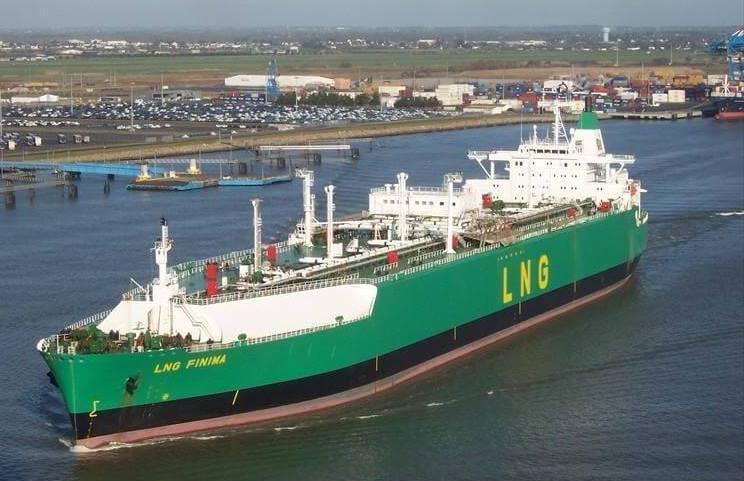
One of such proven models is the Nigeria Liquefied Natural Gas (NLNG). Since 1999, the NLNG has fully paid the $5.45 billion taken from its shareholders to build its six existing LNG trains. The company has also paid as much as $36 billion to its shareholders as dividends over the years, in addition to paying joint venture (JV) gas suppliers $28 billion for feed gas supplies.
Much of its success is derived from its unique structure. The government, represented by NNPC, owns 49 percent of NLNG while Shell owns 25.6 percent, Total Gaz Electricite Holdings owns 15 percent and Eni owns 10.4 percent.

The ownership structure makes it an independent incorporated joint venture, guaranteeing an independent board of directors, effective decision making as well as funding for its projects. NLNG is run based on international best standards with all the parties carefully scrutinising every decision to ensure benefits are maximised.
NLNG’s unique ownership and operating model has also made it difficult for the National Assembly to amend the Act that established it; because of its incorporation charter, with companies and their countries being represented, the NLNG Act has been elevated almost to the status of a treaty and all parties are required to amend it.
NLNG could not kick off after it was first proposed in 1968 because of the huge capital investment required which Nigeria did not have. Investors wanted assurances and guarantees that they would recoup their investments. In 1990 Nigeria granted the investors a ten year pioneer status as well as generous concessions that prohibited further taxation and levies. The charter came with strong terms involving joint agreement before any amendment.
Therefore to finance big infrastructure projects like road networks, rail lines and airports we encourage partnerships and funding, ownership and management structures like the NLNG. We encourage initiatives like those of the Lagos and Ogun state in constructing new roads.
However, for these projects to be viable, they require tolling infrastructure to help investors recoup their money. The private public partnership model has been successful in constructing big ticket infrastructure projects. To attract needed financing, companies can be offered incentives including tax breaks and other kinds of support.

Nigeria has progressively is no longer the destination for foreign direct investments (FDI) as it used to. An enabling environment goes beyond just rhetoric. According to data from the National Bureau of Statistics (NBS) $222.8 million was imported as FDI in the second quarter of 2019, the lowest since the same period in 2016.
Not only does that compare poorly with FDI flows to African peers from South Africa to Egypt, it translates to an FDI per head of $1.14 compared to the Africa average of nearly $100 per head, according to World Bank data. In 2018, while South Africa and Egypt attracted FDI worth $5.3bn and $6.8bn respectively, Nigeria raised $2bn, according to UNCTAD.
We encourage the federal government to replicate this model to attract much-needed financing. It should create entities that are run differently from the public sector. The government could own significant shares but could leaver management to the private sector who have proven to be better at managing businesses.