|
Getting your Trinity Audio player ready...
|
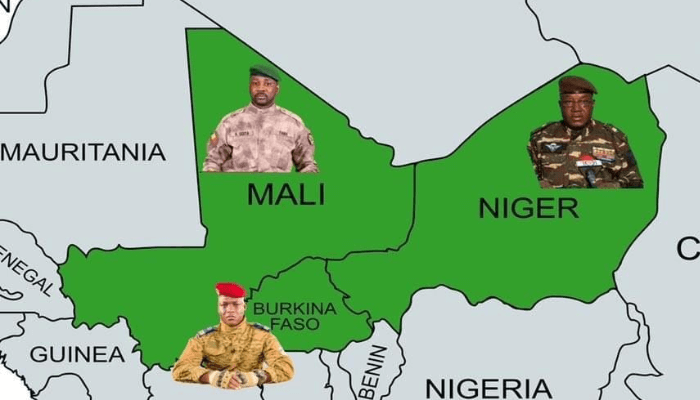
The Ecowas Parliament has expressed hope that the Alliance of Sahel States -Burkina Faso, Niger and Mali- would soon be reintegrated into the subregional group.
Hadja Ibrahim, Speaker of the Parliament, at the opening of the Second 2025 Extraordinary Session on Monday in Port Harcourt, the Rivers State capital, on September 22, 2025, stressed the importance of the three nations rejoining the Ecowas.
She noted that the Commission could not afford to ignore the resentment felt by the three ECOWAS member states, but rather encourage the dialogue initiated with these countries.
“We hope to achieve their full reintegration. We already welcome the desire expressed by all parties to maintain the fluidity of people and goods in the regional space for harmonious development.

“Let us recognise that our action takes place in a complex regional context, but one that brings hope. Our community space continues to face multidimensional challenges: insecurity, terrorism, climate disruption, and economic fragility. These challenges should encourage us to accelerate the integration process,” she said.
Ibrahim explained that this session of the parliament would be mainly devoted to the examination and adoption of the Parliament’s draft budget for the 2026 financial year adding “a prelude to this work, we will take part in a seminar on the theme: ‘Artificial Intelligence in Parliamentary Processes: Strengthening Efficiency and Ethics, Combating Disinformation, Designing Regulations and Governance of Artificial Intelligence.’
Read also: ECOWAS, Sahel states seal deal to collectively confront terrorism
“This theme is part of a dynamic modernisation of our institutions and constitutes a response to the recommendation made by His Excellency, the President of the ECOWAS Commission, during our first ordinary session held last May in Abuja.
“Today, we are all aware that artificial intelligence is no longer a fiction but a tangible reality that is already transforming our societies. It offers immense potential to strengthen the efficiency of our parliamentary work, optimise legislative research, improve transparency and facilitate communication with citizens.

“However, this new power raises significant ethical challenges, including that of disinformation, which erodes democratic debate, undermines public trust, and fuels tensions. Described as a “new geopolitical weapon,” it is the subject of increased and accelerated global competition.
“It is up to us, as legislators, to consider how this tool for the service of democracy should be used and how to prevent it from threatening peace and security, and above all, to ensure a fair distribution of its benefits. I am convinced that this seminar will provide an opportunity for rigorous reflection in order to properly master this technology and ensure its future.
“In accordance with the recommendations of the World Organisation of Employers, we must design a regulatory framework and visionary governance that encourages innovation, while respecting human rights, democratic functions, and values.
“I sincerely hope that these discussions will lay the foundations for a critical and responsible appropriation of artificial intelligence,” she said.
Barau Jibrin, Senator and 1st Deputy Speaker and Leader of the Nigerian Representatives to Ecowas Parliament, in his goodwill message, said that the seminar came at a critical time in the history of the region and the continent.
“Artificial Intelligence has evolved from a distant possibility to a present reality, influencing nearly every sector, from education, health, and security to commerce, communication, and governance.
“For West Africa, the challenge is not whether AI will transform our societies, but how we as leaders, policymakers, and parliamentarians will guide that transformation to ensure it strengthens democratic governance, deepens integration, and improves the lives of our citizens. Parliament is the heartbeat of democracy.”
He said that parliamentarians could leverage AI to enhance legislative drafting, improve the quality and timeliness of oversight functions, and broaden citizen engagement in policymaking.
Read also: The Sahel exodus: How the withdrawal of Mali, Burkina Faso, and Niger could weaken ECOWAS
He, however, warns, “must not only remain vigilant but also proactive in addressing the ethical, security, and socio-economic implications of these technologies, particularly in a region still grappling with issues of digital divide, unemployment, and cyber threats.
“Nigeria remains committed to supporting regional efforts aimed at harnessing emerging technologies for inclusive development. Our National AI Strategy, launched earlier this year, outlines key features such as education, data governance and inclusive innovation, and is designed to create a balanced framework for safeguarding human rights, data privacy and sovereignty, as well as national security.
“It is also Nigeria’s conviction that ECOWAS Parliament, as the voice of the people of West Africa, has a crucial role to play in shaping the normative and legislative environment for the responsible use of AI.
“This includes enacting model laws, encouraging national parliaments to build their capacity for digital governance, and ensuring that women, youth, and vulnerable groups are not left behind in the AI-driven future.
“Let me commend the Rt. Honourable Speaker and the entire ECOWAS Parliament for their foresight in dedicating this seminar to such a timely and strategic theme. I also appreciate the ECOWAS Commission, our development partners, and the Government of Rivers State for their support in convening this gathering.
“For us, legislators entrusted with the sacred duty of representation, lawmaking and oversight, AI presents opportunities to enhance efficiency, strengthen accountability and promote development. Nevertheless, AI also raises ethical, legal and societal challenges that we cannot afford to ignore.
Siminalayi Fubara, Rivers State governor, in his address, said that the presence of the legislators represented more than diplomatic courtesy, adding that it signalled a collective recognition that “we stand at the verge of the most transformative technological revolution in human history.”
Represented by his deputy, Ngozi Odu, the governor described the seminar, which has as its theme, ‘Harnessing Artificial Intelligence AI for Parliamentary Efficiency,’ as one that could not have been more urgent.
“As lawmakers and democratic institutions tackle the exponential advancement of AI technologies, we face what I term the governance paradox of acceleration” – how do we create regulatory frameworks for technologies that evolve faster than our legislative processes? How do we ensure that artificial intelligence serves democratic governance rather than supplanting it?”
Read also: The Alliance of Sahel States tariff: A brewing trade war in West Africa
The governor pointed out that Rivers State, as Nigeria’s largest state and a thriving technology hub, offers unique insights into the challenge of “harnessing artificial intelligence for parliamentary efficiency, which should be domesticated to accommodate our traditional governance structures with emerging digital ecosystems.
“Your deliberations over the coming days will likely influence how African parliamentarians navigate the delicate balance between embracing AI’s transformative potential and preserving the human-centred values that anchor democratic governance.
“The demonstrations you’ll witness – from agricultural optimisation to health surveillance to security applications, represent tangible pathways toward what I envision as augmented democracy – where artificial intelligence amplifies human wisdom rather than replacing it”.
The governor said Rivers State was honoured to host the groundbreaking dialogue, pledging the continued support of the administration for initiatives that position Ecowas at the vanguard of responsible AI governance in the developing world.
Ends/