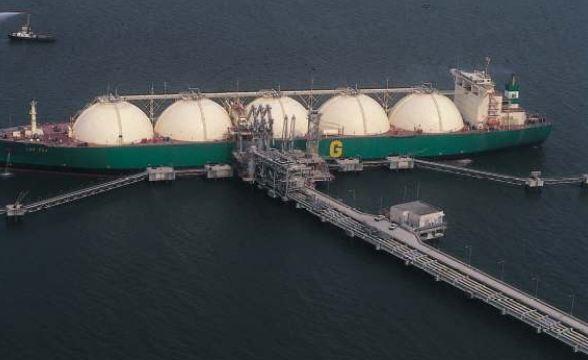
The Nigeria Liquefied Natural Gas Company (NLNG) says the decision of the House of Representatives Committee on Gas Resources to amend the act setting up the company by creating provisions which will compel it to make statutory contributions to the Niger Delta Development Commission (NDDC) fund, questions Nigeria’s commitment to contractual obligations.
The company further states that the action puts the country at risk for arbitrary fines for violation of bilateral agreements, while the proposed amendment gravely threatens foreign direct investments.
The House Committee on Gas Resources, on Thursday held a public hearing in Abuja, on a bill to amend the NLNG Act, further to an earlier advertorial published in the media, calling for a public hearing and memoranda.
Nigeria LNG, while acknowledging the mandate of the National Assembly to make laws for Nigeria, stated that the company could only be set up after 30 years of failed attempts through enactments of legislation that grants the very same incentives, guarantees and assurances that the National Assembly now seeks to modify.

The NLNG Act provides assurances that these incentives will not be tampered with. Section 9 of NLNG Act stipulates, “…These guarantees, assurances and undertakings shall have effect from the date hereof, and so long as the company, or any successor thereto is in existence and carrying on the business of liquefying and selling liquefied natural gas and natural gas liquids within and/or outside the Federal Republic of Nigeria.”
Second Schedule paragraph 1 adds: “The Government shall do nothing to render invalid [or] unenforceable [any] rights and obligations arising from the contract….”
Also, the NLNG states that Nigeria has bilateral agreements with the countries under whose laws the IOC shareholders of NLNG; United Kingdom, Netherlands, France and Italy are constituted, elevating the act to the status of a treaty.
“I respectfully urge this Honorable Committee to gauge its amendment efforts against the potential adverse impact on Nigeria’s reputation as an investment destination which the willful and discriminatory variation of Sovereign assurances that have been codified into Nigerian Law would present.
“In our view, such an action would gravely damage the reputation of the country in the global business environment, and impair the country’s ability to attract FDI which is needed to stimulate the Nigerian economy,” states Babs Omotowa, NLNG chief executive.

Lagos-based lawyer, Olu Akinola, said the development “will affect investors’ confidence but we must also understand that in other lands, legislatures change business contracts in the national interest.”
Nigeria LNG also says that the underlying intention of the Niger Delta Development Commission Act and the levy embodied in it, is to collect from extractive industries within the Niger Delta, but that NLNG only buys feed stock from its gas suppliers, which it proceeds to clean and cool for sale.
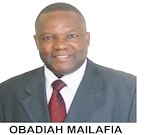
Meanwhile, Obadiah Mailafia, former deputy governor of the Central Bank of Nigeria, said better mechanisms must be put in place to ensure accountability in the NDDC first, noting that “much of the money going to the NDDC is money going down the drain.”
Previous attempts to amend the NLNG Act by the Sixth and Seventh National Assemblies in 2004 and 2008 failed due to the risk attendant to such action.
“It is instructive to note that contemporary experience on BIT disputes would indicate that where countries have reneged on pre-investment assurances/guarantees and other agreements, relevant international courts and arbitral tribunals have applied substantial fines and arbitral awards,” states Omotowa.
ISAAC ANYAOGU