|
Getting your Trinity Audio player ready...
|
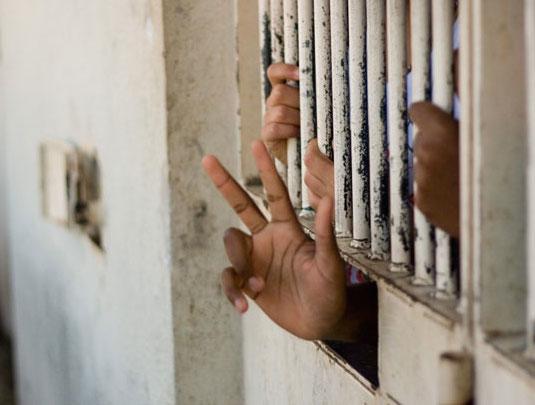
As part of efforts to decongest the Nigerian Prisons, the Federal Executive Council (FEC) on Wednesday approved the sum of N3.5 billion for the procurement of 320 operational vehicles to convey prison inmates to courts.
This is targeted at reducing the population of prisoners which currently stands at 65,000 with 70 percent of them awaiting trial largely due to lack of vehicles to convey them to court.
Briefing journalists after the Federal Executive Council meeting chaired by President Muhammadu Buhari, the Minister of Interior, Abdulrahman Danbazzau said the vehicles will be sourced from local manufacturers, assemblers and vendors within Nigeria, in line with government policy to promote made in Nigeria goods and create
employment opportunities for the youths.
Danbazzau who briefed alongside the Minister of State Petroleum,Emmanuel Kachukwu and Ministers of Power, Works and Housing, Babatunde Fashola and Culture and Information Lai Mohammed at the end of the FEC meeting said Council’s approval of the procure was also part of efforts to strengthen the criminal justice system.

Read also:https://businessday.ng/analysis/article/enugu-jail-break-and-the-need-for-reforms/
“In our efforts to strengthen criminal justice system and to also contribute towards decongesting the system, we presented a memo for the procurement of 320 operational vehicles for the prison service at the cost of N3.5 billion.
“But for the prison system in particular, we are making efforts in a way you know the prisons being one of the legs of the criminal justice system, the others being the police and the judiciary, is to see how best we improve in terms of conveying prison inmates to courts in particular so that we do not jeopardize their chances of their getting
justice. And this has been happening because for a very long time the prison system has suffered due to lack of operational vehicles and as such, quite a number of prisoners remain in prisons longer than necessary, because they do not have the opportunity to be conveyed to the courts. So this is the essence of this”.
The interior minister added that the essence of procuring the vehicles was to ensure that the prison is able to meet up with issues of logistics in relation to transporting the inmates to 5,022 courts across the country.
He said the government was also working on strengthening the police force in terms of investigations and alternative punitive measures “because if the cases are not properly investigated, that too can cause the delay of the trails.

“We are trying to see how we can reduce the number of inmates awaiting trial. But the criminal justice Act of 2015 has also made provision for alternative sentencing, otherwise known as non-custodian sentencing. The courts can now use that to rather than sending the individual to prison, depending on the crime committed, apply other
means of dealing with his case.
“There is also an inter-ministerial committee looking at that issue of decongestion”.
Meanwhile the Minister of Power, Works and Housing, Babatunde Fashola reiterated that the Federal government will not be awarding any new road contracts until it completes existing ones. He said contracts were awarded for over 206 roads for about N2trillion that was not paid for.
Responding to questions on the death traps and state of Nigerian roads the minister noted that the roads went bad at a time when there were resources but the government refused to fix them.
“What we have done was first to say that we would not award any new road contract we would deal with the over 206 roads that have been awarded but not funded for over three years. Again in making those choices what you need to understand is that most federal roads are very long roads, they stretch over hundreds of kilometres” he said adding that there was nothing more he could do until there was appropriation for the roads.
“Now the budget that we have for the three ministries that I superintend we are in the region of N400 plus billion over 200 billion is dedicated to roads across the country. So that is the deficit that we have to deal with and in making those choices we then have to deal not with roads that necessarily bother us but roads that carry the heaviest traffic” he said adding that more attention will be given to roads that have economic significance for the country including routes for evacuation of fuel and food produce going to the different parts of the country.
He also disclosed that Council approved the purchase of three transformers of 150 MVA to be installed in sub-stations of Shiroro in Niger, Oshogbo in Osun and Kumbotso in Kano, as requested by the Transmission Company of Nigeria (TCN).
According to him, the purpose is to “continue to reinforce, to expand and to maintain the existing transmission capacity so that as the progress of our incremental power initiative expands and achieves it’s purpose, transmission company is able to competently deliver the power”.