|
Getting your Trinity Audio player ready...
|
“We choose to go to the moon in this decade and do the other things, not because they are easy, but because they are hard, because that goal will serve to organise and measure the best of our energies and skills, because that challenge is one that we are willing to accept, one we are unwilling to postpone, and one which we intend to win, and the others, too,” President J. F. Kennedy at Rice University in September 1962 trying very hard to justify his decision to spend taxpayers’ money and give priority to space travel and a trip to the moon at a time when about 7 million homes in the United States did not have the luxury of a television set.
“The new subsidy policy came as a bolt from the blue and torpedoed the Nigerian nation and the dynamics of its economy.”
Of interest, this was in an era in which American folklore had a special place for pioneers in the arts, literature, the sciences, military service, and political leadership. It is debatable that the young Kennedy might have had his eyes on history when he made it his priority that a man must walk on the moon before 1970, a curious deadline that circled around the constitutional threshold of his presidency.
This tall order was before the first American who conquered Mount Everest, Jim Whittaker, could reach the summit of the world’s highest mountain in the Himalayas, ten long years after New Zealand’s Edmund Hillary and Nepal’s Tenzing Norgay had taken the crown.
John Fitzgerald Kennedy was elected the 35th President of the United States on November 8, 1960, with a legal and constitutional latitude to seek re-election and continue in the Oval Office up close to the eve of the new decade.

In 1969, precisely on July 20, Neil Armstrong was broadcast live to a worldwide audience as the first man to ever set foot on the moon. Armstrong was an American citizen just like Kennedy. He was a member of a 3-man NASA crew that embarked on the Apollo 11 space mission. He described the event as “…one small step for man, one giant leap for mankind.”
Read also: Inside Nigeria’s bold strategy to double oil production
The Space Centre on Merritt Island is named after President Kennedy. This is understandable. Obviously, the moonwalk is his legacy. But beyond the plaudits of national pride and President Kennedy and Armstrong sharing the spotlight for the first-ever moonwalk, what can one say became of this national policy for the ordinary American citizen?
More than 50 years after this auspicious moment for America in space travel, contrary to the tradition in scientific research, no one other than 11 more American astronauts seems interested in following up on this significant breakthrough.
Not even one Russian astronaut wants to walk on the moon, too, considering their sophistication in space technology and their Sputnik legacy. Russia remains a pioneer in many facets of space exploration before and after every moonwalk by any American astronauts.

According to a review in The Guardian of the UK, “By the mid-60s, NASA was consuming more than 4% of the US federal budget, but while the Soviets were achieving more firsts – the first woman in space (1963), the first extra-vehicular activity, i.e., spacewalk (1965) – the Americans experienced various setbacks, including a launchpad fire that killed all three Apollo 1 astronauts.”
It wouldn’t have mattered if the other explorers had set out just to go and search for Neil’s footprints on the moon, with NASA having not made anything tangible from Armstrong’s footnotes 5 decades later. Why is the moonwalk so unattractive, even to technology giants like the Chinese?
Michael Faraday, an English chemist and physicist, left notes on his discovery of electromagnetic induction, and it revolutionised further research on electricity years later.
It is worthy of mention that this novel work became the foundation for the development of electric lighting and subsequent electric technologies. Here, one can boldly say that Faraday’s small step had given mankind a giant leap in the electric industry, with civilisation being able to power and light up its first electric bulb as far back as 1879.
On the other hand, the rise of the internet or the human genome project cannot be said to be a direct consequence of Armstrong’s work or moonwalk without a heated debate. No major technological advancements like 3D printing, the Internet of Things (IoT), or Artificial Intelligence (AI) can be attributed to President Kennedy’s grand vision of a man walking on the moon before 1970. None.
The question now is whose gain was it really to land or walk on the moon? Because I do not think that NASA would want to claim that it became better after spending over $30 billion on moonwalks and, decades later, failed in a routine basic responsibility to safely return two of its astronauts stuck at the International Space Station back to Earth in 2024 and had to be helped by the rival SpaceX in 2025.
Today, there are more than a handful of sceptics, and their numbers are growing, who believe that the moonwalk was nothing more than scientific choreography done to entertain, like the popular dance moves of the late pop icon, Michael Jackson.
Clearly, Kennedy’s leadership and presidential directive(s) are being judged today by history and subjected to public scrutiny years on.
Like President Kennedy, for every past leader, a Daniel has come to judgement. Questions would be asked, and answers sought. Was it necessary? Was it an act of patriotism and visionary leadership or crass opportunism?
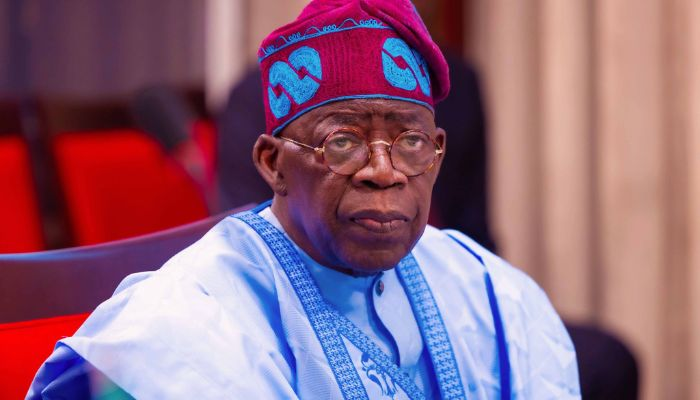
In Nigeria’s contemporary history, the May 29, 2023, announcement of petrol subsidy removal at the Eagle Square by President Bola Ahmed Tinubu can be adjudged as the most consequential presidential directive or national policy in economic terms after the Structural Adjustment Programme (SAP) of the Babangida administration, considering the fuss it generated across the land.
The new subsidy policy came as a bolt from the blue and torpedoed the Nigerian nation and the dynamics of its economy. And things never remained the same ever after…