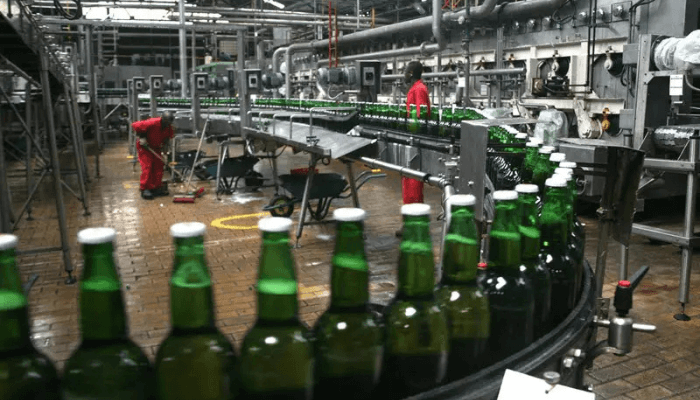
Fluctuations in power supply in the country have continued to stall Nigeria’s desire to have robust petrochemical, plastic and LPG bottling plants, which, if available, would have positive impact on the Gross Domestic Product (GDP), experts have said.
Joseph Makoju, group executive director, Dangote Group, said grid power unavailability and insufficiency affect LPG bottling plants negatively, owing to high cost of providing diesel generators and operating expenses, which have impact of profitability and service reliability.
Makoju, who was formerly the head of the defunct Power Holding Company of Nigeria (PHCN), said primary petrochemical industry, which produce raw materials for plastic fabrication industry, consume a lot of power, stressing that anticipated high capital expenditure on diesel, which has capacity to erode profitability, makes entry barrier to the industry in the country one of the highest in the world.
“The result is that the capital entry barrier into the petrochemical industry is much higher in Nigeria than in countries where grid power is readily available,” he said, during an event organised by the Lagos Chamber of Commerce and Industry (LCCI) entitled ‘Power Generation and its Effects in the Petroleum Downstream Industry.’

Makoju, who was represented by Knut Ulvmoen, deputy president, LCCI, said high spending on diesel, has also discouraged investors from establishing hi-tech plastic manufacturing firms, where precision machinery and power reliability are critical.
Nigeria’s power supply has continued to hover between 2,500 mega watts (MW) and 4,500 MW in recent times. Available data show the country’s installed capacity as of 2011 is greater than Sudan (2,758), Mozambique(2,432), Zimbabwe (2,029), Angola (1,819), Zambia (1,770), Tanzania (1,011), Namibia (537) and Botswana (307).
Incidentally, Nigeria’s installed capacity per capita, estimated at 0.005, lags African peers such as Zambia (0.13), Mozambique (0.1), Angola (0.09), Namibia (0.23) and South Africa (0.93). The country is also a laggard in electrification rate, with a figure totalling 20 percent, which is behind Zimbabwe’s 40 percent, Mozambique’s 34 percent, Sudan’s 30 percent and Botswana’s 22 percent, Akin Akinfemiwa, group CEO, Forte Oil plc, has said.
Akinfemiwa said inadequate power supply has raised the cost of energy for many firms.
“Improved power supply would trigger growth from the manufacturing sector as a result of reduction in self generation cost (N60 per kilowatts per hour) and increase in economic activities, thereby leading to overall increase in GDP and demand for petroleum products,” he said.

READ ALSO: NIGCOMSAT empowers spacesector start ups with N750,000
He said adequate power generation, transmission and distribution would lead to rise in foreign direct investment (FDI) as there would be inflows to finance initiatives and direct investments in the industrial sector and services by large, medium and small firms.
He further said that improvement in power supply would equally increase petroleum refining activities because power would lead to increased production and availability of products for sale in the local economy, while making the country a regional hub for export in the West African states.
ODINAKA ANUDU