



The Central Bank of Nigeria (CBN) has voted to retain the MPR at 13 percent; the Cash Reserve Ratio (CRR) on Private on public Sector deposits at 20 and 75 percent, respectively, while also keeping the liquidity ratio at 30 percent as it rose from the second Monetary Policy Committee (MPC) meeting for the year 2015.
Analysts, yesterday, toed Central Bank of Nigeria’s expectations of a rebound in investment inflows to the Nigerian economy and an appreciation of the local currency, post-election as key rates were left unchanged after the meeting.
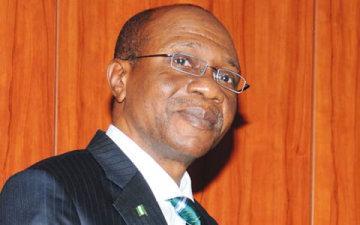
Godwin Emefiele, CBN governor, who announced the decisions in Abuja, said the committee’s view was that previous decisions were sufficient and needed time to crystallise into the economy.
Emefiele is optimistic that the prevailing tight monetary policy stance and some of the recent administrative measures would, among others, help to lock-in inflation expectations and further stabilise the naira exchange rate.

READ ALSO: #ENDSARS: NPA, insurers undergoing damage evaluation on assets ahead of repairs
But he raised concerns about the increasing currency substitution and partial dollarisation in the economy; a development which he said might significantly fuel the high demand for foreign exchange.
He hinted of planned move to clamp down on the current dollarisation in the economy, indicating that post-election, the CBN would look at the amount of liquidity in the market to see whether it would be helping real sector activity, or hurting the naira, and formulate policy on that basis.
Reacting to the MPC decisions, analysts agreed with the CBN’s position that the naira was appropriately priced, as well as, the current monetary policy, which they think would continue to be sufficiently tight for a while.
“Our take is that the MPR is likely to remain at its current level for some time. Nigeria’s changed economic circumstances may re-ignite the debate over what FX policy best suits the needs of the economy.

“For now, the CBN has made it clear that it does not necessarily prioritise the needs of foreign portfolio investors in the allocation of FX. It is merely fulfilling a pledge to investors to ensure free entry into and exit from the market,” Razia Khan, managing director, head, Africa Macro Global Research of the Standard Chartered Bank, said.
“Our sense is that this stance will be viewed positively by investors – many of whom will be looking to re-enter Nigerian markets post-election. However, we are only likely to see this happen in scale when investors themselves start to share the CBN’s optimism on the stabilisation of the Nigerian naira.”
Emefiele expressed CBN’s comfort and satisfaction with the harmonised foreign exchange market, saying that the consequence of those actions had been the stabilisation in the interbank exchange rate after an initial adjustment.
He, however, raised concerns about the wide divergence between the interbank and the bureau-de-change exchange rates, which provides an avenue for arbitrage and speculative activities in the market. “CBN would continue to watch this and take appropriate actions,”he told journalists.
“Even-though there is sufficient level of naira weakness at the parallel market, the CBN does not consider this a good gauge for the strength of the naira, since this is an illiquid market, accounting for only a small volume of FX transactions, and trades are not documented.
“The CBN is meanwhile, confident that the country would return to the JP Morgan’s index after being kept on a negative watch since all the concerns of the rating agency are being trashed, including sanitising the FX market,” he explained.
The external reserves, presently at $30 billion, can also be seen as adequate given the pressures and vulnerabilities in the last couple of weeks.
“I will say it is still at a good level and can support at least close to about five months’ import and we believe that this is still good enough to support business and the Nigerian economy,” Emefiele reiterated.
He, however, pledged that the CBN would continue to fine-tune demand management measures, as well as implement appropriate supply-enhancing strategies to ensure effective demand and utilisation of foreign exchange in the country.
“The currency for doing business remains the naira and we will be looking at areas where people are making demands for foreign currency. We have observed that people are demanding rent, school fees, or transacting business in dollars. It is illegal and we will like to advise those who indulge in these practices to desist from them, because CBN will come after them in due time,” the governor warned.
Onyinye Nwachukwu & Hope Mose-Ashike



