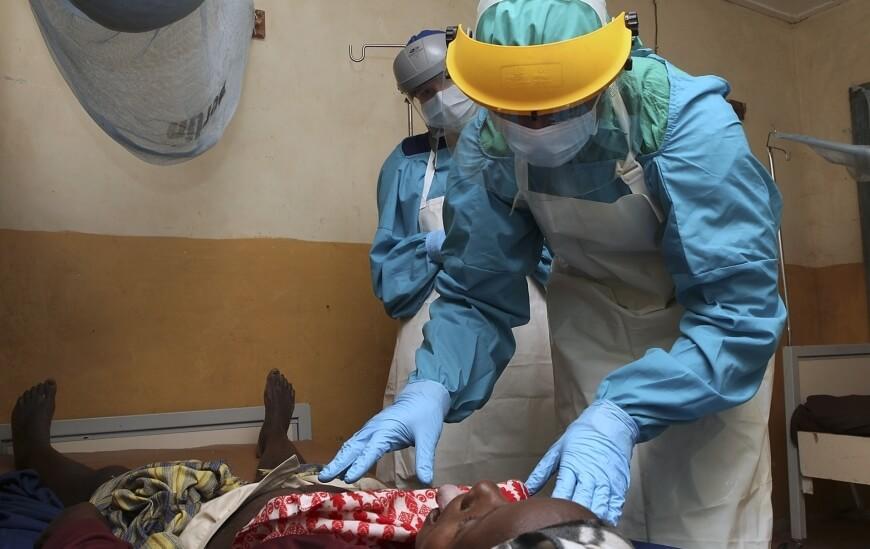
There are many things Nigeria can do to halt the spread of the deadly Lassa fever. The fever has caused devastations in the lives of Nigerians for 51 years, with the virus not prompting changes in the way and manner Africa’s largest economy responds to outbreaks and other health emergencies.
Many years down the line, the virus has continued to stage a comeback, with outbreaks already reported in different states of the country. In 2019, the World Health Organisation (WHO) reported 327 cases of the disease (324 confirmed cases and three probable cases) across 20 states of the federation and the FCT. The disease killed 72 people the same year.
According to the Lassa Fever Weekly Situation Report by the Nigeria Centre for Disease Control (NCDC), a total of 109 cases were confirmed out of 482 suspected cases, from 3rd to 9th February (week 06). This brings the total number of confirmed cases to 472 in 2020.
“Death toll from Lassa fever has risen to 70 while confirmed number of cases ‘significantly’ increased across 26 states in Nigeria,” said the agency, recently.

Nigeria seems yet to find a lasting solution to the scourge either in the cure or in vaccines to prevent its spread. This raises serious questions on the capacity of the Federal government to find a mechanism in putting an end to the widespread outbreak of the virus that has plagued its citizens as reported cases of those affected with the virus keep resurfacing each year since its discovery.
Experts say the outbreaks and infectious disease threat indices may be substantially addressed as advocacy mounts for the country to advance preparedness and establish a public-private coalition on health security and build a resilient health system for all citizens.
Improving research on the response
The World Health Organisation (WHO) incorporates research into its lifesaving emergency responses in order to enhance readiness for the next disease outbreak.
No vaccine has been developed to tackle Lassa fever, also known as viral haemorrhagic illness, 51 years after it was discovered in Nigeria. The disease is relatively common in West Africa, including the countries of Ghana, Sierra Leone, Guinea and Liberia.

“It is important to set up a mechanism for improving environmental sanitation. Funds should be provided for research into finding new drugs for Lassa fever treatment and the development of a Lassa fever vaccine,” said Oladoyin Odubanjo chair, Association of Public Health Physicians of Nigeria (APHPN), Lagos Chapter.
“There is a need to establish functional isolation wards for the treatment,” he further said.
Taking advantage of investigation results
Rapid laboratory testing can make or break Lassa fever response. Faster test results mean faster access to care, which increases the chances of survival for confirmed patients. A rapid diagnosis helps prevent the spread of the disease among the family, friends, and others in the social network of a person confirmed to have the virus.
Quick testing is important for monitoring outbreak control activities and the clinical management of infected patient. The earlier the cases are identified, the faster they can be isolated and be treated.
“Surveillance for Lassa fever is not standardised. Therefore, these continuous reoccurrence in some areas of states in Nigeria demonstrates the serious impact of the disease has on these states and people admitted to hospitals annually having Lassa fever,” said Odubanjo.
According to the public health expert, making a quick diagnosis also eases the anxiety felt by families and communities as their loved ones await results. Importantly, there is a need for the government to enhance the capacity of the national laboratory network for reliable and efficient diagnosis of suspected cases. This is because only about 20 percent of suspected Lassa fever cases are usually diagnosed.
“Government should also provide adequate funds for a sensitive disease surveillance and response system. This is a system that ensures disease outbreaks (not just Lassa fever) are quickly noticed, diagnosed and appropriate responses or containment measures are started in the shortest possible time,” he said.
Changing NCDC emergency response structure
In 2011, the federal government established the Nigeria Centre for Disease Control (NCDC) in response to the challenges of public health emergencies and to enhance the countries preparedness and response to epidemics through prevention, detection, and control of communicable diseases.
Its core mandate as a disease control agency was to detect, investigate, prevent and control diseases of national and international public health importance in the next five years ending 2021.
The agency has been able to achieve, through the support of the government, the creation of three main treatment centres at Irrua Specialist Teaching Hospital, Edo; Federal Medical Centre, Owo and Alex Ekwueme Federal Teaching Hospital, Abakaliki.
While the agency must have received thumbs up in educating the populace on steps to take in preventing the diseases, it hasn’t done much in slowing or ending the disease since it is in the third year of its aforementioned mandate.
Industry experts see that there is a need for emphasise critical importance of preparedness and adjustment in closing gaps include infrastructure, logistics, commodities, technology, human resource and communication.
“Lessons learned from global strategies like how China has been managing the Covid19 ( Corona virus) will help indicate that the roles of multi-sectoral partnerships, particularly the private sector at country level, is a critical precursor to accelerating progress towards set objectives,” said Lanre Yusuf, a medical doctor in Lagos.
Engaging communities to increase awareness on hygiene and symptoms
Engaging with communities is critical to mounting an effective response of the epidemics. Nigeria can apply lessons learnt during the outbreak of Ebola, be proactive and get feedbacks and information. This will help improve and shape communication with the affected states, contact tracing and giving the patients care.
The outbreaks of Lassa fever remains heavy in Nigeria as it has historically occurred up till now. The virus was first described from a case in the town of Lassa in Borno State, Nigeria.
According to Yusuf, there is no vaccine yet to protect persons against this virus as the country is measuring on precautions. Experts stress the need to encourage proper sanitation, good personal hygiene while standard care precautions must be taken by health workers to prevent the spread.
“More awareness needs created and individuals are expected to play their roles in personal responsibility of hygiene,” he explained.
Similarly Odubanjo said to effectively revolve the tide, governments at state and federal level need to mount an extensive and sustained public Lassa fever prevention and control awareness programme.
“States of the federation also need to establish functional isolation wards for the treatment of Lassa fever patients. It is also important to set up a mechanism for improving environmental sanitation in a sustained way throughout the country to reduce rodent population as well as rodent – human contact,” he said.
Finding an effective treatment for Lassa fever and creating a funding mechanism
Experts say that trial steps should be taken towards finding an effective treatment for Lassa fever and there should be efforts in the research of possible treatment in the context of an infectious diseases outbreak.
According to Yusuf, Nigeria can improve on effective treatment by optimising supportive care and access centres to reduce complications of the virus. The country can learn from the Wuhan in China in the development of an emergency facility within ten days.
“What the Nigeria government should pick from this is to learn how make available resources, creating funds for health emergencies and be prepared for outbreaks,” he said.
However, more can be learnt from the WHO strategy setting up a rapid response funding mechanism called the Contingency Fund for Emergencies (CFE) so that money is immediately available to jump-start an outbreak response.
WHO has used the CFE to respond to some 70 separate events in 48 countries.
ANTHONIA OBOKOH