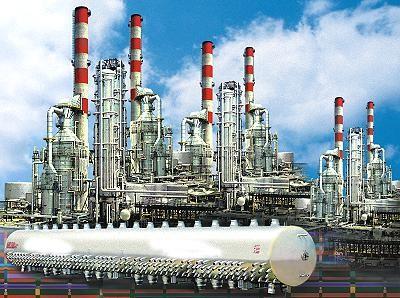
The Port Harcourt Refinery has been completely shutdown.
This is because the products it has produced in recent time could not be evacuated from the storage tanks thereby constituting safety risk for the entire complex and communities around.
The refinery before shutdown was operating at about 50 percent of its installed capacity and because it has been due for turn around maintenance for more than five years it could not operate at the maximum capacity.
Its shutdown may further aggravate the problem of premium motor spirit (petrol) supply to Rivers State and environs and by extension putting pressure on the national supply which is more dependent on importation.

According to sources close to the refinery, the shutting down became necessary so as to avert any danger of either explosion or fire disaster in the company.
The sources further stated that for strange reasons the Pipeline and Products Marketing Company (PPMC) that was supposed to evacuate the products have been slow in doing that.
“If the refinery continues to produce it would be in danger as it could explode. The storage tank in the refinery is full, rate of evacuation is slow from the tank farms to the depot”, a source told BusinessDay.
He said if the tanks are overfull there would be leakages all over the place and this could cause fire, saying that even though Balfred Enjugu, the managing director of the company, wanted the plant to continue to run, he, however, does not want to compromise on safety, hence his decision to accept the shutting down of the plant.
As at the weekend, the source said areas 1,2,3 of the plant complex have been shutdown and the company has just about 10 days crude stock that it 44could still refine.

BusinessDay’s attempt to get the reaction of the Nigerian National Petroleum Corporation (NNPC) over the incident was not successful as the corporation’s spokesperson, Ohi Alegbe, did not respond to text messages sent to his phone.
Nasir Imodagbe, the public affairs manager of Pipeline and Products Marketing Company (PPMC), who promised to get back to BusinessDay failed to do so.
The non evacuation would mean that some of the companies that use some of these products may encounter difficulties in having access to them and if the refinery is not reopened on time it would mean that they have to source for the product outside the country thereby putting more pressure on the naira.