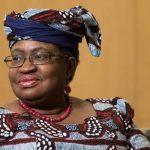
… Amid tumbling revenues, Ngozi Okonjo-Iweala, finance minister, will likely announce additional austerity measures in coming weeks, albeit modest relative to the macroeconomic challenges
…President Jonathan will handily win presidential primaries despite renewed turmoil in the ruling PDP at the gubernatorial and parliamentary levels
Political backdrop
The Goodluck Jonathan-administration has been flat-footed amid the precipitous fall in oil prices and the naira in recent weeks, announcing half measures and sending mixed signals to investors. The pre-election political climate makes fiscal and monetary policy adjustments that much harder, though we are beginning to see modest steps in both realms. The big test will be the MPC meeting on November 24-25. While the administration is likely to be opposed to painful measures like an interest rate hike or a naira band shift ahead of elections, the MPC will probably not be hemmed in by political pressures. This may support more robust action than many market participants expect.
There may even be alignment on timing considerations – if both Aso Rock (the presidency) and the MPC see unrelenting pressure on the naira in the weeks and months ahead (causing a de facto and costly devaluation, probably leading to actual devaluation), then the administration may be willing to take the medicine now rather than later. The ruling PDP and opposition APC both have primaries days ahead. While this is an important event for President Jonathan, the fact that he is likely to coast to victory makes the immediate political context less fraught than later in the campaign cycle ahead of the more competitive general elections in February. The late January MPC meeting would be in the final stretch of the campaign and arguably an even worse time politically to do a rate hike or devaluation.

Earlier MPC signals
Judging from recent MPC minutes, the main policy tools under consideration will be some combination of another capital reserve ratio (CRR) hike, an interest rate hike or shift in the naira band. Of the three, only the CRR hike has been used in recent years (several times this year) and may well get support again this time. In the last MPC meeting five of the committee members voted to increase the CRR on private funds from 15 percent to 18percent; Governor Godwin Emefiele, a longtime banking executive at Zenith, voted with the narrow majority to keep the status quo. While a CRR rise on private and potentially public funds (to 100percent) will be opposed by Emefiele’s former colleagues (including his powerful mentor, Jim Ovia), there is momentum in that direction and no particular political opposition to it. The fact that Emefiele criticised CRR hikes when he was still at Zenith will probably not save banks from another increase.
Until now, there has been very little support in the MPC for either an interest rate hike or devaluation, with a few exceptions. Emefiele himself spoke originally of wanting to tilt the bank towards lower, not higher rates, while following a ‘developmental’ banking model with a new focus on the unemployment rate (over 20percent). He has also insisted in recent weeks that the Central Bank can and will continue to defend the naira and that it has sufficient foreign exchange reserves to do so, projecting complacency.
Politics unlikely to hem in MPC decision-making
That complacency may be dissipating, however, as the naira continues to get battered and foreign reserves come under severe pressure. The Bentral Bank’s research unit and upper management (including the deputy governors) are professionals and technocrats that are likely stressing the severity of the crisis to the governor. Some hawkish members of the MPC, like deputy governor Sarah Alade and Doyin Salami are also reinforcing that view, and will probably advocate for a moderate naira band shift (i.e. from N155/$1 to N160/$ or 165/$1) and/or interest rate hike. Okonjo-Iweala, finance minister, who is also the head of economic coordination and so has a wider remit than most finance ministers, has at least, an indirect voice in the monetary policy debates. She likely favours a robust monetary response, including a naira band shift or an interest rate hike given her background as an IMF official and a formative experience in engineering Nigeria’s $20 billion debt relief package, incurred over years of fiscal and monetary irresponsibility.

The policy options of devaluation and an interest rate hike will both come under consideration. Political opposition will be relatively muted due to a few factors alluded to above- Okonjo-Iweala’s likely counsel to the president, the sheer scale and speed of the crisis (which, untamed, hurts the ruling PDP as much as a hike or devaluation), and the political logic of taking the medicine now rather than closer to the February elections. From a cynical perspective, devaluation will help the many political and economic elites who long ago converted their naira for dollars- the money will go that much farther now. We have expected that the Central Bank would hold off on devaluation until it had depleted its reserves to about $30 billion. That may still be the case but the velocity of the oil price, revenue and naira drop will likely get factored into the decision, and in this context two months (to the next MPC meeting) would be a very long period of time to wait.
Modest fiscal measures; upcoming PDP primaries
The modest fiscal measures proposed by Okonjo-Iweala are a small step in the right direction. While inadequate to the scale of the country’s macroeconomic problems, the fiscal adjustments at least show that the administration is willing to take some counter measures. As anticipated, she revised the oil benchmark price downwards from $78/barrel to $73/barrel and announced a 6percent spending cut for next year, including cuts to government perks and tax hikes on high-end goods (please see NIGERIA – Forthcoming 2015 budget proposal will raise red flags in lower oil price climate). She also announced that half of the $4 billion excess crude account (ECA) would go towards naira defense by the end of the year, making a thin buffer even thinner. The benchmark revision is welcome, but probably insufficient; it certainly does not match the actual price fall. The minister, who is likely to step down next year, will probably announce further measures both out of conviction and with an eye to her legacy (at Nigeria’s moment of crisis). Additional measures could include cutting (or streamlining) some government agencies and freeing up revenues from capital expenditures via debt issuance for infrastructure projects as Nigeria’s external debt to GDP ratio is under 5percent.
The fall in oil prices and the naira is unfolding at a tense political moment. Both the ruling PDP and the opposition All Progressives Congress (APC) are embarking on their party primaries, beginning on November 29, with the gubernatorial contest, followed parliamentary and presidential primaries. There will only be token opposition to President Jonathan at the formal level as he is assured to be the party’s candidate. However, the strength of his candidacy still hangs in the balance as the subsequent gubernatorial and parliamentary primaries, which are hotly contested, could pose obstacles, including a fresh wave of party defections heading towards the general elections.
Philippe de Pontet