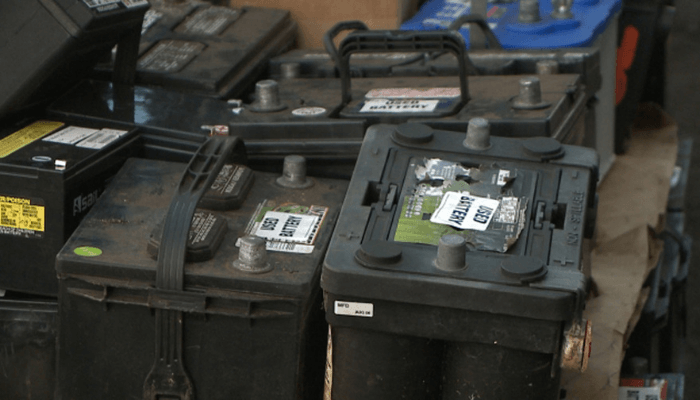
Battery costs have plunged nearly 90 percent in the last decade, from $1,100 per kilowatt-hour in 2010 to $137 in 2020, a new Bloomberg Energy study finds which bodes well for electric cars and the global quest for energy transition.
The report found that packs built for cars — as opposed to home solar arrays or pieces of the power grid — cost even less. They now average $126 per kilowatt-hour.
This could spur quicker global adoption of renewable energy as it could make electric cars become competitive against petrol-powered vehicles, even becoming cheaper.
Due to higher upfront costs than those burning petrol or diesel, adoption of electric vehicles have been slower, this could change as batteries get cheaper.

Battery costs have dropped some 90 percent in the last decade, more than 600 zero-emission models are on track for launch by 2025 and governments around the globe – cities, sub-national states and 17 countries – are mandating transitions to clean fleets by 2030 or 2050. By 2040, over half of new vehicles sold will be electric, up from 2.7 percent today.
Researchers say that price premium will disappear once battery packs reach $ 100 per kilowatt-hour — a tipping point BNEF expects to occur in 2023, according to its 2020 Battery Price Survey.
BNEF’S annual survey also found examples of batteries for electric buses in China selling below $100 per kilowatt-hour, said lead author James Frith. China’s average pack price for electric buses is only slightly higher, at $105.
“Within just a few years we will see the average price in the industry pass this point,” said Frith, BNEF’S head of energy storage research, in a press release.
“What’s more, our analysis shows that even if prices for raw materials were to return to the highs seen in 2018, it would only delay average prices reaching $100/ kwh by two years — rather than completely derailing the industry.”

Electric vehicle adoption is growing worldwide. Only about 17, 000 Electric Vehicles (EVS) were on the world’s roads in 2010 according to the International Energy Association, (IEA) By 2019, that number had swelled to 7.2 million, and 47 percent of which were in China. Nine countries had more than 100 000 electric cars on the road. At least 20 countries reached market shares above 1percent in 2019.
Transit bus electrification projects in Kolkata (India), Shenzhen ( China), Santiago (Chile), and Helsinki (Finland), cheaper cost of batteries, the shift from direct subsidies to policy approaches that rely more on regulatory and other structural measures – including zero-emission vehicles mandates and fuel economy standards could have a lasting impact on how the world moves.
BNEF forecasts prices dropping to $58 per kilowatt-hour by 2030. One possible way that price could be achieved is the widespread production of solid-state batteries, which BNEF estimates could be made for 40% the cost of current lithiumion batteries.
Another forecast by Deloitte concluded that EVS market’s collective accomplishments over the past two years offer hope, despite the short-term impact of COVID-19: a pattern of continued growth, which is expected to be sustained throughout the 2020s.
“Our global EV forecast is for a compound annual growth rate of 29 percent achieved over the next ten years: Total EV sales growing from 2.5 million in 2020 to 11.2 million in 2025, then reaching 31.1 million by 2030,” said analysts at Deloitte.
Deloitte expects that by 2030 China will hold 49 percent of the global EV market, Europe will account for 27 percent, and the United States will hold 14 percent. EVS would secure approximately 32 percent of the total market share for new car sales
This will be driven by improved, cheaper battery technology, more readily available charging infrastructure, new markets, and price parity with internal combustion engine (ICE) vehicles.
Imperative for Nigeria
To make a significant leap to electric vehicles may seen far-fetched for Africa’s biggest oil producer due to poor infrastructure including electricity, analysts have suggested that Nigeria should quickly ramp up the use of gas-powered vehicles and pivot towards EVS.
As crude oil prices continue to decline from the ravaging effects of the Coronavirus pandemic and excess production by suppliers, gas offers Nigeria an option. Gas as a cleaner fuel can help the country meet its climate commitments under the Paris Agreement and reduce its carbon footprint.
Nigeria has been advised to push for the adoption of gas-powered vehicles in a closed-loop system like in state-run mass transit system and before encouraging commercial vehicles including minibuses and larger ones travelling across the country to convert to Compressed Natural Gas (CNG).