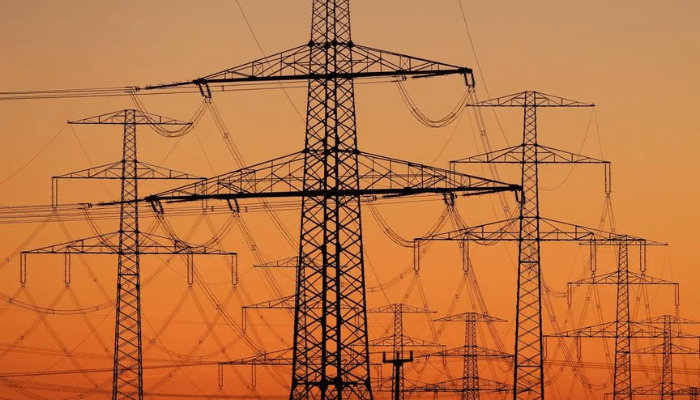
The business of electricity transmission, which is in the hands of the federal government, is the big¬gest constraint facing new investors involved in generation and distribution of electricity in the country.
“Transmission is a severe con¬straint on our ability to service our customers,” Samaila Zubairu, trans¬action advisor to West Power & Gas Limited, buyer of Eko Electricity Dis-tribution Company (Eko Disco), told participants at a seminar on the power sector organised by Akindelano Legal Practitioners (ALP) recently.
Industry analysts have said that massive investment would be re¬quired to achieve rapid expansion and modernisation of the transmis¬sion infrastructure, which is largely in a decrepit state.
The public private partnership (PPP) model is now seen as necessary since failure to drive significant increase in transmission capacity, which is a very critical link along the electric-ity value chain, is capable of jeopardis¬ing the ongoing reforms in the sector.

Transmission is the ‘life-blood” of this entire electricity ‘eco-system’ and it is also potentially the ‘weakest link’ at present, said Atedo Peterside, chairman of the Technical Commit¬tee, National Council on Privatisation (NCP), at a recent forum in Abuja.
Bolaji Osunsanya, managing di¬rector, Oando Gas & Power, while noting the enormous investment required for transmission network development, said: “There is need to create PPP collaboration within TCN. The security connotation around transmission should be removed. We can even break up the grid into re¬gional, rather than being national.”
The network currently has the capability to evacuate less than 6000 megawatts (MW) of electricity, and about $3.7 billion is required by the government to increase transmission capacity to 20,000 MW by 2016, ac¬cording to CBO Capital Partners’ Power Sector Monitor.
Improvement in generation and distribution capacities without a strong transmission network to evacuate generated power would not translate to tangible upturn in power supply to consumers.
Funding from government

Electricity transmission, which links distribution and generation companies, is in the hands of the government-owned Transmission Company of Nigeria (TCN), with management outsourced to Canada’s Manitoba Hydro International (MHI) in 2012 under a three-year manage¬ment contract.
Abubakar Atiku, deputy manag¬ing director, TCN, said the engineer¬ing, procurement and construction of additional transmission infrastruc¬ture to the existing TCN network is the most important thing to imple¬ment by the government after priva¬tisation of the power sector.
We can certainly make the investment in the transmission network that is required to enhance the amount of energy that we can evacuate and distribute to our customers
In 2013, Ngozi Okonjo-Iweala, finance minister said that a sum of $1.5 billion in financing from vari¬ous sources had been mobilised for investment and upgrade of the trans-mission network in 2014 and beyond.
The government in August 2013 signed a memorandum of investment with Chinese firm, Xian Electric En¬gineering Company Ltd to upgrade the country’s transmission capacity to 20,000 MW. Over the next two years, the Chinese firm will work with the TCN and its Canadian managers MHI to execute various projects of up to $500 million to be funded by the China Exim Bank.
According to Atiku, part of the proceeds of the sale of the National Integrated Power Project (NIPP) as¬sets will be invested in transmission network development. Over $1.6 bil¬lion is expected from the sale of 10 new power plants by the Niger Delta Power Holding Company of Nigeria.
New investors’ readiness to invest in transmission
BusinessDay West Africa Energy gathered that some of the private in¬vestors in the Discos are now looking to partnering with the government in a bid to ensure that the transmission bottleneck is resolved with the sense of urgency that it requires
“We are currently discussing with the Transmission Company of Nige¬ria (TCN) to allow us make invest¬ment on their behalf in the transmis¬sion network,” Zubairu said.
“We certainly can do that. Eko Disco can certainly make the invest¬ment in the transmission network that is required to enhance the amount we can evacuate and dis¬tribute to our customers. We have ca¬pacity to do that,” he affirmed to Busi¬nessDay West Africa Energy on the sidelines of the ALP seminar, when asked if the Discos have the financial capacity to invest in the grid.
“I think it is a welcome develop¬ment if the Discos or any other inves¬tors want to invest in transmission, but we need to work out the modali¬ties on how the investment would be recouped. We are open to discussion. It is possible, but it has to involve the regulator NERC,” Atiku said on phone of energy
165 projects awaiting completion
“The ability of TCN to catch up with generation availability and also keep pace with future expansion will depend on its continued access to fi¬nancing for its huge capex needs and also its ability to execute and rigor¬ously monitor project implementa¬tion to high professional standards. The latter will inspire confidence and open the door to even more funding. Conversely, if that confidence is lost early on, then ‘third party financing’ will dry up and the burden of financ¬ing TCN’s expansion will fall on the Federal Government of Nigeria,” said Peterside.
He said if TCN does not deliver the goods in 2014, there will be a ‘cri¬sis of sorts’ when the ten NIPP power plants come on stream.
The development of transmission infrastructure will ensure greater ac¬cess to electricity by the consumers, mopping up of suppressed loads all over the country, grid stabilisation for effective delivery and reduce stranded power from new generators by pro¬viding evacuation lines.
“Therefore it will be necessary that the government pay more attention to the development of the transmis¬sion infrastructure than the develop¬ment of new generators for now,” said Atiku, adding that 165 transmission projects are ongoing.
Upon completion of all ongoing transmission projects in 2016, Nige¬ria’s transmission network will be ca¬pable of moving about 20,000MW of electricity.