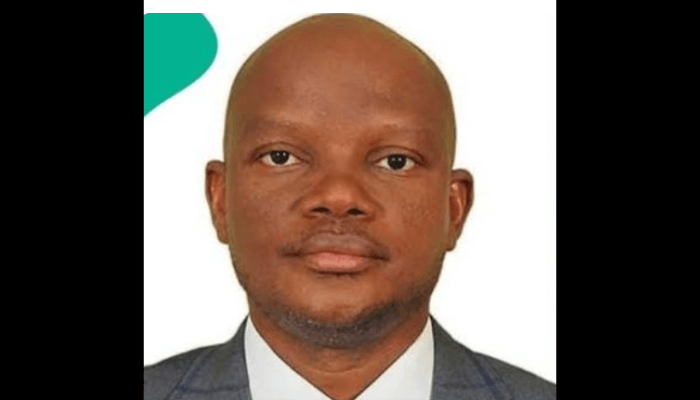
Christopher Piwuna, the president of the Academic Staff Union of Universities (ASUU), has attributed the lingering crisis between the union and the federal government to deep-seated ideological difference, and tendencies toward self-aggrandisement on the government representatives.
Piwuna disclosed on Sunday, November 9, during a virtual conversation on the lingering ASUU-FG impasse that threatens the future of tertiary education in the country.
“If the minister of finance understood that education is critical to developing manpower for national success, or if the science and technology minister realises that research institutions cannot function without educated graduates, they would treat the education minister’s challenges as their own. But currently, other arms of government leave it solely to the education ministry to resolve, which is one reason solutions are never forthcoming.
“We in ASUU view education as a public good, essential for national development. But many government officials see it through a capitalistic lens: if it does not generate profit, it is not prioritized. That is why some prominent Nigerians now advocate that hedge funds should fund private universities where they have vested interests, rather than support public education,” he said.

Besides, he explained that some government officials prioritise personal gain and contract inflation over meaningful investment in education.
“Funds meant for development, such as the TETFUND, have become marketplaces for profit, rather than tools for improving universities
“Members of the federal government don’t see the problem of education as their problem. The people in government see education as something not important if it’s not bringing in money to them,” he noted.
Piwuna emphasised that ASUU is willing and ready to engage the government in meaningful conversations to resolve lingering issues between both parties, and move the university education forward.
“ASUU is ready for conversation to address the impasse but the federal government has not been sincere with the union,” he noted.

He said that the lecturers are fighting for the future of Nigeria’s public university education, and are committed to improving the country’s education.
“We’ll continue to challenge the government, and push them to do what is right. It’s a battle we’re committed to,” he said.
The ASUU president emphasised that many public universities lack the needed infrastructure to compete at global level.
He cited Taraba State University, where he said there are no networks to power research and other academic activities.
“In Taraba State University, there’s no network for over 25,000 students and 1,000 lecturers,” he explained.
Besides, he decried the federal government’s lack of political will to upgrade the public universities.
“The federal government earlier in the year announced the award of contracts to provide solar energy for 18 public universities, but till date nothing is being done to actualise this,” he noted.
Speaking on the ongoing ASUU-NEC meeting in Taraba State, Piwuna said the terms of agreement are shaping up, and hopes the union reaches a definite statement in the next week or two.
“What is clear, however, is that the government’s current salary offer is unacceptable. We are prepared to go to any length to fight for fair compensation.
“Yes, in terms of salaries and conditions, we feel like we are living in the 17th or 18th century. Our salaries are insufficient, and public universities lack the endowments and infrastructure needed to grow. Billionaires fund private universities, not public ones. Over the years, we have fought, negotiated, and gone on strike to achieve the little progress we have. Those small gains are not due to incompetence, they are the result of our struggle to resist government neglect,” he stressed.
In addition, he said, “Our colleagues work tirelessly, often sleeping in offices and bringing their families to campus, yet they cannot secure endowments or improve resources.
“This is the reality we face daily; we are struggling to move our institutions forward under difficult circumstances.”
He expressed fears that the political elites are strategically planning to divert TETFund grants to private universities.
Piwuna reiterated that the federal government consistently refused to grant the universities their autonomy for over 15 years.
“For over 15 years the universities are still fighting for autonomy; why is the government afraid of allowing universities autonomy?” he queried.