|
Getting your Trinity Audio player ready...
|
The Senate has proposed the removal of President Muhammadu Buhari as petroleum minister, as it conducted a public hearing on the Petroleum Industry Governance Bill on December 7.
A post on the Twitter page of the Senate, states that the law will provide “a clear legislative prohibition, requiring that the President should no longer have the power to become the petroleum minister.”
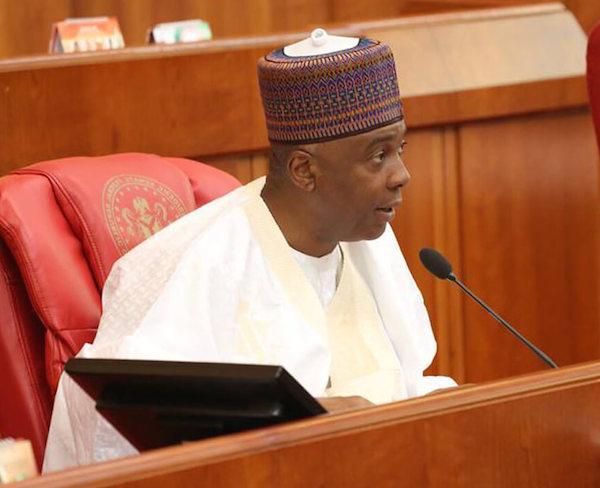
Senate President, Bukola Saraki, opening public hearing of the bill, said it would create effective governing bodies with distinct roles for the industry and break up the Nigerian National Petroleum Corporation (NNPC).
“Our oil and gas industry is yearning for good governance, transparency, indigenous participation,” Saraki said.

The petroleum sector bill, “An Act to provide for the governance and institutional framework for the petroleum industry and for other related matters,” was sponsored by Senators Omotayo Alasoadura and 28 others.
It aims to create an efficient and effective governing institution with clear and separate roles for the petroleum industry and establishes a framework for the creation of commercial-oriented and profit-driven petroleum entities that ensures value addition and internationalisation of the industry.
Meanwhile, the NNPC has backed plans on its own unbundling, which will see the corporation dissolve into two entities: the Nigeria Petroleum Assets Management Company (NPAMC) and Nigeria Petroleum Company (NPC), or National Oil Company.
The Nigeria Petroleum Regulatory Commission (NPRC) as regulator for the entire petroleum industry (upstream, midstream and downstream), while the NPAMC will serve as counterpart and administrator of production sharing agreements and NPC, as a vertically integrated oil and gas company operating as a fully commercial entity across the value chain.
But Maikanti Baru, group-managing director, NNPC, called for the delineation of roles and responsibilities of each entity.

“By also providing NPAMC with an objective to sell crude oil, the PIGB will create two competing national oil companies, both involved in the sale of crude oil,” he said.
“We wish to suggest that there is need for specific revenue stream to be clarified under “funding of the Nigerian Petroleum Regulatory Commission.
“We recommend that the NPAMC resides within the NPC for the period of transition and until first sale of NPC equity on the Nigerian Stock Exchange (NSE),” Baru told the Tayo Alasoadura-led committee”.
Baru also said the Federal Inland Revenue Service (FIRS) should retain its role as the collector and administrator of petroleum profit tax (PPT), corporate income tax and other taxes.
He also advocated the need to delete a provision which empowers NPAMC to sell crude oil and petroleum derivatives, saying assigning NPAMC the role of selling crude oil, which he said should be the responsibility of a department in NPC, would create two competing national oil companies that would both be involved in the sale of crude oil.
Previously known as the Petroleum Industry Bill (PIB), it is the longest standing bill in the National Assembly, having been first introduced in December, 2008 by the late President Musa Umaru Yar’Adua to the 6th National Assembly.
The legislative body has been in the eye of the storm over its failure to pass the PIB in two consecutive assemblies – 6th and 7th National Assemblies.
The government decided to break the bill into different parts. Under the arrangement, the National Oil Company will receive about $5 billion, or at least the five-year average of the amount of money the NNPC had to put into joint venture operations.
It would also be partially privatised, with the Federal Government divesting a minimum of 30 per cent of its shares in the company within six years of its incorporation.
NPAMC, on the other hand, is expected to manage assets where the government is not obligated to provide any upfront funding. These include oil licences run under production-sharing agreements in which independent oil companies cover operating costs and pay tax and royalties on output.
The draft bill curtails ministerial powers as board appointments will be made by the Nigerian president and confirmed by the Senate.
Speaking on behalf of the Petroleum and Natural Gas Senior Staff Association (PENGASSAN) and Nigeria Union of Petroleum and Natural Gas Workers (NUPENG), a labour leader, Chika Onuegbu, said the unions vehemently oppose unbundling and privatisation of NNPC without carrying the unions along.
“We note unfortunately, that the Petroleum Industry Governance Bill contains some of the obnoxious provisions of the 2012 PIB, such as: excessive wide discretionary powers to the minister in charge of petroleum. It also gives the NPRC the power to make regulations without public hearing, which in our own view, is completely alien to constitutional democracy”.
Onuegbu noted that the bill does not make reference to the collective bargain agreement.
He said the privatisation process must “ensure that all workers in the NNPC and all other government agencies to be impacted by the PIB shall transit to the new companies/agencies on terms and conditions no less favourable than their present conditions. This is crucial to the successful take-off of these agencies, the NOC and the PIB itself.”
ISAAC ANYAOGU & OWEDE AGBAJILEKE