|
Getting your Trinity Audio player ready...
|
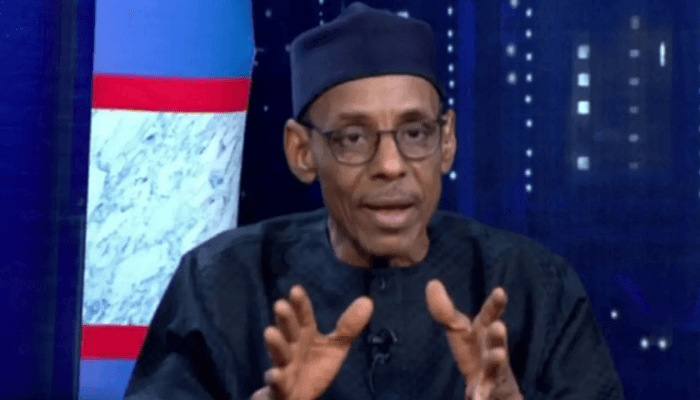
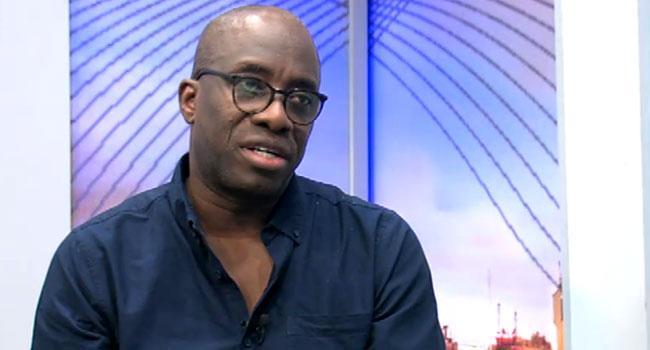
Segun Sowunmi, a spokesperson for the Atiku/Okowa presidential campaign organization, denied Thursday the Peoples Democratic Party’s (PDP) involvement in creating the crisis arising from the naira swap policy of the Central Bank of Nigeria (CBN).
Sowunmi made this remark on Channels Television’s “The 2023 Verdict,” monitored by BusinessDay, when asked about the party’s response to an allegation from the All Progressives Congress (APC) over masterminding the crisis arising from the naira swap policy of the CBN.
“PDP has no hand in this [naira redesign controversy],” Sowunmi said.
Earlier in the course of his interview, he used the opportunity to apologise to the majority of Nigerians for the difficulties they were going through following the scarcity of the new naira notes of N200, N500, and N1,000.

“I’d like to apologise on behalf of everyone to those who are truly suffering,” Sowunmi said.
Read also: Banks shut as Edo residents lament shortage of naira, low sales
“We started this democracy in 1999, and we have not added one inch of land to the territorial space of Nigeria. We have divided the country into 36 states and Abuja. Please tell me why governors in those states do not think that they deserve financial inclusion at that level,” he asked.
“We have all come to the realisation in this country that all problems must sit in the head of the president, forgetting that all the other layers of the ladder—local government and the others—have some responsibilities,” he explained.
He made reference to the growth and development of the telecommunications sector in the country, stating that it is shameful for governors to be complaining about not having enough financial inclusion in their states.

He apologized, however, for what he called the “misnormal” of the current naira swap crisis. He also linked the current cash crisis to a “zombie federation.” According to him, a zombie federation is a “federation where the citizens can see their enemies, that is, the ones who got their money and stole it, and the ones that want to try and adjust things a little bit, that they would also allow these crooks to come and start inciting them against what is designed for their interest.”
He applauded the president for this bold move, which he described as working towards a better retirement when he relinquishes power.
He also acknowledged the differences in ideology and policies that exist between the president and his party but agreed that a policy like a naira redesign, though painful at the early stage of implementation, was a better choice for Nigerians. “They are meant to stem criminal elements from running with our money,” he said. “They are meant to stem currency traffickers and people who counterfeit the currency.”
He also disagreed with opinions and objections given by Femi Gbajiamala, the speaker of the House of Representatives, and Governor Nasir El-Rufia over the naira redesign policy and insisted that “El-Rufia should wait until the people vote for your candidate as president.”
“For now, when it comes to certain policies of the government that are within its exclusive purview according to law, you let him have it,” he noted.