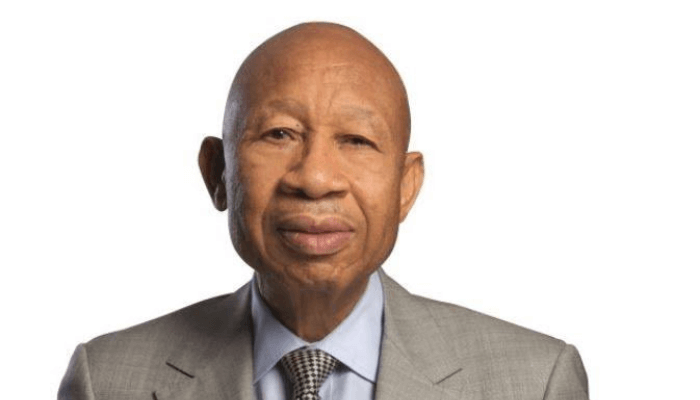
Pascal Gabriel Dozie, the late Nigerian business icon, exemplified how integrity, strategic foresight, and a stellar reputation can lead to tangible financial and institutional success. His career—spanning banking, telecommunications, and education—provides compelling evidence that goodwill and a “good name” are invaluable assets in the business world and life.
Below are key highlights from his life and work that underscore this principle:
1. Founding Diamond Bank: Trust as a Foundation
Despite a five-year licensing delay, Dozie’s establishment of Diamond Bank in 1985 demonstrated his commitment to ethical practices. He refused to “short-circuit the system” even when collaborators withdrew, prioritising compliance over expediency. It is noteworthy that PGD had previously worked at the Central Bank, but he declined to deploy the “long leg”. His patience fostered trust with regulators and stakeholders, allowing the bank to grow from a modest ₦10 million in share capital to a significant financial institution before its merger with Access Bank in 2019.

Key Insight: By adhering to regulations and fostering transparency, Dozie cultivated institutional credibility, which attracted long-term investors and customers.
2. MTN Nigeria: Resilience Amid Accusations
Dozie’s role as chairman of MTN Nigeria experienced early turbulence when false accusations of conflicts of interest nearly derailed his involvement. Instead of retaliating, he maintained his composure, leading MTN to retract its allegations after a subsequent internal review. His restraint preserved his reputation, guaranteeing ongoing collaboration and MTN’s eventual market dominance.
Key Insight: A reputation for fairness and professionalism can recover opportunities even after setbacks.
3. Advocacy for Ethical Business Practices

Dozie criticised Nigeria’s culture of shortcuts. In an interview with BusinessDay on his 80th birthday, he said, “Doing business in Nigeria is like an obstacle race… smart people short-change the system, but it’s not easy if you want to do it the right way.” He championed corporate governance and ethical leadership, influencing institutions like the Lagos Business School (LBS), which he co-founded as an “oasis of sanity” to promote integrity in business education.
He was a member of the Pioneer Council of Lagos Business School. I interviewed him for the first issue of Footprints, the school’s alum journal. This was 1990, and LBS was gaining a good reputation. Diamond Bank was five years old.
His humility and old-fashioned commonsense resonated deeply. His office on Adeola Hopewell resembled that of a senior executive at a manufacturing firm rather than a bank. Bank MDs had tennis courts for offices in that era—not Dozie!
Legacy: His emphasis on ethics attracted partnerships with global institutions like MIT, enhancing Nigeria’s business education framework.
Read also: Diamond Bank founder, Pascal Dozie dies at 86
4. Family Business Sustainability
Recognising the collapse of Nigerian family enterprises such as Fajemirokun and Abiola Group, Dozie partnered with LBS and MIT to develop programs for intergenerational business continuity. His initiatives emphasised structured governance over nepotism, ensuring that family businesses outlive their founders—a philosophy mirrored in global giants like Heineken and Mercedes.
Impact: These efforts preserved wealth and jobs, proving that institutionalised goodwill drives long-term profitability.
5. Philanthropy and Community Investment
Through the Janet Dozie Foundation, named after his wife, he supported over 500 impoverished widows, combining compassion with strategic social investment. His projects at Pan-Atlantic University also aimed to “re-engineer Nigeria’s value system,” advocating for accountability and selfless leadership.
Monetary Value: Such initiatives bolstered public trust, indirectly enhancing his businesses’ social license to operate.
Pascal Gabriel Dozie’s life epitomised reputation as a strategic asset in business and life.
It took a long time for bean counters and other number crunchers to accept putting a financial value on the figures, which is known as goodwill on the soft side. Since they have, many firms now possess values that extend beyond stocks, plants, and physical assets. Reputation is an intangible asset with profound, tangible impacts.
Reputation as Financial Capital
Market Value Boost: Companies with strong reputations typically trade at premium valuations. For instance, Apple’s brand reputation, valued at $516.6 billion in 2023, represents approximately 20% of its market capitalisation.
Investor Confidence: Warren Buffett’s Berkshire Hathaway attracts shareholders primarily due to Buffett’s reputation for integrity, enabling favourable financing terms.
Dozie’s Diamond Bank: Pascal Dozie’s ethical leadership turned Diamond Bank into a trusted institution, securing long-term investments and eventual merger success.
Trust as a Growth Engine
Customer Loyalty: A strong reputation reduces customer acquisition costs. Amazon retains 94% of Prime members yearly due to trust in delivery and service quality.
Partnerships & Talent: Reputable firms attract top talent and collaborators. Google’s “Don’t Be Evil” mantra (pre-2018) helped it dominate tech talent recruitment.
Crisis Resilience
Damage Mitigation: Companies with robust reputations recover faster from scandals. Johnson & Johnson’s transparent response to the Tylenol crisis (1982) saw it rebound within a year.
Dozie’s MTN Nigeria: Despite baseless conflict-of-interest allegations, his measured response maintained relationships, allowing MTN to achieve market dominance.
Quantifying the Value of Reputation
Reputation Dividend®: Studies show that 30–60% of a firm’s market value is tied to reputation.
Cost of Poor Reputation:
Volkswagen lost $30B in market value post-“Dieselgate” (2015).
FTX’s collapse (2022) erased $32B in value, driven by eroded trust.
The Currency of Integrity
Dozie’s career illustrates that goodwill is not abstract; it directly fuels financial resilience and growth. Despite bureaucratic delays and false accusations, his refusal to compromise on ethics solidified his stature as a trusted leader. As he noted, “A businessman can deal with risks but not uncertainties”—a testament to how a reputable name mitigates risks and unlocks opportunities. His legacy reminds us that enduring success is built on trust, patience, and unwavering principles in an era of fleeting gains.
It influences trust, loyalty, market value, and resilience. Below is a detailed breakdown of its significance, supported by real-world examples and frameworks from the literature.
Dozie’s passing is a paradox. There are few lamentations, not merely because of his age but also because of the value he brought to life and his contributions. Fare thee well, Pascal Gabriel Dozie, a catechist’s son who represented Christianity without a title.
Final Takeaway:
“It takes 20 years to build a reputation and five minutes to ruin it. If you think about that, you’ll do things differently.”
— Warren Buffett