…Senate sets up panel to probe initiative
Nigerian schools remain dangerously unprotected, with armed groups still able to enter learning environments and abduct students with minimal resistance, despite more than N122 billion committed into the Safe School Initiative (SSI).
This has raised serious concerns as more than a decade after the initiative was launched, the programme is yet to deliver on its core mandate of keeping children and their learning environment safe.
Kabiru Adamu, managing director of Beacon Consulting Limited, told BusinessDay that the SSI has not matched its ambition with real impact on the ground.

He traced the programme’s origin to 2014 at the World Economic Forum, where it was introduced with the support of former British Prime Minister Gordon Brown, following the abduction of the Chibok schoolgirls, an incident that shocked the world and spotlighted Nigeria’s weak educational security framework.
Read also: The spectre of mass abductions has arisen again in Nigeria – What needs to be done
Though the initiative is now 11 years old, its latest funding cycle – spanning 2023 to 2026-allocates billions across several phases intended to bolster the security of schools nationwide.
Yet, Adamu said the programme continues to ‘fall short,’ despite Nigeria further expanding the framework by ratifying the Safe Schools Declaration in 2019 and approving the National Policy on ‘Safe, Secure and Violent-Free Schools’ in 2021.
He said the country remains in virtually the same vulnerable state, with attacks and mass abductions continuing across several states, including recent incidents.

The SSI, he explained, was designed to introduce multiple layers of defence around schools. These include: community-based safety committees, CCTV installations, reinforced gates, secure windows, adequate lighting and full perimeter fencing.
The framework also mandates early-warning systems, rapid response structures and the deployment of security squads led by the Nigeria Security and Civil Defence Corps (NSCDC), backed by vigilante groups and private security operatives.
Beyond physical upgrades, the programme provides for a dedicated emergency helpline—94—to support schools in distress, while the NSCDC is supposed to conduct nationwide vulnerability mapping for public and private schools. Adamu, however, said most of these provisions exist largely on paper.
He cited official records indicating that only about 37 percent of schools are equipped with functional early-warning systems, leaving the majority exposed. Many schools, he added, still operate with weak or broken perimeter fencing, inadequate gates and little to no security installations.
Adamu criticised the lack of comprehensive audits to assess compliance, saying even schools in major cities, including some in Abuja, lack essential security fittings. “With all the investments made since 2014, it is clear that implementation has been the major weakness. The policies are robust, but they are not being translated into action where it matters,” he said.
He urged the federal government, the NSCDC and the Interministerial Safe Schools Technical Working Group to investigate why the system remains unsafe despite years of investment and policy development. Without improved implementation and stronger monitoring, he warned, school attacks and mass abductions will continue.
The total expenditure on Nigeria’s Safe Schools Initiative remains unclear and is under investigation, though estimates suggest that over $30 million was mobilised between 2014 and 2021. In November 2024, the federal government allocated N122 billion to the National Plan for Financing Safe Schools, covering a three-year period.
Read also: APC chieftain urges service chiefs to act swiftly as killings, abductions surge nationwide
Expressing concerns over the dire situation, Mike Ejiofor, a former director of the Department of State Services, had emphasised that the initiative could have played a pivotal role in thwarting the incessant onslaught of abductions, which he lamented has reached an ‘embarrassing level’ in the country.
Ejiofor, in an earlier interview, had decried the vulnerability of many Nigerian schools, noting that numerous institutions operate without even the most rudimentary security measures such as fences, leaving thousands of children at the mercy of ruthless criminals.
According to him, the initiative could not run successfully due to the absence of accountability and transparency measures, particularly surrounding the initial allocation of funds – $10 million – from the government and an additional $10 million from partners.
“Where is the money and how was it spent? If the money had been spent judiciously, our schools would have been safe today. You can imagine what is happening, kidnapping has become an industry threatening the future of the country” Ejiofor said.
Ejiofor said the government must urgently address the spate of abductions by reviving the safe school initiative. He however added that reviving the initiative is not enough, but the government should make it a priority by increasing its funding as well as ensuring accountability mechanisms for effective implementation.
Shehu Sadeeq, another security expert, said one of the most significant governance flaws is that the SSI is housed within the Federal Ministry of Finance, rather than the Ministry of Education. This, he said, has created ‘bureaucratic distance’ between funding decisions and the operational realities of securing schools.
Senate sets up panel to probe Safe School Initiative
Meanwhile, the Senate on Thursday set up an ad hoc committee to probe the troubled Safe School Initiative, expressing frustration that Nigerian schools remain vulnerable to violent attacks despite what lawmakers described as ‘huge and continuous budgetary commitments’ to the programme.
Announcing the committee, Godswill Akpabio, Senate president, named Orji Uzor Kalu as chairman of the committee, with Tony Nwoye, Yemi Adaramodu, Harry Ipalibo, Ede Dafinone, Mustapha Saliu, Diket Plang, Binus Yaroe, Kaka Shehu, Musa Garba Maidoki and other lawmakers serving as members.
Its establishment followed a resolution by the Senate calling for a comprehensive probe into the initiative, after lawmakers raised questions about the utilisation of funds earmarked to secure schools nationwide.
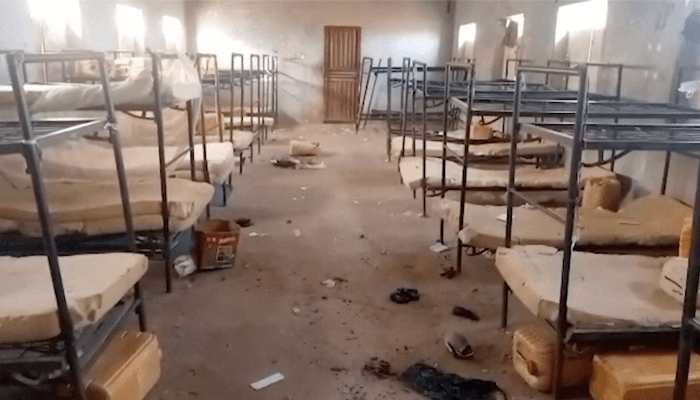
The urgency of the investigation was underscored by the recent attack on Government Comprehensive Girls Secondary School, Maga, in Kebbi State, where gunmen killed the vice principal and reportedly abducted 25 students.
Read also: Of intelligence (mis)handling, abductions, ‘shepherds and hirelings in PDP, et al.
Several senators decried the incident as further evidence that the Safe School Initiative has failed to achieve its objectives.
The debate preceding the formation of the committee gained momentum following additional prayers moved by Adams Oshiomhole, which broadened the scope of the inquiry.
The ad hoc committee is expected to conduct a detailed investigation and submit its report to the Senate within four weeks.