



|
Getting your Trinity Audio player ready...
|
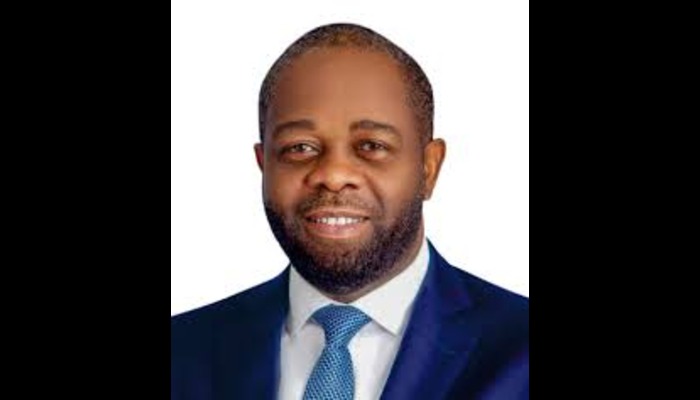
Kelechi Ohiri, the director-general and CEO of the National Health Insurance Authority (NHIA) has cited a global study indicating that over one million Nigerians are pushed into poverty every year due to health-related expenses.
Ohiri lamented this health financing gap, stating that most Nigerians still pay for healthcare out-of-pocket, creating financial fragility.
He noted this during a presentation at the 13th Businessday CEO Forum with the theme: ‘Nigeria: From reform to recovery’.
He argued that the country must see health not merely as a charitable cause or social service, but as an economic lever capable of accelerating growth and industrialisation.

“One catastrophic illness can erase years of progress, plunging families back into financial vulnerability.”
“These persons are your clients, our workforce, our future,” he said.
Ohiri stressed that the health sector, should no longer be viewed as a passive recipient of charity but as a key contributor to national GDP.
Health, he explained, contributes to productivity, drives investment, and stabilises the workforce. For Nigeria to succeed, it must treat healthcare as both a national asset and an economic opportunity.
Read also: Tinubu’s health reforms fail to arrest japa syndrome

Answering the ‘whys’ of health reforms
He raised four pressing questions: Why does Nigeria need health reform? How can the country unlock health and health care as economic assets? What must be done to build momentum for recovery? And finally, how do we sustain progress beyond recovery?
While acknowledging Nigeria’s demographic and economic challenges such as high infant mortality, a low Human Capital Index, and persistent poverty, he also pointed to an opportunity.
Nigeria has a positive working-age to non-working-age population ratio, offering a potential demographic dividend.
However, Ohiri warned that unless infant and child mortality are reduced, the country risks missing this window of opportunity.
Using Indonesia as a comparative model, he explained that in 1980 both countries shared similar demographic profiles. By 2025, Indonesia had shifted towards a more stable, rectangular population structure, signalling improved life expectancy and a larger productive workforce. Nigeria, however, has remained largely stagnant due to continued high mortality.
Read also: Nigeria secures $2.2bn for health sector reforms- Tinubu
How NHIA has contributed to Nigeria’s health reforms
Under NHIA’s leadership, Ohiri noted that health insurance coverage has expanded significantly, with efforts focused on equity, quality care, and market efficiency.
There are programs which now provide free treatment and insurance for women with fistula, and cover emergency obstetric care in over 250 hospitals benefitting thousands.
Also, one per cent of government revenue is allocated to primary healthcare, with half used to insure around 2.7 million poor Nigerians.
The 2023 PIVAC initiative aims to cut the $2 billion annual loss to medical tourism by boosting local treatment, jobs, and investment.
Plans are in place to increase domestic production of medicines and medical devices for future resilience.
Hospital payments rose, capitation by 93 per cent and fee-for-service tariffs by 378 per cent to improve care and attract providers.
NHIA has already achieved 97 per cent of its 2027 target to enrol 20 million Nigerians, with all 36 states running health insurance schemes.





