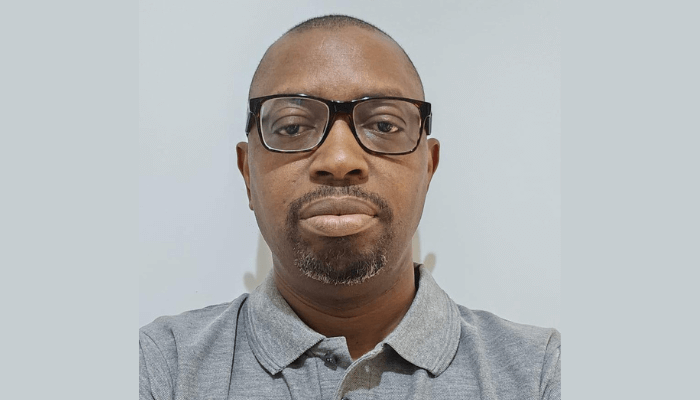
TOPE AYEDUN is the managing director of a UK-based entity that provides technology-driven support services for migrant communities in the UK and other countries of the world and their families back home. In this interview with CHUKA UROKO in Lagos during his brief visit to Nigeria, Ayedun speaks on the company and how it has leveraged technology to offer efficient services, connecting migrants and their loved ones back home seamlessly. He also speaks on the nexus between them and the Fintech industry. Excerpts
Your company has just introduced innovative services, such as gift vouchers and bill payments. How do these new offerings enhance the service experience for both your diaspora customers and their loved ones back home in Nigeria?
Our business is really about impact. I’ll give you a little bit of background on our business. Planet Talk, as a business or as a product, has existed for many years in the UK. We operated back then fully in what we call a low-cost international calling space. So, when a migrant gets into the country, the cost of making calls on the mainstream mobile network operator is pretty high. So, Planet Talk was one of those players that offered a low-cost, let’s call it cheap, way to call back home. And six years ago, we evolved into a mobile application. So, first responding to the issue of technology, we evolved to make the experience seamless.
People can make calls just by going into their hub; they can call any number, anywhere in the world, aside from North Korea, for obvious reasons. But our focus is really on the migrant community. So, we’re a niche player. And proudly, I’m also a migrant. So, the migrant community outside Nigeria are our main customers. Our services are focused on them because they are underserved in their host countries. This is because the host countries don’t take into consideration their needs back home. They separate us as migrants.

These migrants are the ones who download our app. They’re our counterparts, beneficiaries, recipients, or whatever you want to call them. And their family members, loved ones, back home, don’t need to have the app. So, I can call your number from the hub and send an airtime top-up and credit directly to the number.
As I said earlier, our services are not just about profit, but also impact. It’s also about respect for the earning of the migrant community, who have gone over there to look for greener pastures, who are working so hard to make that money, and keep the connection and the support that are still needed back home. Our focus is to ensure that we give them the product and the right propositions that can help them maintain that connection, maintain that support. So, from just offering low-cost calling, we introduce a service where you can send airtime, credit or data to their phone.
There’s a World Bank estimate that puts annual remittances to Nigeria at $24 billion. How does Planet Talk position itself to tap into this substantial flow of funds?
That’s the headline number, $24 billion. But behind that, there’s a back story. What’s happening with that money? What’s the main issue when it comes? That’s where we come in. We’re not a money transfer company. I worked in money transfer for many years. I was one of the global players. We’re not a money transfer company. But we have a full understanding of that back story.
Why do people send money? They send money to support their loved ones and to pay bills. Interesting story about sending money that we’ve also experienced, that we’ve seen over time, that you probably can also connect with is that someone sends money for a particular reason, and that money gets diverted. It’s not used for the purpose it was sent. Someone sends money to be given to their old father, and whoever receives it doesn’t deliver it. So, what we did was to go beyond that headline and ask, Why do they send money? From my experience in remittance, bill payment is one of the reasons people send money.

So we said, okay, why don’t we give people, give the customer the opportunity to just pay for that bill. Pay directly to the service provider. It’s what I call purposeful remittance. You’re not sending money to people to go do it. You just pay the bill.
So why do you send money to someone to then go and pay DSTV and all of that? You just buy the DSTV package you want, and that’s it. It comes alive.
Same way, you pay for electricity directly. They punch in their PIN into their meter. So, we sort of looked at that whole value chain and went in there and said, look, we want to stand where the pinpoint really is.
Research has shown that about 30 percent of remittances are initiated by home-based beneficiaries. Since the recipients don’t interact directly with Planet Talk, how are you ensuring a smooth and efficient process for these beneficiaries when receiving funds?
30 percent is another figure I’m familiar with from my time in money transfer. And it actually just underscores what this whole business is about. It’s a recognition of the migrant community and what it stands for. People migrate because they want a better life. They have a purpose. And everyone arriving in those countries, their suitcase is not just full of clothes and books and all of that. Inside them, they also carry people whom they left behind. We cannot do what we are doing successfully if we do not understand how that connection works.
So, we’ve put ourselves in a position where the beneficiaries are now going to be made more aware of what Planet Talk is. They don’t need to use it, but they’ve got that prescriptive power that is more of an influence on their people to say, Look, don’t send me money. Don’t send me this, right? Does this have core Planet Talk in your market? So, we focus on that, because the 70 percent is our primary focus, but there’s also the 30 percent, because that’s the impact that we’re talking about.
We’re creating some awareness for our proposition with the beneficiaries as well, so that they can influence, prescribe, and recommend us to their loved ones abroad as well to say, you have this in your market, you can use it to do this for me, you can use it to do that for me.
You must have noticed that the FinTech industry is evolving in such a way that it is growing faster than expected. That industry is today valued at over $1.5 billion. With this growth that is happening, how do you intend to leverage it to scale your operations and further enhance your service offerings?
What technology has done generally is to grow the path, spread, and rearrange the value chain. We are now in a position where we strike different partnerships with players on the receiving side. I’ve been privileged to work in the mobile money space in East Africa, across Africa, but predominantly in East Africa, some years ago. At the time, the whole thing was blowing in East Africa. It was not happening in Nigeria. I came to Nigeria in December 202,3 and I still spent some cash.
I started seeing some of these players, and I came again in 2024. The only place I spent cash was at the airport to get a trolley. When I came this time, I paid for roasted corn on the road with a transfer. Everyone now has it. I bought some oranges just yesterday from the guy on the street. I paid through transfer. These are collaborators. We are not competing. These are the guys we will be collaborating with.
You go to India, which is one of our biggest corridors as well, and the same thing is happening. They don’t even send airtime. It’s quite cheap there. But stuff like paying bills and all of that,
We are excited about your observation that many of our people are embracing the digital money transfer. But what technology or innovation are you thinking of adopting to enable you to keep ahead of the competition and also meet customer expectations?
When I take money transfer as an example, there’s a player in Africa that has a platform that’s already connected to so many bank accounts and digital wallets all across the continent. If we want to offer money transfer today, we’ll be looking at that. They’re already connected to all this. But we don’t need to come here to build anything. It’s a partnership. It’s collaboration that we should be thinking about. Our platform today is ready to be able to serve that. What we are seeing with time is on the receiving end, the technology is now evolving so fast that our technology can start connecting with us. We have to remember that technology is not for its own sake. Technology is an enabler. It’s to enable something.