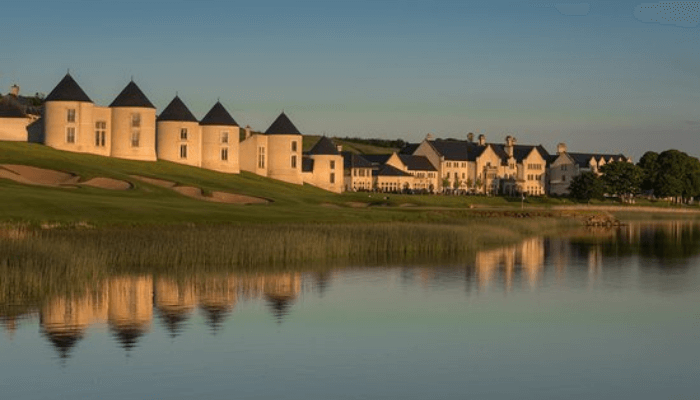
On being asked what one was to make of this month’s G8 Summit in Northern Ireland, one of my wisest advisers commented “It’s show-time”. This is one way of looking at all the ballyhoo that has surrounded the event, for all the attempts to make it look like a serious and historic occasion. It is hard to recall so many sound-bites and photo opportunities piling on top of one another. But should African leaders lend themselves to supporting David Cameron’s attempts to make a sow’s ear look like a silk purse?
Some four years ago this column asked whether the G8 grouping had not become the ‘living dead’. Although when conceived in the 1970s the USA and Canada, plus four European countries (UK, Germany, France and Italy) with Japan, could claim to be ‘the richest’, by the time the 21st Century arrived things were rapidly evolving. The dominance of the super-powers was fading, and the unipolar world of liberal democracies admitted the new non-Communist Russia in 1998 to the grouping. But the “rise of the rest,” especially the emerging countries of Asia, signified a more complex and multi-polar world.
Read also: NIS to repatriate 253 illegal immigrants in Ogun
The crash of 2008 concentrated minds further, for the former richest were in serious economic travail, which still continues. At the same time, the emerging powers formed their own grouping – BRIC (Brazil, Russia, India and China). Russia managed to straddle both, and although Africa still appeared absent from these new centres of power, South Africa, despite relative statistical lightness, was smuggled into the latter to form BRICS. South Africa also managed to secure a position in the newly formed G20 (created like BRIC in 2009), although not really there representing Africa.

Thus, despite Africa’s new economic strength, seen in several years of important continental GDP growth, it has not been reflected in the global economic architecture such as the Western dominated Washington institutions (World Bank and IMF), but also in group summitry. Africa’s position at these arbitrarily created summits was always that of supplicant. It was the same at G20, where African considerations seemed to carry even less weight.
What has been interesting has been the way that the G20, although more balanced and credible as a global phenomenon, has proved more cumbersome and less able to engage in any dramatic reforming actions. So the G8 has survived, despite confident predictions of its demise, demonstrating that once something has been created it proves hard to dismantle, even if there is no bureaucracy attached, which should make abolition relatively easy. Also, because of its annual rotation, it gives a ‘gismo’ to the leader of the country chosen to chair it, offering a sort of pudding-basin into which a lot of notions can be poured and regurgitated as new policies.
Thus, for David Cameron, having the G8 to chair for a year has been a godsend. Having seen how the African agenda Gleneagles G8 Summit of 2005 had helped Tony Blair refurbish a reputation dangerously tarnished by the Iraq War, Cameron picked on issues, the ‘three Ts’ (trade, transparency and tax, that could give the summit an African flavour. Although the trade gambit simply meant launching new EU trade talks (which were going to happen anyway), both transparency and tax meant that the Summit could home in on a vexatious problem that has been of growing importance for some time.
The pre-conference stage management brought to the fore a dossier from Kofi Annan’s organisation Africa Progress Report, which indicated that the secret hoarding of funds in tax havens was costing developing countries, especially in Africa, maybe as much as three trillion dollars. Professor Paul Collier, now it seems one of Cameron’s advisers weighed in with supporting arguments. Cameron hosted an ‘Open for Growth’ session at Lancaster House the Saturday before the Summit, with four African presidents (Ghana, Guinea, Senegal and Tanzania), and British Overseas Territories, many noted as tax havens which duly committed themselves to reform. Other African presidents, plus the Chairperson of the African Union Commission Mrs Nkosazana Zuma were guests at a lunch in Enniskillen to further discuss African issues. But it looks as if once again African leaders are allocated subordinate positions at such summits, as “attendant lords to swell a scene or two,” to paraphrase TS Eliot.
The Summit produced statements of intent in the finely-phrased Lough Erne Declaration which committed all the participants to expressions of disapproval at tax evasion, and to the laudable idea of more transparency. However, as The Times recorded, Cameron said that the declaration had “the potential” to rewrite the rules on tax and transparency, and The Times reporter noted that “should” had been used as opposed to “will” thirteen times. This, alas, resembled other statements emerging from the summit, for example on Syria, offering up bland phrases that everyone could support, concealing continued divisions. But I suppose such encounters were ever thus. Cameron more or less admits this himself in his more candid moments. “Showtime” indeed.

From London, kaye1936@gmail.com