|
Getting your Trinity Audio player ready...
|
Confusions arise, not least in legal adjudication, when there is no distinction made between what happened and the telling of what happened (Seduced by Story, Peter Brooks).
“What reason produces from itself cannot lie concealed, but must be brought to the light by reason itself (The Critique of Pure Reason, Immanuel Kant).”
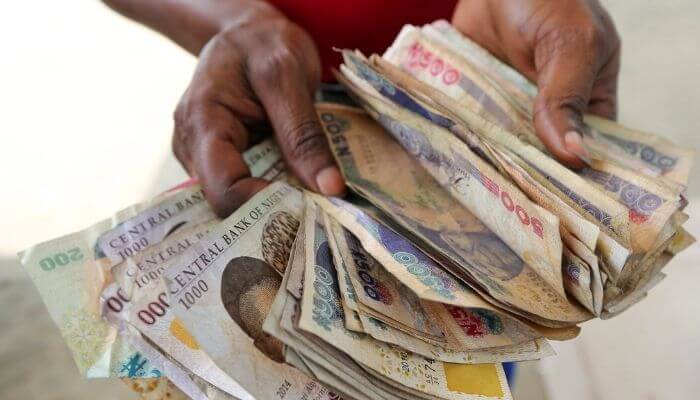
The president should hold the line: Free and fair elections. No compromise. And no, the president did not ignore the Supreme Court by his recent speech affirming that as at February 10th, old N500 and N1,000 banknotes cease to be legal tender. By allowing old N200 banknote to remain legal tender till about mid-April, the president has acted within the powers granted to his office in the Constitution and the Central Bank of Nigeria (CBN) Act.
The Supreme Court cannot halt the executive in its tracks when it is doing what the law and Constitution already grants it powers to do. Stop paying salaries until the court decides a suit by aggrieved workers? Don’t appoint ministers because the loser in the presidential election has brought a suit? Postpone the inauguration till it decides the case? Certainly not.

There is what we call the separation of powers. The executive, legislature and judicature are creations of the Constitution, that is, “We The People.” They are triplets, equal, with clear functions in law. In the government of Nigeria, the judicature is not senior to the executive, nor is the executive subordinate to the judicature under the constitution. It is also important to remind everyone that the Central Bank of Nigeria is an independent body by itself. By law.
While a state governor can make any argument he/she wants about any matter, he/she must still act only within his/her constitutional powers. To do otherwise is treason
This recent disturbance has brought to the fore a lingering great matter about where the lines are to be drawn between the three arms of government. It is also why some lawyers are now seeing the need for a constitutional court. The judicature is an arm of government. It cannot act as the executive, lest every Tom, Dick & Harry will be able to go to the court to holdup governance.
In any case, the Supreme Court cannot rule outside of what is in the CBN Act. All the stakeholders know this. The strategy of the subnational state governors has been to buy time, in my view. None of them believes the president will be overruled by the Supreme Court because the Constitution and the CBN Act are very specific and unambiguous about the exclusive powers of the federal government, the president and the central bank on currency.
Besides, if banks were enthused about the demonetization policy at the outset, there would have been little to no troubles at all. Even so, banks have another opportunity to make the new measures work; N200 banknotes are to be made immediately available, just as the new banknotes will continue to be distributed, with Godwin Emefiele, the central bank governor, putting the potential optimal peak circulation at about N800bn in due course.
I do not believe for a moment that the subnational governors’ angst is really about the people. While a state governor can make any argument he/she wants about any matter, he/she must still act only within his/her constitutional powers. To do otherwise is treason.

Has the president acted within his constitutional powers? Yes. Are the subnational state governors unabashedly undermining the president’s authority acting within their constitutional powers? No. If the state governors’ justification for their treasonable acts is respect for the rule of law, is a violation of the constitution how to respond?
In fact, it could be argued that by these subversive acts, the erring state governors are potentially putting in motion the scenario some of them paint, especially Nasir El-Rufai, the Kaduna state governor, of an interim national government being planned.
A hasty president will then declare a state of emergency in Kaduna, and perhaps elsewhere if a couple of state governors do likewise. Numerous states in emergency become a basis to declare a national one, postponement of elections and perhaps an interim national government. Yes, legislative approval is required. But with chaos everywhere in that event, which legislator will say no in the heat of the moment?
Advisers of the president should simply tell him to ignore the Kaduna state governor. For now. Businesses in the erring states will probably prefer to be shut down than risk losses on the word of state governors. In any case, the people of Kaduna have largely ignored Mr El-Rufai.
Besides, the new measures will suffice for the masses if banks don’t drag their feet again. If the issue is the people, N800bn in new banknotes, in addition to old N200 banknotes, is a reasonable compromise. Some of the northern subnational state governors probably sense an opportunity to succeed Mr. Buhari as the political leader of the north. They have miscalculated if that is the case, as even Mr El-Rufai once acknowledged what a folly it will be to challenge the almost unassailable street credibility Mr Buhari has built during an entire lifetime in the north.
Read also: Peculiar characteristics of 2023 election in Nigeria
Perhaps after reflection, Mr El-Rufai realised he might have erred in his approach, as Mr El-Rufai has now joined with a few state governors to query Mr Buhari at the Supreme Court on what they consider his unconstitutional speech. This is a better approach than the treasonous one Mr El-Rufai earlier adopted.
Even so, the Supreme Court cannot act outside its remit: no one arm of government is subordinate to the other. They are equal. In fact, I think by this recent suit, the court will be forced to acknowledge its own limits as per the separation of powers. In any case, the Supreme Court might actually surprise everyone again by adjourning once more to a period lasting till after the elections.
That way, the focus becomes about the law & Constitution and not the expediency that is motivating all the sides in the dispute. So while initially I was baffled by the slow pace of the Supreme Court on this great matter, I think it wise now that they are not in a hurry.
They know the president has latitude to do as he intends within the ambits of the law. By taking its time, the Supreme Court is ensuring that what have been brought before it are really about interpreting the law and not the usurpation of the executive branch of government. We will know soon enough.