In the 1990s, specifically, 1998, I was opportune to travel to Enugu State. This was while I was seeking admission into University of Nigeria, Nsukka.
Coming all the way from Lagos, I visited my uncle who lived in Nsukka at that time, and the first breakfast I came across in the family and around the community was Okpa.
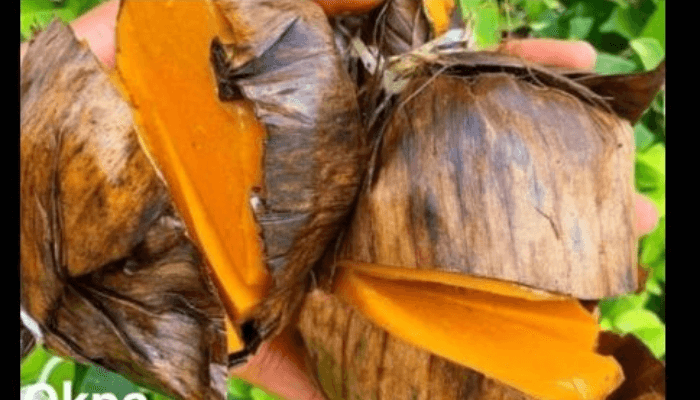
Initially, I was not inspired by the oily yellow and orange looking mould, wrapped in cooked banana leaves. This was because every morning, while they are busy taking Okpa and pap, I just simply looked out for option ‘B’, that is something like bread or any other breakfast.
But because I had to live with them for a month, I reluctantly started eating the beans delicacy after two weeks. Like they say, a taste however convinced me. I became one of the lovers of Okpa till date, but not with pap. The pap combination could not just resonate with me, although this has its own unique taste. Welcome to the world of Okpa.

Tucked away in the lush farmlands of Eastern Nigeria lies a humble but powerful legume, known Okpa, also described as African Breadfruit Seed (Treculia africana).
Locally called Okpa in Igbo, and very popular in Eastern Nigeria, particularly Enugu and Anambra States, Okpa, also well-known and called Afon in Yoruba, and Ize in Edo, is also popular in states such Imo, Abia, Ebonyi, and Cross River, where it is enjoyed as a staple meal. Equally known by other names such as Gurjiya or Kwaruru among the Hausa and Epa-roro in Yoruba regions, Okpa transcends ethnic boundaries, uniting Nigerians through food.
This protein-rich pudding, often called “Bambara nut pudding,” is prepared by mixing bambara nut flour with palm oil, pepper, and seasonings. The mixture is then wrapped in banana or plantain leaves and boiled until it is set. Long story short, this traditional Nigerian food is very popular, tasty and yummy.
Beyond its unique taste and simplicity, Okpa stands out for its high protein content, making it one of Nigeria’s most balanced and wholesome traditional meals. It is often enjoyed warm, served with pap (akamu), garri, or a refreshing cold drink.
For generations, the healthy food, which is also eaten as snack has nourished families, sustained rural economies, and held a revered place in Igbo culinary tradition. As a culinary treasure of the East, Okpa is more than just food, it is a heritage.

Found predominantly in Nigeria’s South-East and parts of the South-South, the food is served in various forms: boiled, roasted, or turned into a hearty porridge known locally as Okpa porridge.
Beyond its taste, Okpa carries cultural significance. Among the Igbo, serving Okpa at festivals, weddings, or family gatherings is a symbol of hospitality, abundance, and unity. In many rural communities, it’s also part of rituals celebrating harvest and fertility, underscoring its deep-rooted connection to the people’s identity and way of life.
Traditionally, the meal is prepared with palm oil, pepper, scent leaves, and dry fish, creating a delicacy rich in both flavour and nostalgia.
As a nutritional powerhouse, Scientists have described Okpa as a “complete food” because of its impressive nutritional profile. According to the Nigerian Institute of Food Science and Technology (NIFST), the African breadfruit is rich in:
• Protein: 14–17% per serving—making it an excellent plant-based alternative to meat.
• Carbohydrates: Provides sustained energy for long working hours, especially in agrarian communities.
• Dietary Fibre: Promotes digestion and prevents constipation.
• Micronutrients: Contains calcium, potassium, magnesium, iron, and vitamins A and C.
• Essential Fatty Acids: Lowers cholesterol and supports heart health.
Unlike many starchy staples, Okpa offers balanced nutrition, helping to combat malnutrition and improve food security. Its natural satiety effect also supports healthy weight management, while its low glycaemic index makes it suitable for diabetics.
The health benefit is beyond the Table. This comes as nutritionists note that regular consumption of Okpa may:
• Strengthen the immune system due to its antioxidant properties.
• Aid in managing hypertension, thanks to its potassium and magnesium content.
• Support muscle and tissue repair through its rich amino acid profile.
• Help detoxify the body by improving liver and kidney function.
In the same vein, traditional healers in some communities also use the seeds and bark for managing ailments such as high blood pressure, ulcers, and arthritis.
In terms of its economic and environmental impact, Okpa farming is a quiet but vital part of rural economies. The tree is drought-resistant and thrives without synthetic fertilizers, making it a sustainable crop. In local markets, Okpa commands a good price, with traders processing, packaging, and selling it across states and even exporting to Nigerian communities abroad.
Entrepreneurs are now exploring Okpa flour, snacks, and breakfast cereals as proof of its commercial viability and potential contribution to Nigeria’s non-oil exports.
Okpa deserves UNESCO recognition
For inclusion on UNESCO’s Intangible Cultural Heritage (ICH) list, an element must represent living traditions, community identity, and knowledge passed down through generations. Okpa fits these criteria perfectly:
1. Cultural Continuity: The preparation and sharing of Okpa embody centuries-old traditions that unite families and preserve oral history.
2. Indigenous Knowledge: The methods of harvesting, dehulling, fermenting, and cooking Okpa reflect local wisdom and sustainability practices.
3. Social Value: Okpa gatherings—whether festive or communal—are moments of bonding and cultural transmission.
4. Economic Empowerment: It sustains livelihoods, especially for rural women and local food processors.
5. Food Heritage Preservation: As global food systems lean toward monocultures, preserving Okpa safeguards biodiversity and promotes Africa’s contribution to the world’s culinary diversity.
As conversations grow around safeguarding Nigeria’s culinary heritage, food experts say Okpa’s deep cultural roots, nutritional value, and sustainable preparation make it a strong candidate for inclusion on UNESCO’s Intangible Cultural Heritage list, alongside other iconic dishes that tell the Nigerian food story. This oily snack is an indigenous food and its cultural preservation is also gaining a global momentum.
A beloved Nigerian delicacy, Bambara nuts, is fast emerging as both a cultural symbol and a nutritional powerhouse and Okpa as a nutritious and wholesome meal, can be eaten on its own or with pap (akamu) or garri as a generational delicacy.
From Pot to Heritage, this conversation remains a global narrative. As Nigeria continues to push for its traditional foods to gain global recognition, like Jollof Rice, Egusi, Banga, Ewedu Soup, Suya, and others, Okpa stands out as a candidate that blends nutritional excellence with deep cultural symbolism.
Its inclusion on the UNESCO Intangible Cultural Heritage list would not only honour the generations who have preserved it but also position Nigeria as a leader in promoting indigenous food heritage and sustainable nutrition on the global stage.
This is because, Okpa is proudly more than a meal, it is a story of roots, resilience, and rich tradition. This is the best time for the world to hear about its uniqueness.
Let’s visit the kitchen…
Recipe for 3 servings
– 500g Okpa flour (Bambara nut flour)
– 100ml palm oil
– 1 medium-sized onion (finely chopped)
– 5 fresh peppers chopped or sliced
– Salt and seasoning to taste
– Lukewarm water
Method
1. Mix the Okpa flour and palm oil until well combined.
2. Add the chopped onion, pepper, salt and seasoning to taste.
3. Gradually add the lukewarm water to achieve a desired consistency.
4. Wrap the meal in fresh banana or plantain leaves and steam for 45 minutes until it is set.
5. Remove from heat and serve warm.