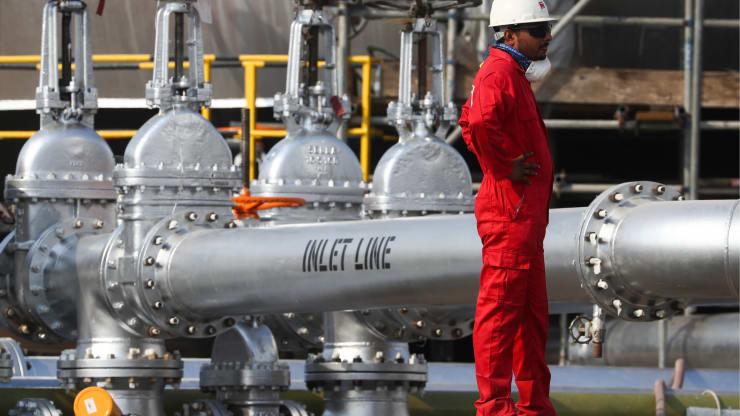
Oil price spiked on Monday after Saudi Arabia announced an additional 1 million barrels oil-production cut to slash output to the lowest in 18 years in an effort to ease a global supply glut that has ravaged prices this year.
Beginning on June 1, the Kingdom will cut output by an additional 1 million bpd which, combined with the cuts agreed to by OPEC and its oil-producing allies, brings Saudi Arabia’s total cut to roughly 4.8 million bpd below its April record production level. Production for June will now be 7.492 million bpd.
“We have to be ahead of the curve,” Saudi Oil Minister Prince Abdulaziz bin Salman told Bloomberg News on a phone interview on Monday. “The voluntary cuts will further expedite the re-balancing process.”
Saudi Arabia also said that it would scale back May production “in consent with its customers”.
“The Kingdom aims through this additional cut to encourage OPEC+ participants, as well as other producing countries, to comply with the production cuts they have committed to, and to provide additional voluntary cuts, in an effort to support the stability of global oil markets,” a statement from the Saudi press agency said.

Kuwait joined Saudi Arabia on Monday in announcing fresh oil production cuts to be implemented in June, state news agency KUNA reported, citing Oil Minister Khaled al-Fadhel.
Kuwait will slash production by 80,000 barrels per day in June, on top of the cuts already agreed under a pact by the OPEC+ group of major oil producing countries, the agency reported al-Fadhel as saying.
The United Arab Emirates has also committed to an additional cut of 100,000 barrels per day in June, according to a tweet from Amena Bakr, deputy bureau chief at Energy Intelligence.
Brent crude oil, the international standard, was up 0.19 percent at $31.03 a barrel while West Texas Intermediate crude oil, the US benchmark, was higher by 2.10 percent at $25.26.
Both benchmarks have notched up gains over the past two weeks as countries have eased business and social lockdowns imposed to cope with the coronavirus and fuel demand has rebounded modestly.
But possible signs of a second wave of coronavirus infections in northeast China and South Korea worried investors even as more countries started to pivot towards easing pandemic restrictions in moves that could support oil demand.
The lockdown measures tied to COVID-19 “still remain in place in many regions, which implies that demand remains soft for crude”, said Fawad Razaqzada, market analyst at ThinkMarkets. Still, “production cuts are going to be supporting prices in the long-term when demand concerns are no longer a threat”.

Goldman Sachs analysts said there was still concern that demand will stay weak in 2021, with worries about a second wave of COVID-19 cases and only a modest increase in personal or corporate travel.
Global oil demand has plummeted by about 30 percent as the coronavirus pandemic curtailed movement across the world, building up inventories globally.
Nigeria, Africa’s biggest oil-producing country, relies on oil for about two-thirds of government revenue and more than 90 percent of foreign currency income. The pandemic and the collapse of oil prices risk plunging the West African nation into its second recession in four years.
Nigeria and some of the world’s largest producers last month agreed to historic output cuts that would reduce global production by about 20 million barrels per day.
The cuts are aimed at restoring supply and demand imbalances exacerbated by the COVID-19 pandemic and the price war between Russia and Saudi Arabia, which have caused prices to fall by 59 percent this year.