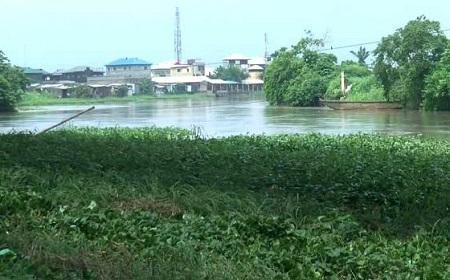
On the 18th of June 2016, at the Ogun river near Kara cattle market, there was the appearance of a thick mass of floating aquatic vegetation dominated by the invasive water weed called- water hyacinth (Eichhioniacrassipes). This incidence obviously surprised the residents, traders and passers-bys at the Kara market area. Some called it a strange and mysterious occurrence that has never happen before. Others said that it was a serious sign from the gods, that the Ogun river at Kara would suddenly become a dry land. Let’s look at some key factors of the event.
The Ogun river is a major water course and drains through three states of Nigeria (Oyo, Ogun and Lagos) via the Lagos lagoon to the Atlantic Ocean. Throughout its length, the Ogun river is connected to tributaries, reservoirs and reserved areas, dams, national park, other rivers and rivulets across the three states. The river passes through densely populated areas and it is used for bathing, washing and drinking, a water source for many concerns including a water board. It also serves as recipient of an array of waste types from some small and medium scale industries, food and livestock markets and even an abattoir. All these are located and drain their effluents and waste streams into the river course. Since a river or lagoon is the lowest point in any vicinity. The river is important religio-culturally and historically for transportation, trading, navigation, fishing, among others. The river originates around Saki, in Saki east local government area of Oyo state.
On the other hand, Water hyacinth is an aquatic plant originally known to the Amazon basin, and often considered a highly problematic and invasive species outside its native range. It lives and reproduces freely in freshwater ecosystems and entered Nigeria via the Lagos lagoon system through the Badagry and Porto-Novo creeks from neighbouring Republic of Benin in September, 1984. In addition, it is a biological invader, widespread and can alter population dynamics and community structure of native ecosystems. It is also able to grow over a wide variety of wetland types from lakes, pond, stream waterways, ditches and backwaters. It is a very fast growing plant and can constitute an environmental nuisance because it can destroy native wetland and waterways, degrade water quality and alternative plant and animal communities, killing native fish and other wildlife. Water hyacinth usually serves as microhabitat for a variety of disease vectors even for humans and known to cause blockage of drainages, navigation, increase in breeding of mosquitoes and snails while interfering with fishing activities.
The worrying question is this, why did the Ogun river dry out at the Kara area. The occurrence at Kara cattle and ram market was simply a large blockage of the river course from a massive flow downstream of a community of water hyacinth that have been dislodged upstream by floodwaters induced by increased rainfall volumes. This huge mass of floating vegetation were contributed by the many fresh water tributaries and connecting rivers. These waterways have been increasing polluted with nutrients from domestic and market waste discharges that has largely encourages the strong growth of the weed in the immediate past dry season. Water hyacinth is renowned to thrive well with corresponding high levels of nutrients. Additionally, wastes and debris from the cattle market, abattoirs and from the region, that have been continually dumped into the water channel over the years, have led to increasing obstructions and the reduction of free flow for the river at this point. The upstream pressure from the rainfall induced floodwaters, flowing by gravity compressed the blocked floating vegetation gradually over twenty four hours or so. Making a very thick mat at Kara that accumulated from the day before as noticed by some observant residents. The water hyacinth plant grows associated with other plants such as other aquatic macrophytes, including grasses, water lettuce, duck weed, etc. These plants have air pockets to aid survival by floatation. Compression of these weeds, will give a strong adhesive and abrasive force, hence, allowing people to “seemingly walk” on it. But this is very dangerous. The river course is still alive and active. People are able to walk on the weed mass because of the force of water from upstream compressing and pushing it tightly downstream. This “push”, will eventually “win” if not cleared. And the blockage will give way.

The bottom line is this. We must begin to take the environment more seriously by effective and continuous environmental education to the people and reduce waste and indiscriminate discharges. We can all make the world a better place to live in. It begins with us.
Charles Onyema