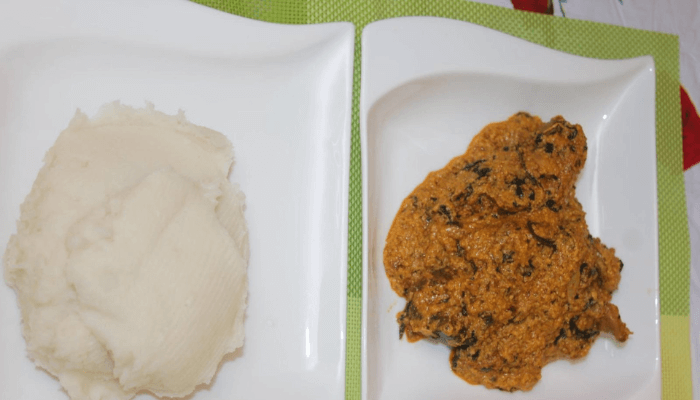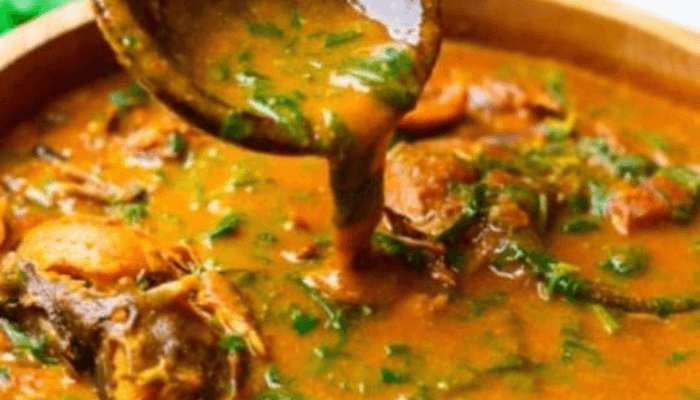
Ogbono is a unity soup. It is a household name that has the cultural aroma of a solid traditional soup. Across Nigeria, few foods speak as fluently to memory, identity, and community as Ogbono soup.
This unique draw or slimmy soup is always thick, aromatic, and deeply comforting, not just as a cultural easy – to prepare meal, but also as a cultural language shared across the Nigerian ethnic groups, communities, generations, kitchens, and regions.
From family compounds in the East and South to bustling urban homes across the North, ogbono carries stories of origin, adaptation, and belonging.
These qualities make a compelling case for its inscription on UNESCO’s Intangible Cultural Heritage (ICH) List.

First, as a living tradition rooted in mature, Ogbono is derived from the seeds of the African bush mango (Irvingia gabonensis). This is a forest fruit harvested, dried, cracked, and milled using indigenous knowledge passed down through families. This process is often communal and it clearly reflects sustainable relationships with the environment and seasonal rhythms.
The soup’s signature draw (elastic texture) is not accidental, it is the result of precise techniques honed over time, showcasing culinary science embedded in tradition.
One of ogbono’s greatest strengths is its adaptability and its cultural diversity. Preparation varies by region and household. Some regions enrich Ogbono soup with plenty of palm oil and assorted meats, while others with seafood.
Others are comfortable using assorted vegetables like scent leaves, ugu, utazi, bitterleaves, okra, or uziza. These variations are not departures from authenticity, they are the originality, adaptability and authenticity of the Ogbono soup. They demonstrate how a shared heritage evolves while preserving its core identity and this is exactly the kind of living, dynamic practice UNESCO seeks to protect.
Ogbono is woven into social life of so many Nigerians and others who relish the soup. It is easily prepared with any swallow to go with it as an everyday family meal and it appears at cultural events, naming ceremonies, communal feasts, and other occasions.

The act of cooking and stirring the soup to patiently achieve the perfect consistency, and use of the right salt and seasoning by instinct rather than measurement, all help to create spaces for storytelling and teaching. Elderly women, particularly, pass on the methods while younger cooks learn not just how to cook. In many homes, ogbono is a taste of comfort, continuity, and care.
Beyond Nigeria’s borders, and in the spirit of diaspora identity and global reach, ogbono has become a culinary anchor for the African diaspora. Prepared in London, Scotland, Ireland, Houston, Toronto, and Johannesburg, it connects migrants to home and introduces global audiences to Nigerian and African foodways. This transnational presence strengthens the case for recognition, underscoring ogbono’s role in cultural transmission across borders.
UNESCO recognition of Ogbono soup would help safeguard traditional knowledge from seed processing to cooking techniques, while promoting sustainable harvesting of bush mango. This would also support rural livelihoods, particularly women who dominate processing and trade, and encourage documentation, education, and intergenerational transfer.
Ogbono is a heritage worth protecting, more so as UNESCO’s Intangible Cultural Heritage List celebrates practices that foster identity, continuity, and respect for cultural diversity. Ogbono meets and exceeds these criteria. It is a living tradition that binds people to place, past to present, and home to the world. Adding ogbono to the ICH List would not only honour a beloved Nigerian dish, it would affirm the value of African culinary heritage as a vital expression of humanity’s shared culture. Ogbono is a cultural and community soup that is usually served warm, stirred with patience, and shared with love.
Let’s visit the kitchen…
Recipe for 6 servings:
1 cup ogbono (ground)
4 tablespoons ground crayfish
3 dry or fresh Cameroun pepper (ground)
2 large dry fish (cleaned)
1 large chunk stockfish (cleaned)
1 cup periwinkles (isam)[optional]
1-kilogram assorted meat
1 cooking spoon palm oil
Salt and seasoning to taste
Sizeable Ugu or Uziza Vegetables[shredded]
Method:
• Wash, cut and season the meat.
• Bring to boil, adding salt and seasoning to taste.
• Cook until tender.
• Wash and add the cleaned fish and stockfish as well and cook until all are well cooked.
• Add the crayfish and isam.
• There are two methods of adding the ogbono. Either you pour the ogbono into a small bowl, add the palm oil to the bowl and stir for some seconds.
• Add to the pot and do not stir. Uncover the pot until the soup thickens.
• Or fry the ogbono in either a sauce pan or deep pot for a few seconds, add the stock gradually and the pepper.
• Stir and add other remaining ingredients.
• In few minutes, the soup is set.
• Add the shredded vegetables as the last ingredients.
• Remove from heat and serve with any swallow of your choice. But usually eba is always the best bet!