|
Getting your Trinity Audio player ready...
|
When Odu’a Investment Company was established 44 years ago, an ambition was for it to be an ‘Octopus’ in size, and in the early years it was close to this. Several years later, the company has gone from full, majority or significant shareholding in companies such as Wema Bank, National Bank, Great Nigeria Insurance, Nigerian Wire and Cable, Cocoa Industries limited, Guinness, Nigerian Textile Mill, and then West African Portland Cement (WAPCO), which is now LaFarge Africa, to in some cases, as little as 4 percent.
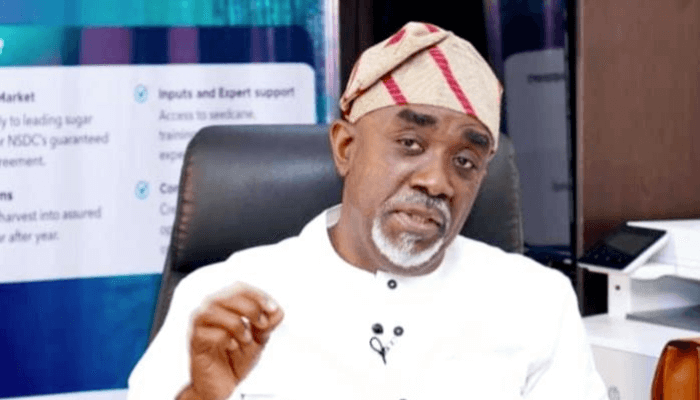
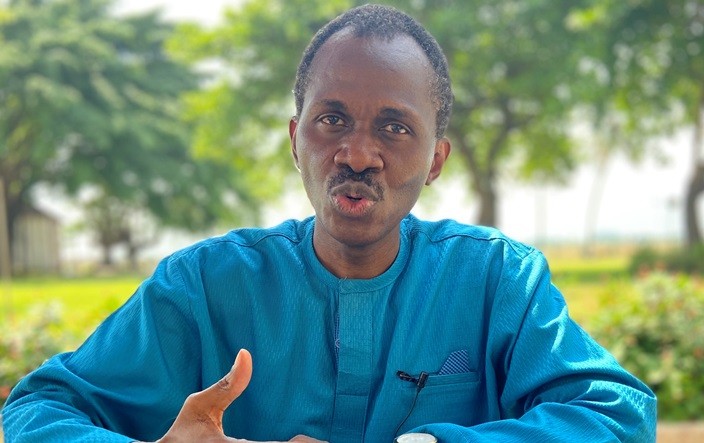
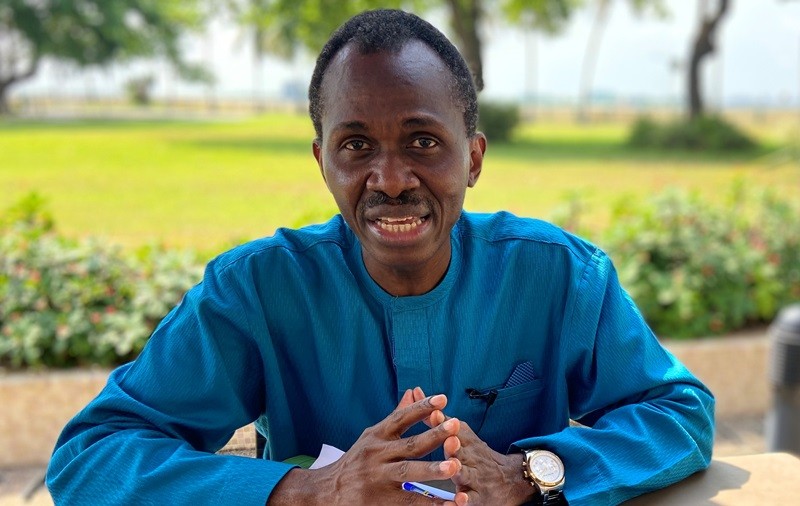
ADEWALE RAJI, Group Managing Director/CEO of Odu’a Investment Company Limited in this interview with CALEB OJEWALE, answers some probing questions on how and why the company descended from its glory days. He also revealed efforts and strategies to return the company to winning ways, the best performing portfolios, new markets and emerging opportunities for investment. Excerpts:
You were first appointed to this position in 2014, and got it renewed for a second tenure last year. Having been at the helm of affairs for six years now, how has the journey been so far?
Coming from a multinational environment, I would say that for the organization called Odu’a group, it was a completely new experience for me in the sense that the responsibility of the chief executive and the expectations of the chief executive are not exactly 100 percent the way we know it in the private sector.

The private sector is about creating shareholders value and enhancing shareholders value in a sustainable manner. Coming into Odu’a, I found out that creating shareholder value and enhancing the business were downplayed. However, I came in with a clear mandate from the Shareholders to restore Odu’a Investment to the company that once provided all the finances for the various social welfare programs from health to education, roads and other infrastructural development by the then Western region government.
That expectation was quite clear from the Shareholders. Unfortunately the structure on the ground in terms of the board, the management and staff was not geared along that line. Therefore, what the experience has been is that I have had to literally transit the organization back on its focus to be a business that must be delivering value. Value for shareholders and also stakeholders and that process of trying to redirect the focus of the organization literally met with a lot of opposition. That was a major hallmark of my first tenure; making sure that we can move the organization back to the focus of being a business and trying to ensure also that the foundations and institutions that will make it sustainable are put in place.
It slowed us down tremendously, but I think at the end of the day we have to give glory to God that gave us support of a lot of stakeholders. Just as there was a set of people pulling it down, there were others giving physical and moral support to ensure we succeeded in the direction we want to take the organization; to be a sovereign wealth fund and generating income for the owners.
We then managed to put in some foundations and engaged shareholders to buy into our ideas, which also recognized what I see to be the bane of the organization not making progress; governance. The organization did not make desired progress because governance structure was very weak in terms of the role expected of shareholders, the board and management. Everyone did not play according to the rules.
Has that changed now?

Yes, I would say in the past one and half year in particular, we have had the opportunity of reforming and that was when the shareholders actually bought into conducting a governance study and reform for the organization. KPMG advisory services was engaged in June 2019 to look at the organisation thoroughly and this led to a lot of recommendations to enhance governance, to make sure that business facing people are the ones appointed because there a set of criteria for people to be appointed to the board. The duties of shareholders, directors and management were clearly set out in documentation. In addition to it was securing the appointments of people coming on the board. It is now in the code that people are appointed for secured, sacrosanct terms.
In addition there is now a provision for Independent Directors to join the board, not necessarily because they are nominated by the shareholders but just to balance the diversity of the board. We now have two independent directors as part of the board to balance the diversity in terms of knowledge, gender and experience.
The third Leg of that exercise is to reinforce management to make sure that there is capability in management. Whereas in my previous six years I was the only executive director on the board, now, we have appointed two executive directors as group executive directors. One in charge of Finance, our Chief Financial Officer, and one in charge of investment because we are an investment company, called, Chief Investment and Business Development officer. The process was very competitive so we attracted real talent and we got shareholders to ratify the appointments.
Odu’a now has an executive board of three Group Executive Directors working with six Non Executive Directors and two Independent Non-Executive-Directors. Therefore, even the board has greater capacity and capability than it used to be and because these are all now entrenched in the corporate governance reform document passed by the board and ratified by shareholders; it becomes the basis for the company going forward.
When you came on board what specific goals did you set out to achieve and how much of those have you achieved?
At the tail end of 2014 we got all our directors, management staff at the group head office and all managing directors of our subsidiaries into a strategy retreat, which produced a document named our five-year strategic plan 2015-2019. We studied Dangote and UAC as models in Nigeria, and overseas, we studied Mubadala in UAE, and Temasek of Singapore.
The report was submitted to the board, which in approving it said this was going to be a roadmap for five years. When execution was to commence, that was where unfortunately I suddenly realized that we were in a different world. In 2015 after this (roadmap) was approved, we suddenly realized that even the conversations and decisions the board were taking are contrary to this document.
To give a typical example. In that document, it recognized that our hospitality business was contributing N1.5billion as annual revenue to the group. We set a target that in five years by 2019, we were going to get our hospitality business to contribute as much as N7.2 billion revenue in a year. We further identified how this was going to be done.
We also realized that we did not have the needed capital to redevelop those entities to become world-class in structure, services, ambience etc and we agreed to do strategic partnerships. This was to lead to dilutions of ownership and we were ready to concede majority shareholding to overcome these shortcomings identified in taking Premier hotel, Ibadan and Airport Hotel Lagos to the next level.
We also agreed that in those five years, we would create two new hotels that will be contributing N4billion revenue per annum and this other two we were trying to transform will double revenue from N1.5billion to N3 billion and that’s how we came about N7.2billion. That was the plan in the strategy document and we started discussing how to go about achieving it. However, it became clear that the board that I met (and inherited) had other plans that completely repudiated what we have. The plan was to lease out the hotel and collect ridiculous annual rent.
One (of the hotels) was going to be leased out for N100million a year, and the question is; we projected a revenue for five years of N7.2billion and you want to start collecting rent, where will it get you? At that point, I as group managing director became a lone voice as I opposed it. I had to fight it by getting support of shareholders who stopped that transaction but that created a lot of trouble for me because having subverted that misadventure, which saved shareholders and stakeholders alike a very inglorious situation, I got myself exposed and thereafter there was nothing else that I was putting on the table that was right. It became like the board and management were at daggers drawn.
In all of these we did not grow revenue because the initiatives being put forward were being treated as coming from a persona non grata because of the actions I took towards the hotels. However, I kept my focus on running the company efficiently to the best of my ability and that probably was one thing that earned me a second tenure. What we did was to focus on the organization and try to put in the dynamics of private sector running. Even though Revenue was not growing significantly – because we couldn’t get through new initiatives – on account of efficiency of operation, watching our cost and blocking leakages and loopholes in the system, in those five years we were able to get holding company profitability of N378million that I inherited for the end of 2013, to N849million by the end of 2018. That was 124 percent increase in profitability in five years. At the group level, I inherited N495 million as group PBT at end of 2013, which we were able to take to N1.061 billion at the end of 2018 amounting to 114 percent growth in profitability despite a situation that we could not grow the Top Line significantly.
Because we were able to do this, we were then able to pay dividend to our shareholders and I would mention that the first time we paid dividends which was in 2015 for 2014 year, was the first time that dividend was being paid in 7 years. That dividend became an annual ritual that in those five year, we paid a total of N1.2billion as dividend compared to the previous seven years where zero naira was paid. This has made our shareholders have more interest in us and making us drive the mandate from our shareholders, which is quite clear; Odu’a group should be the engine room for the economic development of the Southwest. In so doing, it is essentially to lift the economy of the southwest and those are the strategies we are now trying to pursue.
Your time in charge has coincided with the two recent economic recessions in Nigeria, how has it been navigating through the economic turmoil?
The diversity of our portfolio has assisted us because we are not a mono sector entity and it meant that we have managed to balance the ups and downs. For example, the recent one, which relates to COVID has battered our hospitality business terribly. We have managed on real estate but hospitality has really been in bad shape. However, there are other essential parts of the economy, which have not suffered the shock of recession or COVID-19 as we currently have it now. We are lucky that because of the balance of our portfolio we are able to manage this and I can readily say that the construction sector of our portfolio is one area which has not been affected by recession.
In your experience over the years, which has been the best performing portfolio?
Construction has done very well, and that has to do with the state of our infrastructure in Nigeria. If you take a look at Nigeria today, one of the latest developments is construction of roads with concrete, at a time when the established capacity in the country remains the same so we can interpret that to mean that there’s a new market. It is a completely new market, a new demand for cement and we also happen to have investments in Lafarge.
When the company was set up, I saw on your website that the ambition was for the company to be an octopus, probably only second in size to the UAC group of companies. How has the company fared in achieving that ambition that was set 44 years ago?
We cannot compare ourselves to UAC today. At the beginning, we had very strong presence in a lot of sectors. Today, that strength is no longer there. At the beginning, we were 100 percent owners of National Bank; more than 70 percent owners of Wema Bank; 100 percent owners of Great Nigeria Insurance and others. We were also 60 percent owners of Nigerian Wire and Cable; 100 percent owners of Cocoa Industries limited. We were significant shareholders in Guinness, Nigerian Textile Mill, and then West African Portland Cement (WAPCO), which is LaFarge Africa today.
The organization did not make desired progress because governance structure was very weak in terms of the role expected of shareholders, the board and management.
The first time we paid dividends, which was in 2015 for 2014 year, was the first time that dividend was being paid in 7 years. That dividend became an annual ritual
We are not only ensuring food security, but also physical security by turning forests housing criminals to farms
Odua group should be the engine room for the economic development of the Southwest. In so doing, it is essentially to lift the economy of the southwest and those are the strategies we are now trying to pursue
Today, there are limited entities where we are significant shareholders. So, if that was the foundation and the vision of our forebears that we are going to grow along that line, why have we not grown? Deficiency of governance, one in which we made the mistake of treating the organization like another government parastatal or entity, a rent-seeking notion. Most of these investments have withered away and even where we have holdings, it is minority holdings. That is what we are trying to recreate under a new strategy. In essence, trying to bring about the WNDC DNA, because WNDC created everything I am talking to you about. Today, we know that when it comes to business, it has to be private sector tenets, best practices and governance that make them grow.
I also saw that you have a strategic investment focus that includes things like oil and gas upstream, aviation, agriculture, manufacturing, product and brand marketing, infrastructure, power generation. I would like you to just touch on each one of them.
Starting with agriculture, (our) Tomato cultivation has witnessed a lot of challenges. The essence was not just to be a subsistence vegetable farm. If you do not process, agric is not sustainable. We have had to shift the focus to cassava; cassava to industrial starch and to high-quality cassava flour. This is because scaling up became a problem for us. With the kind of problem we were facing, it looked as though we would need an army of men and women on that farm to ever scale up. As we stand today, this farm has cleared about 560 hectares and as at the end of November, we had planted 218 hectares of cassava. This farm is going to 1200 hectares.
The second one is how it is going to be sustainable. If you do not process, there will not be sustainability. The reason for this is that there is a commitment for this, courtesy of our ownership, that we must be a thriving and sustainable business, profitable to shareholders, but there must be social impact. For our shareholders, the easiest way to deliver social and economic impact is in activities like this where, with partners, we are able to locate ourselves in ventures that create impact through the scale of agriculture that we do, and the actual processing on site. The design of this project is that we will cultivate 1200 hectares of cassava, on the basis that we are cultivating 100 hectares per month. In a cycle of 11 or 12 months, as they are maturing they feed the processing facility, which is a modular facility of 50 tons tuber consumption per day for industrial starch processing, 50 tons also for high-quality cassava flour. As the output for one month is being processed, the second month is already maturing. At the same time, the harvested portion is being replanted, which means we do 300 days production on the site. That is how we are going to impact that place, because the tractor operator is not just a driver but a skilled operator. We have three tractors on that site as we speak now. Between two and three bulldozers are working every day, continuously clearing. As they are clearing, the land preparation is being done. We are doing the cultivation manually just to make sure that we can have locals employed, with over 100 currently engaged. With our shareholders, we have created this company called South West Agric Company limited (SWAGCO). It’s an agric investment company, so it’s core responsibility is to access and mobilize funds and then take a position to start investing across the value chain; food crops, cash crops, livestock, as well as processing. They will do it with partners because they will not operate any farm themselves. This is because, when you operate one farm, you get stuck with management. However, if you are an investor and you have both funds and land – which we are lucky to have combined 40,000 hectares across five states of the South West – and we know that when we transform them, we can get more land from our owners. Through our work in each state, we are creating knowledge such that in the future, all the workers will become potential outgrowers. What we are installing, in terms of processing, is 100 tons a day. What stops up from doubling the land? If we are going to double it, we should not go and do that again, rather we should now empower and engage outgrowers. Help them with clearing, stems and other input while they operate the farm and we guarantee buying from them. At the point of buying, we will discount all the inputs and extensions granted to them, and that is how we can create entrepreneurs at this level.
We recognize our limitations with governance, that is why we must not get stuck with operating. We are going to drive this with technology. It is our way of trying to bring development to our rural areas. In so doing, we are not only ensuring food security, but also physical security by turning forests housing criminals to farms. SWAGCO will have its own board, empowered with takeoff funds, and we are going to pass on all our land to them, and they will do all that I have just mentioned.
The strategy will also be replicated in other sectors. I earlier mentioned our stakes in some financial institutions where today we are only about 4 percent shareholders of Wema Bank (from 70 percent); we have 9 percent in the Great Nigeria Insurance from 100 percent. Regrettably, we cannot really point to what we exchanged (for the shares), because it was a legacy of how we have undermined those businesses notably through underperforming loans we had recommended. So, we are looking at multiple sectors. Energy is something that is very serious, just like we are looking at Healthcare and Pharmaceuticals.
How are we going to insulate ourselves from the impact of recession? Healthcare does not know recession. Healthcare also has a very rare privilege, from a pricing point of view. Nobody would start bargaining with you in a chemist shop on the price to sell paracetamol. What that means is that people need it because they want to be healthy, just like food, which is part of the insulation. The second element is that it is an area where you have an opportunity to make good margins. Courtesy of our ownership, if we do a strategic partnership and we set up a pharmaceutical production company, we can be sure that the hospitals are one side to patronize, other than the generality. If our owners are the ones who own hospitals, there is a guaranteed market. At least, we have a guaranteed market for 40 percent of the output.
Energy; oil and gas, is a major area. We are looking at energy within the context of upstream oil and gas, as well as renewable energy, because we have a lot of rural settings, and one of the reasons given for rural-urban migration is that people consider that life is more abundant in terms of access to facilities in the urban centres, starting from electricity. The moment you can make this available, maybe through renewables and not requiring connecting them to the national grid. Renewable energy is a very important part of the company. And, of course, now that we are talking about climate consciousness and green energy, etc.
We also need to know that oil is not going to disappear overnight. What do we need to do? Today, the easiest way to generate electricity, at scale, is through gas-powered electricity. So, where are the gas pipelines? An investment in gas pipelines, for example, from Sagamu to Ibadan, should be something that Odu’a is promoting with partners. When we talk about energy, gas pipeline to Ibadan means that industrialization can be accelerated in Oyo State, from there we can think of how do we get to Osogbo? If we do that successfully, we can then think of how we can get a gas pipeline from Ore into Ondo State and into Ekiti. Once the gas pipelines are available, you can then have power stations that can serve the whole area, and dependence on the national grid could be a thing of the past.
As a conglomerate that anticipates itself to start operating at the level of a sovereign wealth fund, there has to be areas where we have access to foreign denomination currency in the earnings. In Nigeria, the guys who have both portfolio of local and foreign currency are better off. So, in our business, we look along that line. It is important also that part of our component should be in foreign currency to hedge, and we have taken oil and gas for that area. We are showing interest in being able to acquire a marginal field and we are believing that these are things that we can do with technically sound and financially capable partners, so we want to run a joint venture where Odu’a’s presence will be more significant than it is today. We have a very smallholding in Niger Delta Exploration and Production Company, but we want to get to a level where we are a co-promoter of an exploration and production company.
What does Odu’a typically look out for in a prospective company?
If I tell you what we have used in the past, then, typically, what you will ask is why has the portfolio not grown? You will find out that the lens we have used in the past has been a discoloured lens that is why it has not been very sound otherwise, we should have grown portfolio and not have diminishing returns. Profitability has been the core one written down; second one is the impact on our people. The perspective was to provide the basic necessities of man; food, clothing and shelter and our investments at the beginning reflected this operations in different food processing companies. The impact on our people was very important, and making money was the other one. Today, it is different. As we identified and resolved the governance issue, it also means that we need to put in what we can call the building blocks to sustain the business, which will outlive the creators of these new innovations that we are bringing to the business. If I’m not here in five years time, what are they going to be doing? What we expect them to be doing is that through the foundation that has been laid, they are going to revive their strategy. There may be sectors that they want to get out of and others that they want to get into. There is an investment framework and strategy policy that is underway, courtesy of recruiting the Chief Investment and Business Development Officer, such that we can identify areas we will be investing in, in terms of well codified sectors.
The second one is; what are you looking for in those investments? What should be your entry and exit point? If you say once you do X number of years and attain this kind of turnover, you must exit, so be it. But, you should make sure that it is already documented and approved. It is not about how people are feeling, because when we went into telecoms, a lot of the money came from selling our holdings in Lafarge Africa, which diminished our stake in the company. At the end of the day, we crashed in the telecoms we went into. Creating a robust investment policy and the discipline of executing it was absent. That is what the current board and management is trying to create.
Are there any recent investments from the last one year?
We had significant investments. SWAGCO was one. We also increased our holding in Lafarge by over half a billion naira, in the last six months.
Can we get a peek into what your next investment portfolio investment is likely to be?
What I can say at the moment is that the strategy session was in September this year. The board ratified in October. I can give you a glimpse on what we are looking at. I cannot confirm to you what the first one is going to be but I will give you an idea of new areas that we have decided to enter.
Because we are looking at the future and want to be of interest to our youth population, we are looking into digital and Fintech (solutions). Don’t be surprised if we start taking positions at incubation centres. We want to make sure that the framework for decision making is well articulated and documented.
We have seen what Covid-19 has done to us whereby we were demobilized, but we never stopped eating or attending to our health needs. This means that we have to deepen our presence in agriculture. Healthcare and pharmaceuticals also come top notch. We have seen, during the Covid era, how logistics, distribution and e-commerce have become frontal. That has become an area of solid interest to us, and this is different from the existing portfolios like real estate and hospitality. This area of technology and innovation that interests the young generation are areas where you are able to come up with very good and decent returns. Those areas have become of interest to us and we are going to be pursuing them accordingly.
Taking a five-year forward-looking approach, which sector of the economy would you be placing your biggest bet and why?
Looking at our ownership and responsibility to the southwest, it will be agric and agric value chain, where we have sustainable returns on it, opportunities for exports, foreign exchange, job creation, food security, and physical security. I will say Agric because this is extremely important, especially in this situation where Nigeria finds itself, on outflow of our expenditure on buying what we need to feed, we actually need to overcome it and make sure that other areas are sorted out. Our expectation is to create sustainable millionaires in this process, who would work with us and then go on their own to establish and do well. IGR is one thing I cannot fail to stress, because once you create these businesses, and they are creating value, in terms of what you produce and sell, people are employed. You are having amenities coming to areas that used to be thick forests, which now become areas that are creating wealth for you.
What lessons can other regions learn in terms of economic integration in the South West as embodied by Odu’a group?
Taking it within the context of Nigeria, one way to purge ourselves of the Dutch disease syndrome where we are dependent on natural resources is to think of how we are going to create value. In that value that we create, majority belongs to us. From our integration point of view, I would say the benefit of Odu’a is that you have a large segment that has a sentimental disposition and concedes certain rights to you. For example, in the agricultural farms and our relationship with the communities, there is a sense of ownership by people that what is Odu’a’s is their own. For an investor in Nigeria, in agriculture, the greatest problem is land access and all the distractions that can come from it. So you find out that because it is Odu’a, it allows us to go across geographical boundaries, which is a huge advantage to us as an organization. What I would say is that for the limitation in geographical boundaries on where you can operate, when you have this regional integration agenda, it helps. I believe that our ability to create value implies that others can easily learn from us. We should not forget that every of those entities in the past have something similar to Odu’a. Today, I talked about gas pipeline. Because we have a bigger territory, it is now easy to say, for instance, to deploy gas pipelines across multiple states, easily siting in locations that offer advantage in distance and cost. If it were an individual state project, one would be limited in reach and deployment. The key challenge is that if we don’t have a strategic plan to go across a wider area, the areas you have done it to might become choked and it will become a disadvantage to them, such as in Lagos and the attendant congestions.
It is something from the economic point of view that all other regions in the country should look at. It is also a way to see the results of our sweat, rather than relying on the resources that is being shared from Abuja. What we see here is a situation where our regional integration agenda allows people to integrate further, which means there is synergy, which in turn leads to economic development and can lift people out of poverty. For us, as Odu’a, realising the mandate of shareholders to be the engine room for economic development, all other social and economic challenges are all taken care of. Once you have significant economic development, you generate output that impacts on everybody. Those outputs also generate tax revenues (for states) to meet up with their infrastructural needs.
If you were to give some thoughts on leadership, what things do you think you have done differently and can help other aspiring CEOs to meet and exceed their expectations and that of their shareholders and stakeholders?
I will take it at two levels; at an individual level and at a group/corporate level. For successful leadership in Nigeria, it is talking about leaders and their teams being able to put together a talent pool that fulfils what I consider to be three Cs. It is from these three Cs that whatever they create becomes very meaningful. I believe that the element of Competence is very important. Having trained in a multinational environment that is merit driven, who you know is not important. It is what you put on the table. In the process also, you are also supported to go and deepen your areas of strength and also work on areas that require development. Competence could be financial or technical, but competence is important.
Commitment, which is related to attitude, is also very important. It is those things that allow people to go beyond coming to work at 8 and closing at 5. You will find out that the quality of work that people do in 2 or 3 hours in their homes could be far higher than 8 hours at work. It’s commitment that makes people do that. It is commitment that makes people say that they are going to add value that is different from what everybody is saying. Commitment means that you can take things to the next level.
Third one is Character. Why I mentioned this is because, for us as a country and as businesses, we have seen how character deficiency has ruined businesses and individuals. Most of it has to do with societal pressure and preference for accumulation of wealth. I see these three Cs as very important. Our educational system is also not helping us. ASUU has been on strike for 8 months, so how is competence going to be built? Unfortunately, the youths at home cannot remain tabula rasa. If something good is not going in, the void will be filled. There are other vices they are taking to.
The next one that I will say is, how do you build a team that is very balanced, where the vision is shared? Frankly, I will say that there is a lot to be learnt from multinationals, because you and I will attest to occasionally watching CNN and then coming up with companies which are 100 years and above. Then you start wondering, if these companies are 100 years, how many generations have they gone through and what made them to be able to achieve more than 100 years and beyond? I will say sharing the vision, putting the right values and people living up to those values meant that there is contentment in what people do and people ascribe a higher respect and focus in the value that is added rather than the material wealth that comes from it. Therefore, limiting our consumption appetite helps. When it comes to affluence, this attitude of being gluttons has not helped us. A lot of the situations we have relating to jobless in Nigeria is traceable to that. There are a lot of businesses that are undermined by people not living up to these values. We need to really imbue these three virtues of competence, commitment and character, which as South Westerners is in our culture; Omoluabi. It is a sense of communalism; a sense of consideration for others, not self-centredness.