|
Getting your Trinity Audio player ready...
|
Nigeria’s public companies’ profit nightmare is gradually ebbing after a torrid two and a half years of underperformance brought on by an economic downturn.
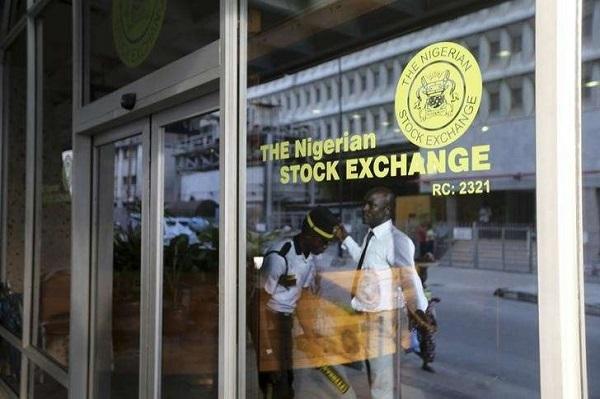
For the first three months through March 2017, the net income of the 30 largest listed firms on the Nigerian Stock Exchange (NSE), or the NSE – 30 increased by 32 percent to N292 billion from N221.30 billion the previous year.
There were a few underperformers in the period under review. Seven Up Bottling Company Plc, Guinness Nigeria Plc, Julius Berger Construction Company and Seplat Development Corporation (Seplat) recorded a combined loss of N11.71 billion.
“All the indicators show that the economy is on the path to recovery. The major challenges were a lack of liquidity in the system,” said Johnson Chukwu, managing director and CEO of Cowry Asset Management limited.
“But in the first quarter, we have seen an improvement in foreign exchange, as evident in the new policy. We have also seen an improvement in the Purchasing Managers Index (PMI). The NSE 30 firms are the most capitalised and they are expected to track changes in the economy,” said Chukwu.
The Manufacturing Purchasing Managers’ Index (PMI) stood at 52.5 index points in May 2017, indicating expansion in the manufacturing sector for the second consecutive month.
A devalued currency, collapsing oil prices, receding consumer spending and a severe dollar shortage have put pressure on corporate’s in Africa’s largest economy. The devaluation of the currency made prices of imported raw material very expensive, thus adding more to the cost of production. Furthermore, the price of diesel oil used in running generators in offices, added to cost of operations- as power from the grid is unreliable.
Fast Moving Consumable Goods Firms (FMCG), and cement makers were forced to increase the prices of key products.
Nigeria’s economy contracted by 0.52 percent in the first quarter of the year, lower than the 1.50 percent recorded last year, the first negative growth in 25 years, while operating expenses of NSE-30 firms which make up some 90 per cent of equity market capitalisation increased by 21.21 percent.
Inspite of the rising operating expenses, these firms are efficient and net margins increased to 24.64 per cent in the period under review from 20.65 per cent as March 2016.
The recent decision by the Central Bank to introduce a new market driven foreign exchange window will reverse the fortune of ailing Nigerian companies, analysts say.
A rebound in oil prices and output and government’s expansionary budgetary spend are expected to increase liquidity, while boosting consumer spending.
The Federal Government headed by President Muhammadu Buhari, has proposed spending a record N7.3 trillion ($23 billion) in 2017.
The International Monetary Fund (IMF) has raised projections for Nigeria’s economic growth this year to 0.8 per cent – The fund also revised its forecast for Nigeria in 2018 to 2.3 per cent on the back of high oil production and relative calm in the Niger Delta region.
“The improvement in the macroeconomic environment is beginning to have strong impacts on the earnings of company’s and I expect this to even improve further,” said Ayodele Akinwunmi, Head of research at FSDH Merchant Bank Limited.
BALA AUGIE