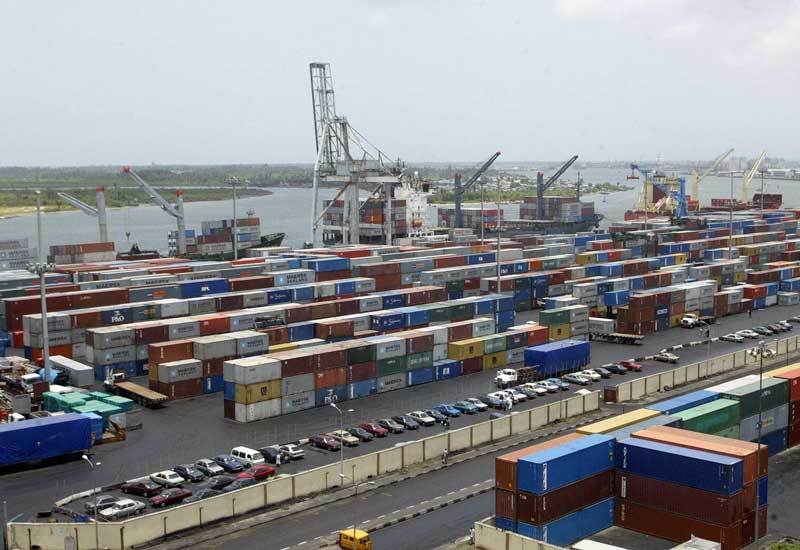
Despite the Federal Government port reform of 2006, which ceded cargo handling operations to private terminal operators, business activities in the nation’s seaport are still being hampered by bureaucratic bottlenecks, human interference and clumsy procedures.
This not only creates several avoidable costs such as demurrage and storage charges to port users, but also creates a situation where jobs and businesses in the port become an all comers’ affair, as foreigners make their way to the nation’s seaport to take away jobs that ordinarily belong to Nigerians.
Upon appointment of the Nigerian Shippers Council (NSC) as the port economic regulator, the council took up the challenge of restoring sanity in the ports by replicating the happenings in the global maritime environment to bear in our local environment.
First, in a bid to fight for the interest of the shippers by ensuring competitive pricing for port services, the NSC entered into loggerheads with the terminal operators and shipping companies. The loggerhead became serious such that the case was left for the court to decide.

However, as a port regulator, the NSC had considered the interest of the shipping companies and terminal operators before going ahead to create an atmosphere of possible soft landing, after the Appeal Court verdict in a case between shipping companies, terminal operators and the council as the regulator.
BusinessDay understands that the Appeal Court has mandated the terminal operators and shipping companies to refund the charges collected over the years from port users with an interest of 21 percent. Though the case had gone to the Supreme Court, but there are strong moves to settle-out-of-court based on the consequences, should the apex court pass judgment against shipping companies and terminal operators.
Obviously, the council has left its doors open for settlement believing that enforcement of the judgment of the Supreme Court if the Council wins, is capable of creating severe economic hardship for the service providers.
The Council played a prominent role in the actualisation of the Council for the Regulation of Freight Forwarding in Nigeria (CRFFN) in 2007, and this saved shippers the hardship they encountered in their businesses. The council had handled thousands of cases in which international suppliers’ defrauded Nigerian shippers in some transactions with refunds secured for Nigerians.
In addition to that, the NSC also spearheaded the call for infrastructural development targeted at promoting efficient services. This is apart from creating harmony among players, protecting the shippers, freight forwarders against illegal charges and other unfriendly business practices.

To ensure that Nigeria becomes the centre of maritime trade, where transshipment of West and Central African cargo can take place, the council has tried to leave no stone unturned in addressing both human and infrastructure obstacles to port business in order to bring sanity to the nation’s ports.
Already, the council has been working hard to ensure that modern cargo handling equipment are deployed at the ports. This has been through embarking on equipment audit of the port.
This, according to Hassan Bello, executive secretary of the council, has been very impressive. However, the issue currently confronting the council is that of presence of quackery and lack of sanity at the ports. This has led to the introduction of annual registration fee for all service providers at the ports.
Following the strong opposition from the service providers, the NSC has gone a step further to review and is set to publish the new fee. A breakdown of the new fees shows that Seaport Terminal Operators, who were supposed to pay N100,000 as registration fee, will now pay N50,000; stevedoring companies and warehouse operators who were supposed to pay N20,000 will now pay N5,000; while shipping lines and shipping agencies that were to pay N100,000, will now pay N50,000.
Inland container depot operators, who were supposed to pay N50,000, will now pay N25,000; off dock terminals registration fee was reduced from N20,000 to N10,000; freight forwarders and clearing agents fees were reduced from N10,000 to N5,000; haulage companies fee was cut down from N10,000 to N5,000.
Others include, shippers who will be paying N1,000; cargo surveyors to pay N5,000 and shippers associations fee was reduced from N20,000 to N5,000.
BusinessDay understands that the registration, which is aimed at regulating the activities of the service providers, will ensure quality service delivery and eradication of quackery in the maritime industry. It will also enable the regulator to sufficiently protect indigenous operators from foreign dominance.
Since the introduction, some service providers have expressed dismay, describing it as additional cost to their businesses but industry watchers believe that there will be a soft landing somewhere between the ports economic regulator and the service providers on the issue. And this may not be unconnected with the goodwill which the council enjoys among all the service providers that are affected in the registration process.
Speaking in an interview, Bello, who described the registration as the basic and a one-off, said that it was of much interest how people reacted to newly introduced registration fee for the service providers.
Bello said that the reaction was good because the council must consult stakeholders before taking certain actions, adding that stakeholders have the right to make observations.
According to him, the reactions show that no stakeholder has issue with the registration because it is good to have database, rather the issues raised were around the cost of the registration fee.
“Some people complained that the fee was on the high side and I think that they were right. This was why the council has to look at the fees again. The Shippers Council is the one to reduce the cost of doing business and not to increase the cost. We have listened to the reactions of the people and we are going to the public with the new fees. Now, we have brought down the fees,” Bello added.
Samuel Vongtau, director, Legal Services of the Council, said that the registration will help government to check quackery within the system, and will help the Council to know the number of service providers operating within the sector, an exercise that will bring relative ease in the ports.
Vongtau, who spoke at a sensitisation workshop organised by the NSC, appealed to the service providers to register with the ports economic regulator as part of the efforts to providing efficiency at the ports. “With this, the council promised it will be able to rid the ports of touts and quacks that are currently common.
“The registration will bring sanity and reduce congestion at the port. Once the service providers are registered and known, the number of people entering the port will be reduced,” Vongtau said.
Knowing the players in the ports, in terms of number and types of businesses they are doing, will be easier to make financial projections that will enable government and policy makers to know what the sector can generate.
Therefore, it is expected that in consideration of these, service providers will embrace the new registration process.
AMAKA ANAGOR-EWUZIE