The Independent National Electoral Commission (INEC) said the non-passage of proposed amendments to the electoral legal framework (Electoral Act) operational, logistical and funding issues were responsible for the poor outcome of the 2019 general elections.
INEC in its report of the 2019 General Elections presented on Friday in Abuja alluded to the impact of the actions of other electoral stakeholders, especially the political parties and candidates, the judiciary and the security agencies as been responsible for the shortcomings experienced in the last year’s polls.
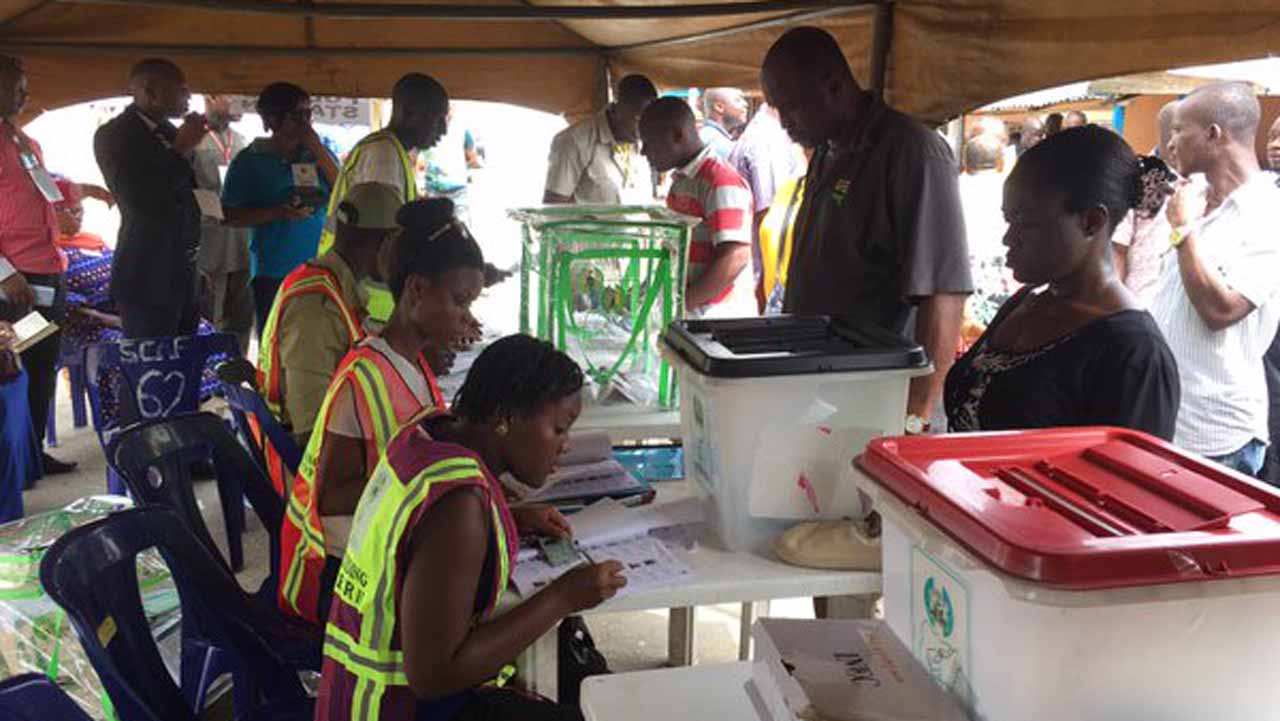
On the conduct of the Presidential and National Assembly Elections, the report said the complexities of coordinating the logistic delivery and receipt of sensitive election materials were amplified by the numerous contentions surrounding the nomination and submission of candidates by political parties, most of which ended in the Courts against the provisions of the Electoral Act 2010.
This development made it difficult for the Commission to finalise the production of the over 4,000 tons of sensitive materials required for the election as these materials cannot be produced until the required submissions were either made by the political parties or the disputes over the such submissions adjudicated upon and settled by the Courts.

“In effect, the available production window for sensitive materials was just about 30 days. This was far too short a period for the production, inspection, transportation and deployment of the materials, especially in cases where such materials were to be produced outside the country.
“Another challenge was the shortage of operational vehicles for the deployment of election materials and personnel. Up to 90,000 vehicles were required for the movement of personnel and materials for the 2019 General Election at the cost of about N10 billion. This amount excludes the cost of hiring airplanes, helicopters and leasing of boats to deploy personnel and materials for the conduct of the elections in the riverine areas and areas with a difficult terrain that were not easily accessible by road.
“Other challenges include sabotage by partisan groups in various links of the logistics chain. For example, some boat and vehicle owners hiked prices of services on the eve of the election or withdrew their services altogether, after receiving part payments as provided for in their contracts with the Commission.
“Another challenge arose from errors in naming, coding and serialisation of a number of Polling Units across the nation. The Commission set up a Sub-Committee of its ICT and Voter Registry (ITVR) Committee with membership drawn from the ICT, VR and Electoral Operations Departments to address the challenge”, the report said.
According to the report, the conduct of the 2019 General Election had raised a number of issues and challenges that are well documented in the reports of the States and FCT, including instances of violence, the snatching/diversion/vandalization of election materials, intimidation of election personnel, and difficulties with service providers such as the owners of procurred vehicles and boats in some states, who, having signed agreements and

The report stated that while the Commission was able to mitigate some of these daunting challenges by dexterously harnessing its human and material resources, its latitude for action was constrained in several other areas.
It said INEC had to resort to proactive engagement with the executive, legislative and judicial arms of government, deployment of critical national assets, and the support of critical stakeholders, including Civil Society Organisations, the Media, the international development partners and the understanding of the citizenry to successfully conduct the 2019
General Election.
The report concluded that the conduct of the 2019 General Election was characterised by a number of critical issues ranging from the quick passage of amendments to the electoral legal framework; strengthened human resource and operational capacity of INEC; conduct of security personnel on electoral duty; cost of elections; better management of political parties, particularly to hold them accountable for engendering internal democracy and inclusion in their party political activities; voter apathy; and to strict enforcement of legislation against electoral offences.
In recommended a National Dialogue involving State and Non-State Actors to re-examine the pressing issues and the objective of the Dialogue should be with not only developing a shared understanding of these issues but also mapping, before it is too late, the way forward towards their resolution in the continuing efforts towards the institutionalisation of free, fair and credible elections and the consolidation of democracy in Nigeria.
In another report on; ‘Review of the 2019 General Election’ based on the outcome of the Commission’s retreats and stakeholder engagements also presented on Friday revealed that the late arrival of some sensitive election materials at the various locations where they were to be used resulted in the rescheduling of the election by one week from Saturday 16 February 2019 to Saturday 23 February
The report amongst others said there was: “inadequate Iogistic capacity to handle the movement of large quantity of materials encumbered the distribution of the materials to, and within, States of the Federation while there were instances of wrong packaging of ballot papers and result movement of a few materials to wrong destinations and low quality or inadequate quantity of some non materials.
“Late completion of the procurement processes caused mainly by delayed passage of budget and lack of funds. Although the procurement process commenced since 2017, the delay in the passage of the election budget impeded the completion of the process. Contracts could neither be awarded or where they were, funds were not available to mobilize contractors”.