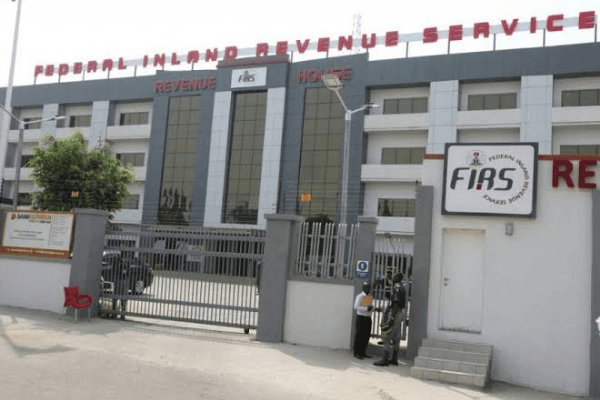
In a bid to widen the tax net and upscale Nigeria’s revenue, the Federal Inland Revenue Service (FIRS) has come up with policies that would aid in fishing out companies and individuals that have over time defaulted in paying taxes.
That was after the tax authority on Tuesday disclosed it has developed a common tax identity and it’s working closely with banks operating in the country in line with its statutory powers to ensure that tax evaders comply.
“We are working in synergy with the banks at the moment and at present, we have access to everybody’s account, so there is no hiding place for tax evaders in the country. All we need to do is request information about any individual or company and we will get it,” said Ikechukwu Odume, FIRS General Counsel.
Odume, who made this disclosure at the sideline of the ongoing 2019 Annual Conference organized by the Nigerian Bar Association (NBA) in Lagos, also noted that in other to drive full compliance, the FIRS developed and launched the Common National Tax Identity.

“With the click of a button, we can have the tax number of every person so if you say you pay taxes we would know,” Ndume told Businessday.
Africa’s largest economy, with a gross domestic product of $380.85 billion, has Tax-to-gdp ratio of 5.6 percent, one of the lowest in the continent, according to data from World Bank.
Tax-to-gdp ratio in Algeria, South Africa, Morocco, Angola, Kenya and Egypt currently stands at 34.75; 26.80; 21.35; 19.25; 18 and 15.20 percent, respectively.
In a show of dire need for revenue to fund the budget, the federal government through the Chief of Staff, Abba Kyari, queried the FIRS Boss, Babatunde Fowler, to provide explanation on the widening variance between actual revenue and budgeted from 2015 to 2018.
In 2015, actual revenue collection by the agency was N3.7 trillion, compared with a budgeted target of N4.5 trillion, set by the federal government for the tax regulator.

A similar shortfall occurred in 2016, when actual collection was N3.307 trillion, less than the N4.95 trillion targeted in the budget.
Also, in 2017, the FIRS collected a total of N4.027 trillion, less than the set target of N4.89 trillion and in 2018, actual collection was N5.3 trillion, while the budgeted target was N6,7 trillion
In response to the query, Fowler blamed the shortfall in actual revenue to dwindling economic activities from the fall out of a global collapse in crude oil prices that submerged the country’s economy into five quarters of negative contraction.
To shore up revenue, the tax regulatory agency embarked on several aggressive strategies within is purview including placing a “lien” in the form of suspension on the bank account of defaulting tax payers. The FIRS released a public memo naming over 20,000 businesses that are yet to remit taxes into its coffers.
It has also announced plans of taking a 5 percent Value Added Taxes (VAT) on all purchases done online from 1st January 2020.
In response to controversy on how the tax regulator plans on axing online savvy customers, Nudume affirmed that the 5 percent would be collected directly from the bank accounts of the users differently from the VAT already charged by the ecommerce firm.
“What we are trying to achieve for the online transaction is equity in tax. So, whether you buy goods online or physically, you will pay VAT,” Udeme said in an exclusive interview with Businessday.
He noted that the FIRS was building a network of collaboration with the various tax authorities at the state level so there could be some kind of interchange of information on people paying tax so as to eliminate he issues of multiplicity of taxes.
The collaboration between both arms have also resulted in the establishment of a Joint Tax Audit (JTA), where the federal and the state government tax authority, come together to audit companies, Udeme noted
“We can know what is happening in states across the federation. For example, a company in Lagos may have employees in Ogun state and should pay tax in Ogun state but they work in Lagos. With the JTA, we should be able to ascertain how many of these companies’ tax should go to Ogun state, Lagos state and those that should go to the FIRS,” he said.
According to Udeme, the FIRS has also come up with a National Tax Policy, that would help in driving he vision of the agency and remove every bottleneck hindering effective tax payment by taxpayers.
For the agency, the National Tax Policy is the spirit that drives tax laws and reforms as it helps in detecting where tax is going, the things that the agency want in the tax, avoiding multiple taxation, efficiency in tax administration so that each government looks at it as a guide towards the laws that they are making.
At the conference, Udeme urged lawyers on the need to buy into tax laws as they should be the ones driving tax reforms in the country.
The FIRS representative expressed dissatisfaction, noting that over time, judges have a major impediment to the agency’s efforts in tax collection in the country as many of them fail to intensively study tax laws.
He explained that the FIRS has shown enough empathy in tax collection if the powers given to the agency is anything to consider.
“The law has given us the mandate to go against the directors of any company that defaults in paying taxes. It also gave us the powers to place a lien on accounts of defaulters, but over the years we have been lenient considering the fact that we as an agency understands that things are really no easy,” he noted.
He explained that Nigeria is financially struggling and oil revenue cannot save the country any more, however, the only way the country could generate enough money to fund its ballooning expenditure, is making sure people pay taxes.
On explaining how the agency has performed, Udeme pointed that the FIRS under Babatunde Fowler has since 2015 rolled out far-reaching strategies that have helped in widening the nation’s tax net and contributed to the increase in collection of revenue over the years
Among these strategies, he said, includes, VAT automation; the 2016 amnesty program, which involved a waiver of interest and penalty of three years (2013-2015), in order to assist defaulting tax payers. This strategy alone according to him, brought in about 2,735 taxpayers before it was closed.
Furthermore, the Voluntary Asset and Income Declaration Scheme ( VAIDS), launched by federal government, on the 29th of June 2017, aided in encouraging defaulting taxpayers to voluntarily declare their hitherto undisclosed income and assets, by paying the applicable tax liabilities over a defined period.
The FIRS also in 2015, embarked upon nationwide tax registration drive which brought in additional 814,000 corporate taxpayers into the tax net. “this was achieved through nationwide taxpayer engagement, enlightenment and registration”.
Udeme noted that the outlook for the FIRS is on moving gradually away from direct taxes to indirect taxes as that is what is obtainable in other countries of the world.
The 2019 annual general conference of the NBA graced the presence of about 12,000 lawyers as well as stakeholders in the public and private sector.
Stakeholders present in the conference urged the government to be more sensitive and intervene on behalf of the Small and Medium Enterprises (SMES) by bringing the effective tax rate to about 20 percent.
They also called on the need to imbibe taxation in the school curriculum of primary and secondary schools so that citizens from their early age would begin to see the importance of paying their taxes.
Bidemi Olumide, a partner and CEO at Taxaide said the Nigerian tax system does not seem to favour taxpayers. Olumide explained that the language of Nigeria’s tax system is not simple.
He outlined seven process challenges faced with taxation which includes tax inclusion, ambiguous computation, laborious process of payments, delay in remittances, poor auditing and low returns.