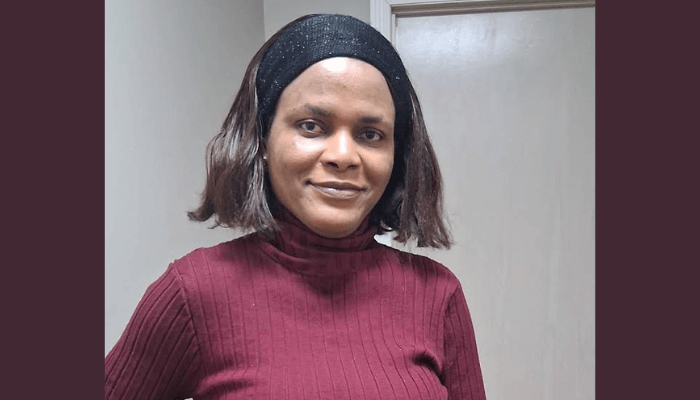
Uju Ifeoma Nnubia is fast emerging as one of Nigeria’s most influential voices in inclusive education and mental-health research, driving reforms that are reshaping classroom practices and informing national policy.
Her groundbreaking work gained national attention through a TETFUND-sponsored study that assessed dyslexia among primary school pupils across ten states. The findings were stark: as many as one in six Nigerian children may show signs of dyslexia, yet nearly 90 percent of teachers are unaware of the condition. Many pupils are instead mislabeled as “lazy” or “unintelligent,” reinforcing stigma and widening educational inequalities.
Rather than limit her work to diagnosis, Nnubia has taken a solutions-driven approach. In Ebonyi State, she led the development of the Picture Concept Activity (PCA), a component of a low-cost, multisensory instructional program designed for low-resource schools. The PCA strengthens phonological processing and word-recognition skills, equipping dyslexic learners with tools that support meaningful progress.
To address gaps among educators, she created the Teachers Awareness Questionnaire (TAQ), a diagnostic tool that helps identify knowledge gaps and guide the design of targeted teacher-training modules.

“These tools are game-changers for low-resource schools,” Nnubia said. “They empower teachers and give children a chance to thrive.”
Her interventions are already transforming classrooms. In Ebonyi, she has organised a series of awareness workshops that provide teachers with practical resources while challenging misconceptions about learning differences. The efforts are cultivating a culture of empathy, inclusion, and evidence-based pedagogy across schools.
Nnubia’s influence extends beyond community programs. As Vice President of the Association for Family and Society Scientists, she chaired its inaugural conference in 2022, steering national discussions on dyslexia, mental health, and family resilience. She also serves as managing editor of the Journal of Family and Society Research, which published its fourth volume in June 2025, advancing access to research-driven insights for policymakers and practitioners.
Her work aligns with major national priorities, including the National Policy on Education, the National Mental Health Policy, and the National Gender Policy. It also supports global development targets such as the United Nations Sustainable Development Goals (SDGs)—particularly Quality Education (SDG 4), Good Health and Well-being (SDG 3), Gender Equality (SDG 5), and Reduced Inequalities (SDG 10).
Through resilience-focused approaches and psychoeducational interventions, Nnubia is championing solutions that uplift both teachers and learners. Her efforts are rewriting the narrative around dyslexia and mental health, one classroom, one teacher, and one child at a time.