|
Getting your Trinity Audio player ready...
|
Agriculture desk officers of at least eleven financial Institutions will be trained by the Nigeria Incentive-Based Risk Sharing System for Agricultural Lending (NIRSAL) on value chain finance methodologies, Aliyu Abdulhameed, NIRSAL MD/CEO announced on Wednesday.
The training would be the second phase of capacity building on the country’s agricultural value chain but would ensure financial access to every segment of the chain and create jobs.
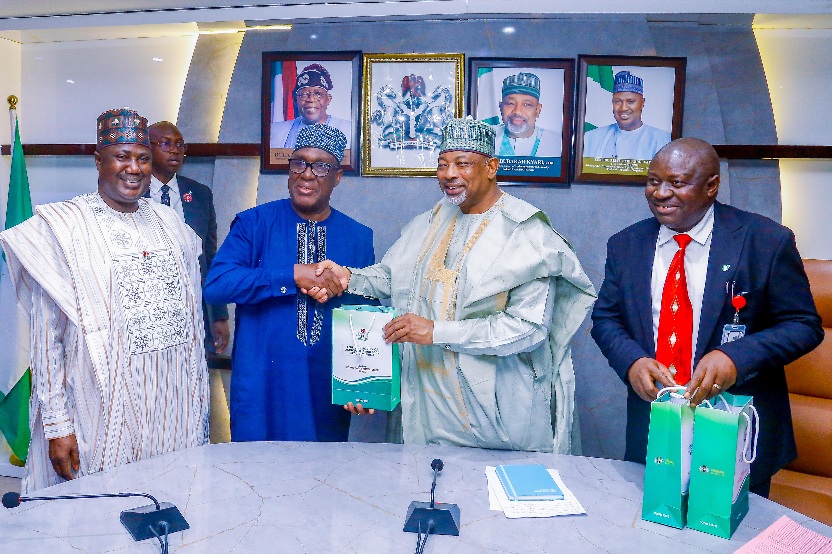
Abdulhameed was speaking at the close of the first phase of training specifically for the employees of NIRSAL, Central Bank of Nigeria (CBN) and the ministry of agriculture in Abuja.
NIRSAL’s core responsibility is to de-risk the agriculture value chain
so that banks can lend to the agriculture sector with confidence.

The training, a collaboration between the International Training Centre of the International Labour Organization (ILO) was to equip employees of NIRSAL, CBN and the agriculture ministry with the knowledge of agricultural value chains and a better understanding of and solutions to the issues relating to developing efficient and effective value chains for key commodities in Nigeria.
“We must de-risk Nigerian agricultural value chain and provide technical assistance that will help the banks to lend sustainably to agriculture, so that producers can borrow and use loans more effectively to increase output of better quality agricultural products.
“It is also imperative that we, the catalyst, our stakeholders and financiers, understand the sustainable development of the agricultural value chain in Nigeria,” Abdulhameed stated.
He said the training provides an opportunity not only to upgrade needed skills but also an opportunity to contribute to the transformation of the economy and positively impact the lives of the poorest, who today, unfortunately, are mostly the smallholder farmers.
According to him, the value chain approach is particularly of advantage to smallholder farmers in Nigeria because it identifies how inputs and services are brought together to produce a product, and how value is added as it moves along the chain.

Abdulhameed also announced of NIRSAL plans to develop value chains along eight agriculture products including, rice, maize, soya bean, cotton, palm oil, livestock especially ranched livestock and aquaculture within 2018, through 2019.
“That way, we will be able to convince finance and investment to take a position within a fixed value chain, either integrate the whole value chain in financing it, or take segments of the value chain.
“We want to reach a point where we can take a whole value chain and place it before finance. We want to see where a single investor or a consortium of investors can take a whole value chain and do integrated financing end to end.”
According to Dennis Zulu, Nigeria Country Director, ILO there is now a great realization that for Nigeria to be able to develop its value chain, an institution like NIRSAL needs to have the capacity to optimise and take advantage of the value chain opportunities that exist.
“We are delighted to be partnering NIRSAL and bringing on board global experiences from across the world, helping to build the capacity of NIRSAL to be able to deliver ad take lead in these very important areas,” he said.
Speaking on ILO interest in the Nigerian agric value chain, he said first of all, it offers great opportunities for the country to create the jobs for the youths.
“First of all, it is what we do as an institution through our international training centre. The ILO promotes decent work, and in doing this, we are looking at supporting, we are working with the federal government on how it can promote jobs,” he noted.
Oluyemisi Iranloye, MD/CEO, Psaltry International Company Ltd who also participated said the training was necessary in strengthening the value chain so that Nigeria can develop agribusinesses from the present huge small holder farmers.
“The smallholder farmers must be transformed into agribusinesses and we must change the mentality of the farmers to see themselves as business and then grow.
“And, with the facility provided by NIRSAL, which is de-risking the risky aspect of the farmer, every small holder farmer should be transformed into a commercial farmer in less than three years,” she stated.
Onyinye Nwachukwu, Abuja