|
Getting your Trinity Audio player ready...
|
…hosts scientific symposium to combat viral diseases
Nigeria’s Institute of Human Virology, Nigeria (IHVN), announces that it has begun research efforts for a vaccine that will be effective against Lassa fever, a viral haemorrhagic illness that remains endemic in Nigeria and continues to pose a major public health challenge.
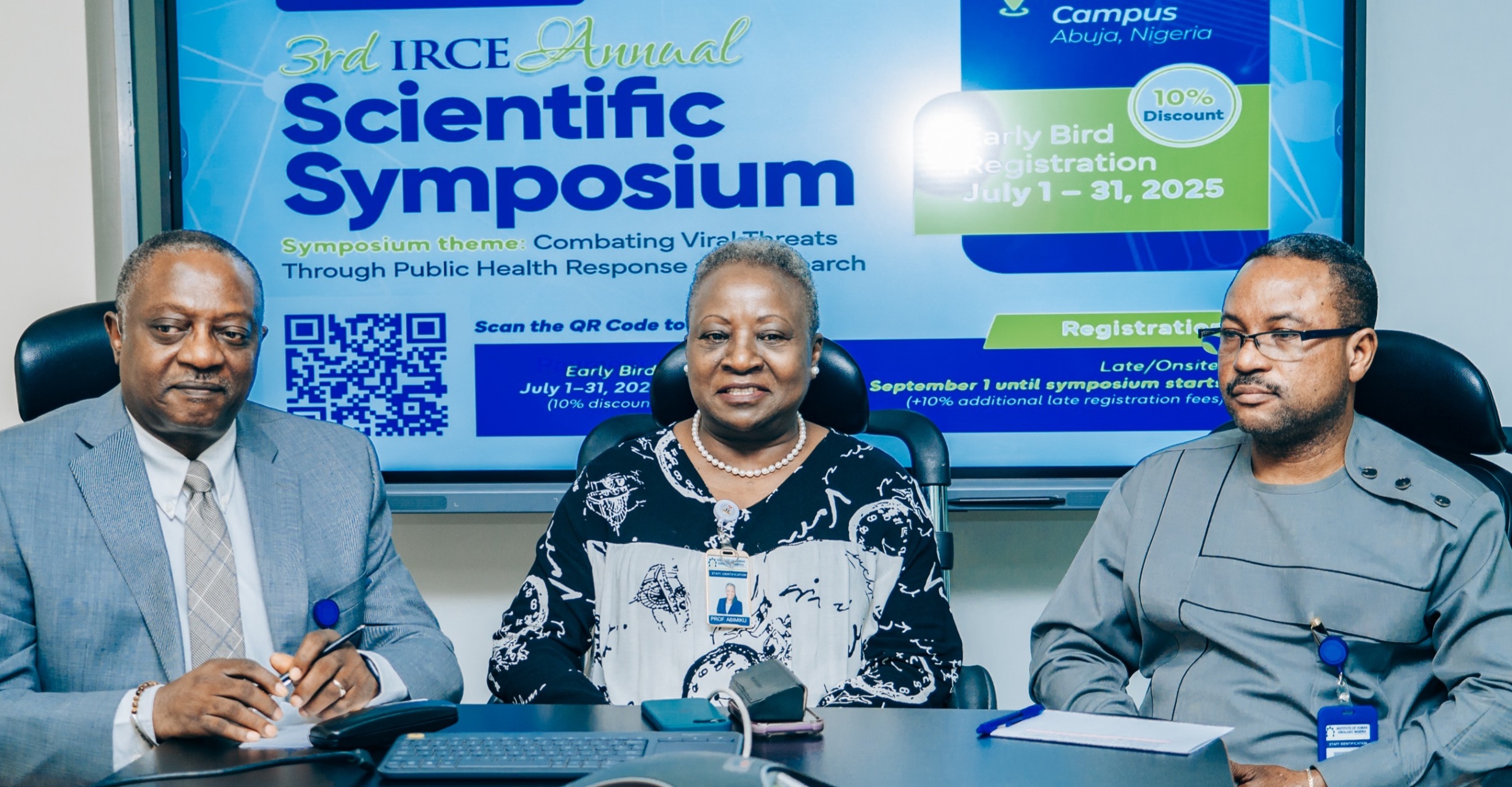
Alash’le Abimiku, executive director of the International Centre of Excellence at IHVN, disclosed while briefing the press on Wednesday in Abuja, on IHVN’s forthcoming scientific symposium, that the institute was already working with two groups on potential vaccine candidates.
“We’re very, very excited because the Lassa virus is problematic for Nigeria. Right now, we’re working with two groups for the potential of testing Lassa vaccines and to see whether we will be able to identify a vaccine that is effective against Lassa,” she said.

Abimiku explained that one of the first pieces of research done by the Institute is to understand how the strains are changing from one year to the next, the characteristics of the rodent that carries this virus, and the differences in the viruses, among others, to ensure the development of an effective vaccine.
According to her, the institute’s findings indicate that although the virus undergoes mutations, strains across Nigeria remain largely similar. “So that is good for the vaccine, because if you make one vaccine, it can cut across. We also know that the habits of the rat have remained more or less similar.
“It takes several years, but we continue to do it in the background. One day, the CEO will come and announce to you guys and say, We’ve got a vaccine,” Abimiku noted.
On the forthcoming scientific symposium themed, “Combating Viral Threats through Public Health Response and Research” Abimiku explained that it will focus on viral threats to Nigeria’s public health system, drawing lessons from the Covid-19 pandemic.
“Unless we come together to understand the viruses that put us at risk, their patterns, and the policies we need to control them, we will continue to face repeated outbreaks,” she warned, citing cholera, diphtheria and Lassa fever as examples.
“If tomorrow, God forbid, we have another pandemic, are we prepared? What have we learnt from the last one? And what makes these viruses so devastating in Nigeria and across the world? Can we learn enough about how they behave to be better prepared? That is the emphasis of our work”, she added.

Patrick Dakum, chief executive officer, IHVN, added that the conference would also provide a platform for global and local stakeholders to exchange strategies on sustaining research amid declining international funding.
He urged the federal government to strengthen investment in medical research as part of its push to “unlock the healthcare value chain”, saying Nigeria cannot continue to depend almost entirely on foreign funding for critical breakthroughs.
Dakum, regretted that while research is very key in public health, the Nigerin government has not committed substantial funding, and urged that a minimum of 20% of government funding should go to research especially as international finding is shrinking.
Charles Mensah, the institute’s chief operating officer, said research efforts had been significantly affected by reduced funding, particularly from international donors. “We’ve been advocating to the government, both at the federal and state levels, to get some support in that area. I think we are making some progress, but the will of the government moves very slowly,” he said.
Mensah added that the institute is in talks with private pharmaceutical companies to explore research and development partnerships and continues to engage with multilateral donors such as the US Government, the European Union and the European Commission.
“We are hopeful that at some point the US government will resume the funding of scientific research,” he said.
He warned that neglecting investment in research would ultimately undermine Nigeria’s ability to control outbreaks.
Beyond vaccine development, he said the IHVN is working with the Federal Government to strengthen research integrity and ethics in Nigeria, in collaboration with the Ministers of Health and Education.