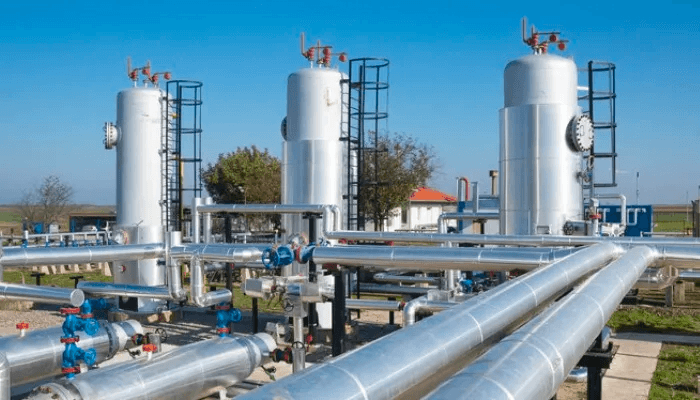
This is the third part of my concluding articles and the 24th in my series of articles on the power sector. The second, published last week, focused on energy diversification. The current article is about the need for accelerated development of natural gas for fuelling the power sector. Significant effort is currently ongoing to ramp up gas production in Nigeria under the “Decade of Gas 2021-2030” initiative of the Federal Government of Nigeria. This is against the background of gas being Nigeria’s transition fuel to achieving net zero emission by 2060.
The “Decade of Gas” initiative has the following objectives: “1. Increasing Gas Production: grow gas production by over 50 percent during the decade, with domestic consumption expected to account for approximately 60 percent of total demand by 2030. 2. Promoting domestic utilisation: encourage the use of natural gas for power generation, industrial applications, and transportation, such as converting vehicles to compressed natural gas (CNG). 3. Developing critical infrastructure: build necessary gas infrastructure, including pipelines, processing plants, and distribution networks, to support growing demand. 4. Attracting investment: Foster public-private partnerships and investments in the gas sector to drive growth and development. 5. Creating jobs and stimulating economic growth: attract $14 billion in foreign direct investment, raise $12 billion in revenue through royalties and taxes, and create two million jobs by 2030. 6. Expanding access to clean energy: Distribute five million liquefied petroleum gas (LPG) cylinders by 2030, promoting clean cooking gas and reducing reliance on traditional biomass fuels. 7. Enhancing energy security: improve electricity generation capacity and grid reliability and reduce reliance on expensive and polluting fuels like diesel and fuel oil. 8. Environmental sustainability: reduce gas flaring, promote gas utilisation, and preserve the environment by curbing deforestation and reducing greenhouse gas emissions.”
Read also: Nigeria’s power sector: The way forward (part one)
A review of gas production, utilisation, and domestic consumption between 2021, when the “Decade of Gas 2021-2030” initiative was inaugurated, and 2024 reveals the following: Gas production: 2021: 2.744 trillion standard cubic feet (SCF); 2022: 2.521 trillion SCF, a 0.233 SCF decline compared to 2021; 2023: 2.491 trillion SCF produced, a little drop compared to 2022; and 2024: 2.511 trillion SCF, a slight improvement on 2023 production, but still less than 2022 production. Thus, instead of increasing, gas production is reduced between 2021 and 2024, contrary to the objectives of the “Decade of Gas.”

On the other hand, gas utilisation by industrial consumers increased remarkably from 137.361 billion SCF in 2022 to 2.317 trillion SCF in 2024, “out of 2.511 trillion SCF produced, representing a 92.26 percent utilisation rate.” Domestic gas consumption increased from 518.42 billion SCF in 2023 to 673.64 billion SCF in 2024. So, while gas production reduced between 2021 and 2024, domestic gas utilisation by industries and domestic gas consumption increased impressively.
“Nigeria actually needs between 50,000 MW and 100,000 MW to meet our plan for universal access by 2030 and Nigeria’s overall electricity needs from its energy mix of thermal, hydro, solar, and other renewable sources.”
However, a number of gas projects are ongoing, as represented by the recently commissioned gas plant in Imo State, the ANOH Gas Processing Plant, which is a joint venture between the Nigerian National Petroleum Company Limited (NNPCL) and Seplat Energy Plc located in Assah, Ohaji/Egbema Local Government Area of Imo State, with an installed capacity of 850 million standard cubic feet of gas per day.
Nonetheless, the key proposition of this article is that Nigeria needs, first, to ensure the achievement of its relatively modest objective of a 50 percent increase in gas production between 2021 and 2030. From the above review, little progress is so far being made in ramping up gas production pursuant to the achievement of the “Decade of Gas” initiative. Secondly, for gas to effectively serve as Nigeria’s energy transition fuel, Nigeria needs much more investment than the US$14 billion FDI envisaged. Nigeria needs to link its power sector development plan closely with its need to become the manufacturing hub for West and Central Africa in the medium term (next five years) and a newly industrialising country (NIC) in the next decade, which ought to have coincided with 2030. That date can be extended to 2035. Nigeria needs to produce the quantity of power that makes such manufacturing/industrial aspirations possible.
Nigeria needs to move away from the mentality of incrementalism and glacial gradualism, which the approach to implementing the objectives of the “Decade of Gas” initiative currently represents. With the very little progress so far recorded in its implementation, it is doubtful whether the main objectives of the initiative will be achieved by 2030. Gas-fired thermal plants account for roughly 80 percent of Nigeria’s realised 6005 megawatts (MW) of grid-transmitted power supply, which is less than 5000 MW. If we agree that Nigeria needs a minimum of 30,000 MW, as the government envisages, to modestly meet Nigeria’s continental industrial and trade objectives, then gas-fired thermal power production needs to provide a minimum of half of that 30,000 MW. This means that the objectives of the “Decade of Gas” initiative need to be significantly reviewed upward.

Nigeria actually needs between 50,000 MW and 100,000 MW to meet our plan for universal access by 2030 and Nigeria’s overall electricity needs from its energy mix of thermal, hydro, solar, and other renewable sources. But even settling for 30,000 MW requires more significant investment in gas production and utilisation, especially given the gradually closing window of opportunity for securing funding for fossil fuel investments against the background of the fast-moving decarbonisation train.
Read also: Nigeria’s power sector: The way forward (Part 2)
The major constraint to Nigeria’s industrialisation and overall economic development aspirations is a weak power sector. Apart from solar energy, which is increasingly becoming an important part of Nigeria’s energy mix, gas, which we have in great abundance, represents an important source of power supply for Nigeria in the next decade. It is a resource we should use creatively and aggressively to expand our power supply in the next decade, as the opportunity gradually fades away.
Mr. Igbinoba is Team Lead/CEO at ProServe Options Consulting, Lagos.