|
Getting your Trinity Audio player ready...
|
When the final ripple of applause faded from Aliyu Suleiman’s candid fireside, the CEO Forum shifted, almost on cue, from the might of billion-dollar industrial scale to the quiet power of human capital: the true fuel of any sustainable economy.
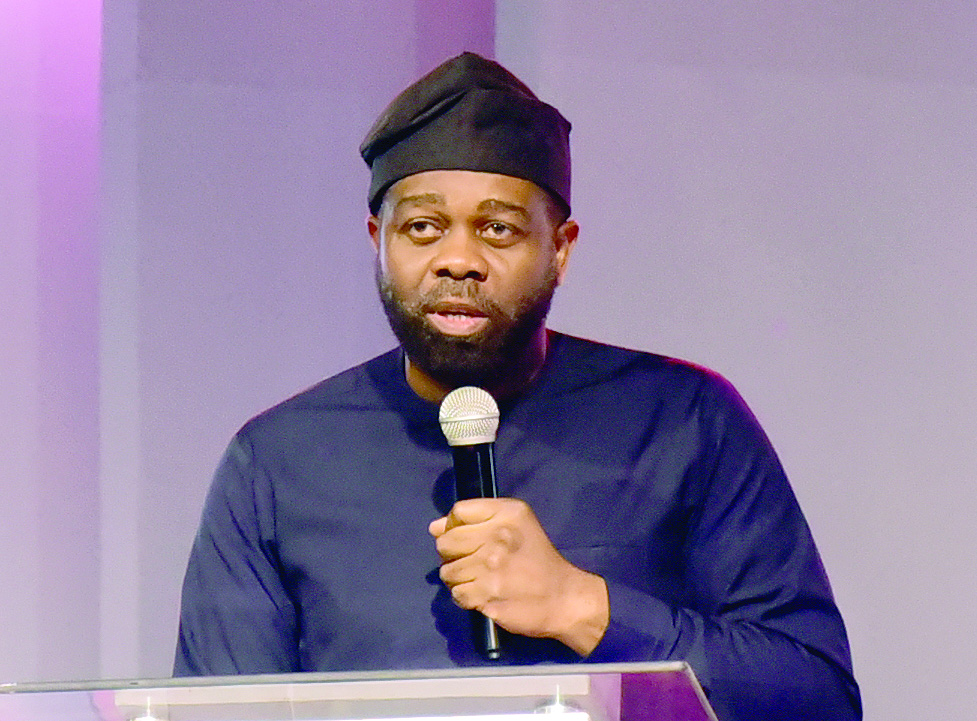
Kelechi Ohiri, director-general/CEO of the National Health Insurance Authority (NHIA), stepped to the podium. He carried no illusions that charts and balance sheets alone could secure Nigeria’s future. Framed by Chinua Achebe’s timeless reminder that “Africa is people,” his message was both a caution and a rallying cry.
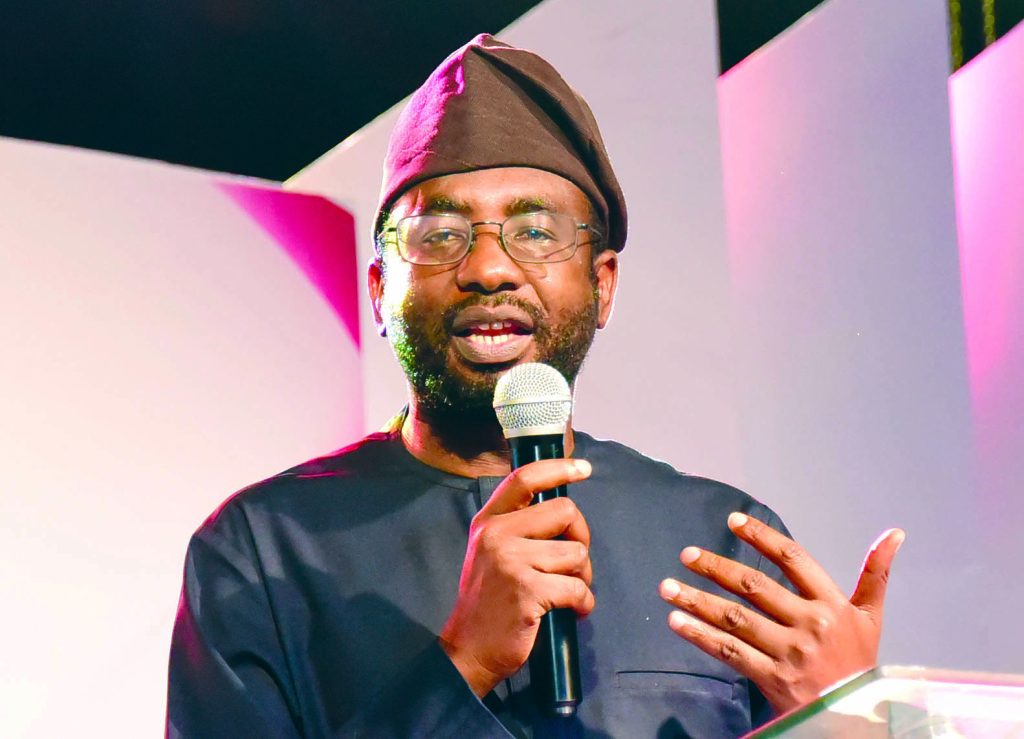
He drew a line between Indonesia’s demographic dividend and Nigeria’s fragile pyramid, reminding the CEOs and policymakers that impressive economic headlines mean little if they do not translate into healthier, protected citizens.
Millions still slide into poverty with each sudden illness, paying out-of-pocket for healthcare that should be a right, not a ruinous gamble. A single diagnosis can erase a lifetime’s savings, hollowing out the middle class before it can find its feet.

Yet within the stark numbers, Ohiri offered the audience a glimpse of quiet, relentless progress:
Nearly 97% progress towards insuring 20 million Nigerians, years ahead of target.
A mandatory minimum benefits package defined by actuarial evidence, not guesswork.
Payments to hospitals increased by 93%, while fee-for-service tariffs rose by 378% – all aimed at attracting quality providers who trust the system to pay and pay on time.
Equity, too, was no afterthought. His stories cut through the jargon: thousands of women living with debilitating fistulas are now treated at no personal cost. Emergency childbirth, once a desperate search for cash, is now covered in over 250 hospitals nationwide. And the national Health Act’s 1% fund has secured coverage for over 2.7 million of Nigeria’s poorest.

However, he warned the CEOs in the room: coverage is only the beginning. True resilience, he argued, will come only when the health sector itself industrialises, when Nigeria produces its drugs, medical devices, and supply chains that do not collapse when global crises strike. “Health must be seen not as charity, but as industry, as a generator of jobs, foreign exchange savings, and shared prosperity.”
He landed on the note where he began: “Nigeria is people.” If CEOs, investors, and policymakers do not place human capital at the core of the growth conversation, the promise of reforms will remain just that, a promise. “In everything we do, every boardroom bet, every policy pivot, our people must feel the impact. Otherwise, it is not transformation. It is simply talk.”
New Frontiers: Oil, Gas, and the Deals That Matter
With that sobering charge still echoing, the Forum turned to the engine that, for now, still fuels much of that human capital revolution: energy.
Adewale Ajayi, KPMG Africa’s partner for energy and head of tax, took the stage to steer the morning’s first major sector panel, “Oil and Gas in Transition: Reforms, Recovery, and Deals That Matter.”
If the refinery conversation had shown what vision and scale can unlock, this panel would dig deeper: seismic reforms, new licensing regimes, and the strategic transactions shaping Nigeria’s most consequential industry.
Joining him was Tony Attah, managing director/CEO of Renaissance Africa Energy Holdings, a voice whose vantage point spans upstream ambition, energy transition, and the complex chessboard of deal-making that could propel Nigeria from extraction to true value creation.
Samson Ezugwaorie, chief operating officer/executive director, Seplat Energy plc, stepping in for Seplat Energy CEO Roger Brown, struck an unusually optimistic tone. Where many see headwinds, he sees a pipeline of over $16 billion in new upstream commitments. Nigeria’s rig count, which limped at eight in 2021, now hovers around 46, a quiet but powerful signal that investors see credible reform where once they saw only risk.
Most striking was his simple anecdote: the new culture at Nigerian National Petroleum
Company Limited (NNPC). Meetings that once meant flights to Abuja and doors slammed shut are now regular working sessions to solve real bottlenecks. “A barrel produced must be a barrel sold,” Attah reminded the room. Without secure midstream infrastructure, pipelines that do not leak more than oil but offer an opportunity for production are just a paper gain.
He praised the recent Executive Orders that lifted decades-old thresholds for contract approvals, unshackling operators from chasing sign-offs for routine deals. “Raising that to $10 million is not just policy – it’s oxygen,” Attah declared. It is agility. It is trust restored.

A Generation in Charge
Perhaps the truest signal of change is who now sits at the table. “If this panel were held five years ago,” Attah noted, “it would have been four expats and one Nigerian. Today, Nigerians own over 50% of our oil production. That is reform, in flesh and blood.”
Yet new ownership brings new burdens. Ainojie ‘Alex’ Irune, managing director, Oando Energy Resources Limited, captured the new reality: “Local problems need local solutions, and we’re the solution now.”
Once, global oil giants absorbed risk and repatriated profit. Today, Nigerian companies must squeeze every naira of value from each barrel. Theft and inefficiency are not line items on a global spreadsheet; they are existential threats to local shareholders and employees.
Collaboration or Bust
Adegbite Falade, group CEO of Aradel Holdings Plc, was blunt: “Twenty years ago, we had under ten major operators. Today, over forty. Many use the same ageing infrastructure. Collaboration is no longer optional, it’s survival.” Whether in sharing pipelines, tackling oil theft, or skilling the next generation of engineers, the future will belong to those who build together, not in silos.
The same applies to technology. Artificial intelligence (AI), automation, and digital tools are transforming global energy. But in Nigeria, legal frameworks often lag. “If we regulate digital businesses with analogue rules, we’re not reforming, we’re just renaming the same old obstacles,” one speaker warned.
As the panel wrapped, the message was clear: the stars may finally be aligning, a decisive president, credible NNPC, maturing Nigerian operators. But windows do not stay open forever. “If we don’t get it right now, we may never get it right,” Irune said flatly. And the room knew he was right.
From Barrels to Bytes: Technology as the Endless Starting Line
If oil and gas promise recovery, technology promises reinvention.
Stepping up, Kashifu Inuwa Abdullahi, director general of the National Information Technology Development Agency (NITDA), challenged the room to see transformation not as a destination but as an infinite relay. He reminded them that when Nigeria’s IT journey began in 2001, fewer than half a million Nigerians had access to a computer.
Information Communication Technology (ICT) added barely 0.5% to gross domestic product (GDP). Today, over 130 million Nigerians connect to the internet, and ICT contributes more than 17%.
But progress is not a finish line; it is a springboard. “Whatever you can imagine, technology can make possible. The only limitation is your imagination.”
He laid out the National Digital Literacy Framework:
- 95% digital literacy by 2030, 70% by 2027.
- Training market traders, artisans, and everyday citizens through the National Youth Service Corps (NYSC) scheme.
- Embedding digital skills in schools and universities, as fundamental as English and Mathematics.
- Equipping every civil servant to deliver better governance with tech.
Yet policy alone cannot do it. The government’s role is to set the table, but the feast must come from the private sector, entrepreneurs, academia, and investors. Abdullahi described an ecosystem with five pillars: academia, corporates, entrepreneurs, risk capital, and government, all moving as one.
No Finish Line, Only a New Starting Line
As he stepped down to warm applause, his closing charge lingered: “Reform must never be the finish line. It must be the starting line, again and again.”
If there was one echo threading Ohiri’s call for people-first healthcare, the oil and gas panel’s blunt realism, and NITDA’s digital vision, it was this: Nigeria’s greatest resource is not oil, gas, or even code. It is people. And transformation must touch their lives, or it is not transformation at all.
Nigeria’s next leap will not come from barrels alone, or bytes alone – but from systems that work, industries that grow, and people who are seen, protected, and prepared to build what comes next.
This is the second of a three-part post BusinessDay CEO Forum series, designed to tell the story of what transpired at Nigeria’s premium invitation-only gathering of elites. Watch out for the third edition, which will be published in two parts.