In 2024, South Africa generated roughly $1.5 billion from adventure tourism, according to South African Tourism. The segment is built not on minerals or financial services, but on mountains, wildlife reserves, hiking circuits, and carefully regulated outdoor experiences.
It is a figure that should reframe Nigeria’s diversification debate.
Tourism contributes less than 3 percent to Nigeria’s GDP, according to industry estimates, and international arrivals remain well below pre-pandemic highs. Former Minister of Tourism, Mrs. Lola Ade-John, reported that the country welcomed over 1.2 million international visitors in 2023 and recorded three million domestic trips, reflecting a 20 percent increase compared to the previous year. Recovery has been uneven, constrained by currency volatility, air connectivity, and perception challenges.
Yet scattered across Nigeria are plateaus, waterfalls, forest reserves, and mountain ranges that, in aggregate, rival some of the continent’s most marketed adventure assets.

The gap is not geography. It is structure
Adventure tourism is not a lifestyle indulgence. It is an export service. Travellers who fuel this segment typically spend more per day than conventional leisure tourists. They book certified guides, pay for insured activities, stay longer in host communities, and consume local supply chains more intensively. Globally, experiential and nature-based travel has grown faster than traditional leisure tourism over the past decade, and post-pandemic shifts toward outdoor destinations have reinforced that trajectory.
Kenya offers a strong benchmark. June Chepkemei, chief executive officer of the state-owned Kenya Tourism Board, said adventure tourism will allow visitors to discover hidden gems by traversing unique terrains and immersing themselves in the rich and diverse cultures of participating counties. She noted that adventure tourism is expected to enable Kenya to develop new tourism pathways, improving its sector beyond the 2.4 million international visitors and 350 billion Kenyan shillings (about $2.7 billion) in revenue generated in 2024. Chepkemei highlighted that tourism remains a key pillar of Kenya’s economy and a major source of foreign exchange, alongside tea, horticulture, and diaspora remittances, sustaining at least 1.7 million jobs or 8 percent of national employment.
Morocco provides another instructive comparison. The Moroccan Ministry of Tourism reported that Morocco welcomed a record 19.8 million tourists in 2025, exceeding the government target of 18 million. Tourism revenues reached 124 billion dirhams ($13.5 billion) in the first 11 months of 2025, up 19 percent year-on-year. Morocco retained its position as Africa’s top tourist destination, ahead of Egypt, supported by eco-tourism and Atlas Mountain trekking circuits that attract European adventure travellers. Branded trails, standardised riads and lodges, and coordinated air access have allowed Morocco to scale high-value, nature-linked travel without reliance on hydrocarbons.
For Nigeria, where oil revenues remain vulnerable to price volatility and production constraints, the appeal is strategic. High-value visitors can generate significant foreign exchange even in moderate numbers. The country does not need tens of millions of arrivals to build a meaningful industry. It needs coherence.

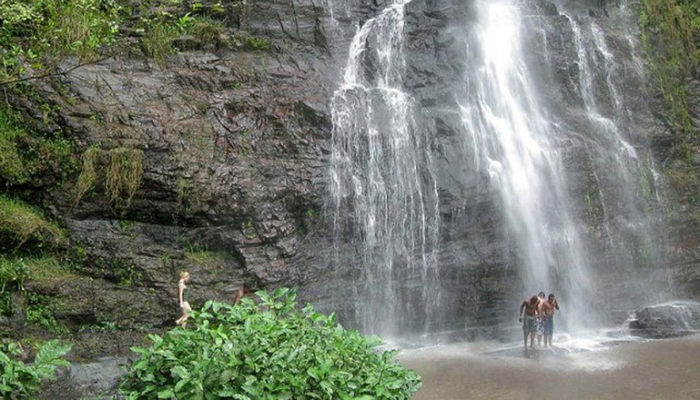
Consider the assets already in place: the Obudu Mountain Resort and Afi Mountain canopy walkway in Cross River State; the temperate highlands of the Mambilla Plateau in Taraba; the Erin-Ijesha waterfalls in Osun; the dramatic granite outcrops of the Jos Plateau. Individually, they function as domestic attractions. Integrated into curated, multi-day circuits with reliable infrastructure and certified operators, they could anchor premium regional and diaspora itineraries.
The arithmetic is not speculative. Assuming Nigeria were to attract 500,000 regional and international adventure travellers annually, a modest ambition relative to its population size and diaspora reach, and each visitor spent an average of $2,000 across accommodation, guides, transport and activities, direct revenue would approach $1 billion. A slightly higher per-visitor spend, typical of premium adventure segments, would push that figure toward $1.5 billion.
More important than the headline number is the structure of the revenue. Unlike hydrocarbons, which are capital-intensive and geographically concentrated, adventure tourism is labour-intensive and dispersed. It generates demand for trained guides, emergency responders, drivers, hospitality workers, conservation specialists, and local suppliers. Income circulates within host communities rather than accumulating around a single extraction site.
For a country pursuing inclusive growth, that distinction matters
The primary barrier is institutional credibility. Adventure tourism depends on trust. International travellers and insurers require assurance that climbing routes are inspected, guides are certified, rescue systems exist, and liability frameworks are enforceable. Nigeria lacks a unified, internationally recognised safety and operator accreditation regime for high-risk outdoor activities. In its absence, destinations struggle to command premium pricing or attract global distribution partners.
Infrastructure inconsistencies compound the challenge. Access roads, air connectivity, medical proximity, and power reliability determine whether a destination can sustain high-spend traffic. Too many promising sites remain difficult to reach or operate at global standards.
Packaging is another constraint. Travellers rarely purchase isolated landmarks. They purchase experiences with narrative coherence: five-day trekking circuits, themed cultural-ecology routes and guided wildlife immersion programmes. Countries that have scaled adventure tourism have done so by branding routes, standardising trails, and marketing finished itineraries rather than scattered attractions.
Ease of entry is equally decisive Visa processing times, airport efficiency, and consistent security communication influence travel decisions long before a booking is confirmed. Perception is part of the product.
None of these obstacles are insurmountable. A small number of anchor destinations could be prioritised for infrastructure upgrades, operator licensing reforms, and internationally benchmarked safety standards. Transparent certification systems would reduce risk perception and unlock private capital.
Investment appetite is unlikely to be the binding constraint. Eco-lodges, equipment hubs, and training institutes require patient financing, but the risk-return profile improves dramatically once regulatory frameworks are predictable. Targeted tax incentives, concessional credit lines, and public-private partnerships could catalyse early movers. Development finance institutions already active in infrastructure and SME financing could extend risk-sharing instruments to credible tourism operators.
Human capital development would need to follow. Guide accreditation, wilderness first-response certification, and environmental management training could be embedded within hospitality and technical curricula. Structured properly, this becomes export service capacity building rather than seasonal employment.
There is also a sustainability dividend. When well managed, adventure tourism aligns economic incentives with environmental conservation. Revenue-sharing agreements and community participation models create financial stakes in preserving forests, waterfalls, and wildlife corridors. In contrast to extractive industries that often generate tension, structured tourism can anchor conservation-based growth.
Timing matters
Global travel demand continues to recover, and younger travellers increasingly prioritise immersive experiences over conventional luxury. Regional competitors are consolidating brand positions. Delay carries opportunity cost.
South Africa’s $1.5 billion adventure tourism segment demonstrates institutional coordination, the conversion of landscape into structured income. Nigeria’s terrain is not inferior. Its execution has been.
Diversification debates in Abuja often revolve around sectors that require heavy capital formation from scratch. Adventure tourism is different. The raw materials already exist. Mountains do not require import waivers. Waterfalls do not depend on refinery rehabilitation. Plateaus do not fluctuate with Brent crude.
They require policy discipline, regulatory clarity, and branding coherence.
If treated as a strategic export industry rather than a peripheral leisure activity, adventure tourism could credibly evolve into a billion-dollar segment within a decade. In an economy long defined by oil wells and production quotas, Nigeria’s cliffs and highlands may yet prove to be the more resilient asset.
The landscape is in place. The missing ingredient is structure.