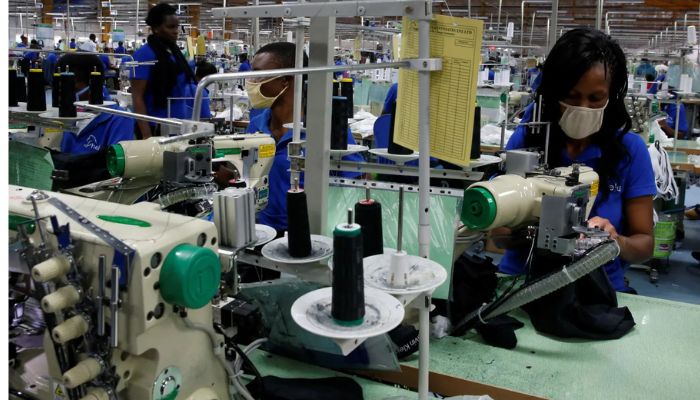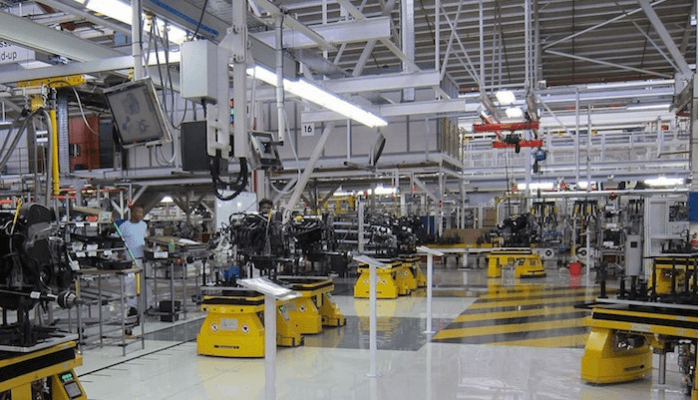
Nigeria’s manufacturing investments plunged 35 percent in 2024, as high interest rate crush appetite for capita-intensive projects.
Data from the Manufacturers Association of Nigeria’s (MAN) latest 2024 second -half economic review report shows that investments into the sector fell by 35.3 percent year-on-year to N658.81 billion in 2024.
However, H2 2024 witnessed a 19.4 percent increase compared to H1 2024, as manufacturers cautiously resumed capital expenditures.
MAN attributed the sharp decline to the country’s economic uncertainty reduced expansion plans.

The Central Bank of Nigeria retained MPR, the benchmark for the interest rate in the country at 27.5 percent, and the cash reserve ratio (CRR) at 50 percent.
At the moment, commercial banks charge rates between 30 and 38 percent, according to BusinessDay checks.
Experts say the excessively high rates at deposit money banks leading to higher borrowing costs, will derail growth and output gains in the country’s manufacturing sector.
MAN had warned in 2024 that the country’s high interest rate would stifle new investments in the real sector, increase production costs and borrowing costs for manufacturers.
Read also: Firm plans investment in Nigeria’s valves manufacturing

“The impact of higher interest rates goes beyond compounding the challenges of manufacturers, it stifles opportunities for investment in crucial areas such as technology, retooling, and expansion within the manufacturing sector,” said Segun Ajayi-Kadir, director general of MAN said in a September note last year.
“Manufacturers will all the more be compelled to choose servicing existing credit facilities over expansion and investment in new product lines,” he explained.
Usually, banks respond to MPR changes, according to experts. MAN noted that the recent hike will increase borrowing costs from manufacturers to 35 percent.
Nigerian manufacturers suffered from a long-running shortage of foreign exchange and a sharp devaluation in 2024 which made doing business in the country too complicated.
In 2024, the naira lost 40.9 percent of its value against the dollar in the official market despite notable growth in external reserves within the period, according to BusinessDay analysis.
Apart from FX volatility and high interest rate, the country’s huge infrastructure gaps are also increasing the burden of doing business in Africa’s most populous country.
Read also: U.S 14% tariff has significant impact on sector, economy – manufacturers
The availability of adequate infrastructure is a major determinant of the success of every country’s industrial sector.
However, Nigeria lacks the necessary infrastructure needed to grow businesses, especially developed transport systems such as roads and rail that are connected to the nation’s seaports.
Also, energy is a key element of the production process. Nigeria’s inability to supply and distribute sufficient electricity has left businesses at the mercy of generators that consume diesel and petrol.
Manufacturers spend 40 percent of their total production cost on generating energy for their businesses, according to MAN.
According to MAN 2024 second -half economic review report, the electricity supply situation for industries improved in 2024, with the average daily supply increasing to 13.3 hours per day, up from 10.6 hours in 2023.
On a half-on-half basis, electricity supply rose from 11.4 hours per day in H1 2024 to 15.2 hours in H2 2024.
However, electricity tariffs surged by over 200 percent for Band A consumers, significantly increasing manufacturing costs.
While power availability improved, many manufacturers still faced frequent outages, and costs as the country witnessed 12 national grid collapses and this remained a major concern, the report said.