The year 2020 was an unprecedented year, no thanks to the coronavirus outbreak, as the global economy was suspended in the second quarter and most of Q3-2020 to safeguard human health. Oil prices plummeted to levels never seen before, airlines were grounded, hotels shut down, and all forms of congregational economic activity halted. This triggered a global recession across advanced and low income countries, as GDP growth numbers printed negative amid demand and supply shocks.
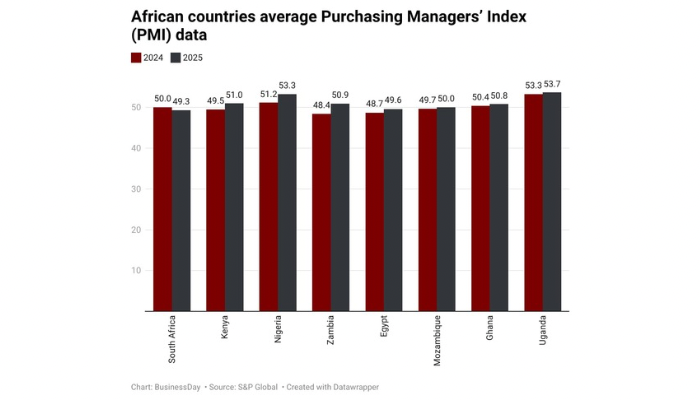
Economic recovery is however, gaining momentum globally. Forward-looking composite purchasing manager indices for major regions are indicating a strong ongoing expansion with manufacturing still offsetting weak services. Labour markets are also healing gradually in the US, UK and Australia and are stabilizing in Europe. However, strong goods demand is putting pressure on global supply chains with worldwide shortages and bottlenecks across a range of industries. Also, weather disruptions earlier in the year, port backlogs, a fire in a major Japanese chip factory, and a large vessel blocking Suez Canal for almost a week, exacerbated supply problems. The Baltic Dry Index which measures global shipping rates reached a two-year high in the month of March 2021.
Overall, the OECD has upgraded its forecast for global growth for 2021 by a significant degree, but the recovery remains uneven. Global growth is projected by the IMF to rebound by 5.2% in 2021, buoyed by recoveries in emerging markets (+6.0%) and advanced economies (+3.9%). Recovery will be aided by bold economic stimulus packages and a massive accommodative policy stance by central banks. Similarly, oil prices are expected to continue northwards but may be stuck within the $65-$70/b range if demand fails to keep up with supply.
In developed markets, the US outperformed most major countries except Germany and Italy in March. Emerging markets were the weakest region, returning -1.5% in March which was driven by the ongoing market correction in China. China’s tech stocks were hit by the rotation to value and increasing regulatory pressure. Concerns over credit tightening weighed on Chinese equity markets in general.

Read Also: CBN extends Naira for dollar scheme indefinitely
NIGERIA’S Q1 REVIEW
On the home front, the Monetary Policy Committee (MPC) met for the second time this year, and committee members casted a 6/3 ballot to keep the Monetary Policy Rate and other policy parameters unchanged. As intimated by Godwin Emefiele, Chairman of the Committee and Governor of the Central Bank of Nigeria (CBN), the committee arrived at this choice in the wake of the different macroeconomic factors like the high rate of unemployment (33%), upward inflationary pressure (18.17%), and the sluggish economic growth (0.11%) the country recorded in Q4 2020.
Finally, the National Bureau of Statistics ( NBS) released its foreign and domestic debt report for Q4 2020, noting that the nation’s gross public debt stood at N32.92 trillion as of 31st December 2020. Contrasted with the N27.40 trillion figure as of 31st December, 2019, this nation’s total debt size grew by 20.1% over the year. The overall domestic debt represented 61.40% of the total public debt (in contrast to the 67.10% recorded in 2019). The gross public debt is projected to extend to N37.61 trillion by 31st December 2021 after considering the estimated borrowings of N4.69 trillion needed to finance the deficiency in Nigeria’s 2021 budget.
MACROECONOMIC OVERVIEW GDP Growth & Oil Production

Following a narrow recovery from the second economic recession in 4 years, Nigeria’s growth trajectory has seen improved expectations for 2021. A recently released report by the International Monetary Fund (IMF) pointed to an improved outlook for the Nigerian economy, as the Bretton Wood establishment increased the GDP growth forecast for 2021 from 1.5% in its January 2021’s forecast to 2.5%. The IMF however expects growth to moderate in 2022, ticking up by just 2.3%.
Nigeria’s revised growth rests against a backdrop of improved global outlook, as the IMF increased its global economic growth forecast to 6.0% from a 5.2% projection embedded in the October 2020 IMF World Economic Outlook. Likewise, the IMF lifted its earlier Sub-saharan Africa growth forecast for 2021 by 0.2% to 3.4%. Nevertheless, the anticipated growth across Sub-saharan Africa masks various contours, as recovery in tourism reliant economies is expected to be slower. Downside risks to recovery in commodity-export reliant economies like Nigeria are equally predominant, hence, rationalising a lower growth projection for Nigeria relative to that of the Sub-saharan African region.
OPEC, in its monthly oil market report noted that Nigeria’s oil production improved slightly by 4.63% in February 2021 to 1.42mbpd from 1.36mbpd in January 2020. This evidenced the positive impact from the ease of the local production limit following the additional output cuts implemented in the past months to compensate for non-compliance in the earlier months of 2020. In addition, OPEC marginally improved its world oil demand forecast for 2021 by 0.20mbpd to average 96.30mbpd relative to the preceding month’s estimate, on the back of improved economic expectations for the second quarter of the year, as the world records improvements in Covid-19 inoculation. On the supply side, OPEC revised its world oil supply estimate for 2021 up by 0.50mbpd to average 63.30mbpd relative to the preceding month’s estimate, buoyed by improved production in Canada, the US, Norway, Brazil and Russia.
FINANCIAL MARKETS Fixed Income Market
The fixed income market halted its bullish run in Q1 2021 as weak liquidity expectation coupled with the rise in rates at the NTB auctions, dampened investors’ appetite.
Monthly yields for the benchmark securities monitored expanded across all maturities on a month-on month basis, as average yields of the sovereign bonds with 3-year, 5-year, 10-year and 20-year maturities rose by 55 bps, 117 bps, 38 bps and 87 bps, respectively.
The Bond auction, which held on 24th March 2021, closed relatively strong with a bid-to-cover ratio of 2.2x and stop rates for the 7-year, 15year and 25-year maturities printing at 10.50%, 11.50% and 12.00% respectively. Compared to the previous auction, 7-year, 15-year and 25-year maturities closed higher by 25 bps, 25 bps, and 20 bps, respectively. The bond auction calendar for Q2 2021 which was released during the period signaled an increase in offer size.
The Central Bank of Nigeria left its monetary policy rate unchanged at 11.5% during its March 2021 meeting, to help to consolidate the country’s recovery process despite intensifying inflationary pressures. Headline inflation hit a four-year high of 17.33% in February, due to the persistent insecurity coupled with the upward foreign exchange adjustments.
EXPECTATIONS FOR SUBSEQUENT QUARTERS
Nigeria’s path to recovery may not be far off as the quicker than expected availability of Covid-19 vaccines in Nigeria, as well as the sustained uptick in oil prices, has brightened the GDP growth outlook for 2021. We expect to see real GDP grow by roughly 1% in Q1 2021 based on in-house macroeconomic models; GDP in Q1 2021 could grow between +0.98% and +1.3% depending on the size of fiscal policy stimulus in the first quarter. However, the 2.5% growth projection by the IMF sits slightly above our earlier posited GDP growth range of 1.5% and 2.4%, but remains shy of the 3% growth target embedded in the 2021 Appropriation Act. Nevertheless, we maintain tepid expectations on Nigerian’s economic growth for 2021, as we foresee a shift in policy posture to curb inflation, and we also remain concerned about the pre-existing structural issues.
Inflation is expected to maintain a northward trajectory, as the drivers remain active. Food supply remains a key concern, but the reduced tension between the northern and south-western traders should marginally temper a monthly rise. Nevertheless, the insufficiency and disruptions to food supply will continue to have a notable effect on prices, as well as the pass-through effect of increased energy and PMS prices on the production cost of businesses and the pockets of individual consumers. However, all things being equal, if the economy continues in its current trajectory, inflation rates are expected to begin to dip from the second half of the year (H2), and probably conclude the year at a 12%-14% threshold.
While the monetary and fiscal authorities have maintained a dovish tone in a bid to stimulate growth, we believe that inflation has now risen to levels that cannot be ignored anymore. Hence, we anticipate deliberate responses particularly from the fiscal side, to cap the upsurge. We also anticipate a knee-jerk reaction in the fixed income market as participants re-price their risks.
We expect the MPC to keep playing down the current inflationary pressure, which to a great extent, remains supply-side driven, since tightening would expand the costs of capital and hinder venture and individual investments expected to support recuperation of the debilitated economy. Additionally, we consider a dovish decision both unrealistic and far-fetched in the short to medium term as this might be terrible for the country’s currency. We however do not totally preclude tightening in the short to medium term as any hit to the exchange rate could lead to a frantic move to draw in more greenback.
We also expect yields to trend further upward this month on the back of the low liquidity expectation coupled with the increase in bond offering.
In the near term, we may see a further devaluation of the Naira at the I&E FX window till more flows come in to further stabilize the reserves.
The earnings season has come to an end and it is difficult to pinpoint what could propel positive sentiments in the market in the near term. A key factor to watch will be the trend of the 1-year bill as we know there is an inverse relationship between fixed income yields and equity prices. We expect positive macros and corporate disclosures to steer the sentiments in the market.