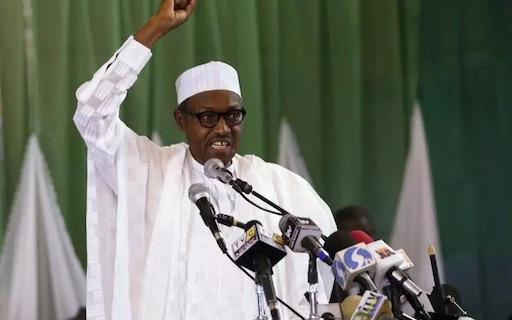
After 12 years of trying, a majority of Nigerians have given retired general Muhammadu Buhari the mandate to go ahead and carry out the change message he promised during a three month long presidential campaign, as president-elect of the country. Buhari is making history as he becomes the first presidential candidate of an opposition political party to dethrone an incumbent in an election since Nigeria gained independence in 1960.
A resilient retired Army General turned politician, Buhari has contested the presidency on the platforms of different political parties since 2003. He was Nigeria’s military ruler between December 1984 and 1985. His victory at the March 28 presidential election was made possible by the merger between his party, the Congress for Progressive Change (CPC) a predominantly Northern party and the Action Congress of Nigeria (ACN) which has the South West region of the country as its stronghold.
The choice of Buhari to lead the party and the nation, at this time, when morale is at a low ebb, amid declining resources and insecurity, was due to his uprightness and the belief that he could bring sanity to a country terribly eaten up by corruption, which has caused a deep distrust in its leaders by its teeming new generation. This election which proved many wrong, because of the apprehension that built up in the country prior to the postponement of the polls, was surprisingly peaceful and smooth.
This election is a replica of the June 12 elections of 2003 when Nigerians overwhelmingly voted to cause a change in the direction the country was headed then. The impressive and large turn out of voters underlined the yearnings of Nigerians for a change in the administration of the country from a group of leaders who have been clueless. Buhari will be faced with the challenge of securing the nation from insurgents that have killed thousands and driven people away from states such as Borno, Adamawa, and Yobe. He will also need to devise strategies to change the orientation of a corrupt nation and give confidence that the leaders have to be accountable and transparent.

Nigerians will also look up to the new government of Buhari to make the country’s infrastructure work, so as to make life worth living for the mass of Nigerians. The new APC led government is expected to provide a new direction for the country’s economy that is currently at an all time low, due to the cluelessness of the outgoing president Jonathan and the PDP administration. Jonathan’s administration will be remembered for the various reforms made in almost all sectors of the economy but which corruption made insignificant.
His administration was dogged with the looting of the pension funds for its senior citizens and mismanagement of oil resources, as well as the oil subsidy fraud. He will also need to assure the country that age and experience have made him to be flexible in decision making, a factor that has long made the position elusive to him. Buhari’s emergence will definitely alter the political permutations of the country. During the Olusegun Obasanjo’s administration, political offices were shared among the three ethnic region of the country. With a Southwesterner as the president and a Northerner as vice-president, the position of the Senate president went to the south east.
The permutations also changed during this outgoing Jonathan administration, when a South South president has his vice president, Namadi Sambo, from the North. This is expected to change again with the emergence of a Northern president with his deputy coming from the Southwest. Although seniority is always a factor in the choice of the leaders of the National Assembly, as enjoyed by David Mark who spent two terms as the Senate president.
This, however may cease now, following the change in the country’s leadership. Also, the party with majority membership is in good stead of providing the leaders in the National Assembly. Mark will likely go down in history as the first Senate President who spent two terms but later became a floor member.
He may however be compensated with the chairmanship of a committee because of his experience and long stay in the hallowed chamber. Mark has been in the Senate since 1999 when the country returned to civil rule. He became the Senate president in 2007 and has since occupied the position.

For the House of Representatives, the party in the majority will also provide the speaker, depending on the power sharing formula of the party that is in control of the chamber.