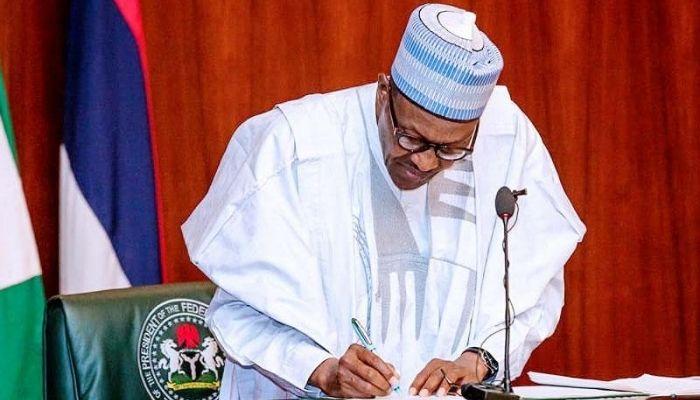
The new Electoral Act signed into law by President Muhammadu Buhari on Friday holds potential for the improvement of the Nigerian electoral system.
In his verified twitter account, investment banker/founder of ANAP Foundation, Atedo Peterside, expressed his gratitude to President Buahri.
“Thank you @MBuhari for signing into law an Electoral Act that constitutes a significant improvement over previous legislation. The #GoNigeria movement wishes to thank Mr. President, our legislators, Civil Society, etc. for this team effort,” he stated.
Those who spoke with BusinessDay expressed the optimism that the new legal framework would improve Nigeria’s election significantly in so many ways such as the electronic transmission of results and early release of funds to the Independent National Electoral Commission (INEC) which would hasten preparations.

Ernest Ereke, coordinator, YIAGA Africa Centre for Legislative Engagement, said with the new Act, INEC will receive funds for general election not later than 360 days or one year before the date for the election and this will help to improve its preparation.
Ereke also said the new law would promote inclusivity by empowering INEC to make provisions for the people with disabilities to vote and for early conduct of party primaries which could help resolve pre-election matters.
“It has strengthened the power of INEC to reject results that are declared under circumstances that are not recognised by the law for instance under duress.
“Equally important in terms of strengthening INEC is the provision to provide for the neutrality of those who will get into the Commission by ensuring that those who want to serve the Commission at whatever level are; whether as permanent staff or ad-hoc staff of the Commission will have to declare if they’re politically affiliated if they are partisan,” Ereke said.
He also expressed the hope that “On the part of candidate nomination, primaries will now have to come early. Primaries have to be concluded not later than 180 days to the date for the conduct of elections. Campaigns will now start earlier. Therefore, it helps us; Nigerians will know the candidates very well, issues that could arise from the conduct of party primaries would have been resolved before the conduct of the election so that we will not be going back to pre-election issues.”
“Also, for the very first time, INEC has been mandated to make every other decision that is necessary to ensure that our citizens who are living with disabilities, visually or physically impaired they are able to vote so that INEC provide braille and any other facility make it possible for them to participate in election,” he further said.

Read also: Chronicles of the Electoral Bill since 2018
Christian Okeke, a lecturer in the Department of Political Science, Nnamdi Azikiwe University Awka, said INEC no longer has excuse of lack of formidable legal framework.
He urged the Commission to go to its archives and dig out those infractions with regards to failure of past elections and begin to address them head-on, using the new law as a springboard.
“The President, by signing the electoral amendment bill into law, simply did his job and I think that politically-conscious Nigerians are relieved at last. The president appears to have a record of attending to important state matters rather late. That had happened in a number of incidents. However, it is better late than never, they say.
“Time is running out against INEC’s preparations for 2023 general election. There is no doubt about that. But what have principally crippled INEC and forced it to conduct troubled elections are different factors entirely. At every election, those factors boldly rear their ugly heads, the last councils’ election in FCT inclusive. The commission is fully aware of those problems.”
According to Okeke, “The Commission must know that the 2023 poll is about the most important election in the history of Nigeria. It therefore, should not allow itself to be used to derail it.”
Solomon Gbenga, deputy National Youth Leader of the Young Progressives Party (YPP), agreed that though the Electoral Act could help in area of electronic transmission of results, there was nothing too special about it as most of the provisions have been there.
“I don’t know why Nigerians are making it a big deal. For the electronic transmission of results we can applaud that but I don’t want to make it look like my party is condemning anything that the President has done. I don’t know why everybody is celebrating what has been in existence,” he said.