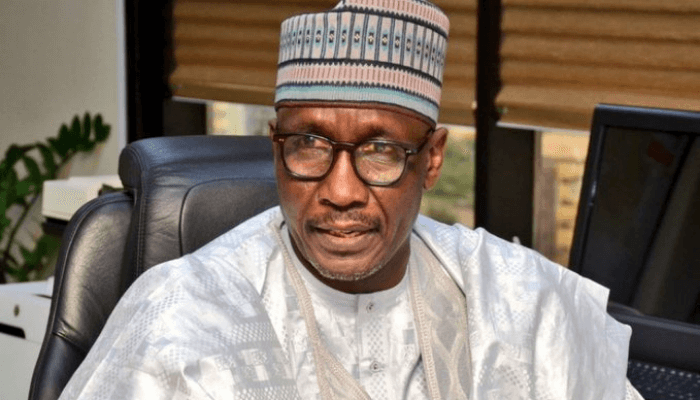
Group managing director of the Nigerian National Petroleum Corporation (NNPC), Mele Kyari has said it is difficult for Nigerians to know their actual fuel consumption.
Spokesman of the NNPC, Garba Deen Muhammad, in a statement on Thursday, said Kyari stated this in his presentation at an interactive session organised by the joint Senate committee on the 2022-2024 Medium Term Expenditure Framework (MTEF) and Fiscal Strategy Paper (FSP).
The GMD attributed the situation to what he claimed to be “criminal activities of fuel smugglers.”
Kyari, according to the statement, stressed that the activities of smugglers have made it difficult for the country to determine the actual consumption figures for petrol, noting that the corporation can only know what was trucked out from loading depots across the country but cannot determine how much of that was consumed in-country.

He said efforts by the corporation and some federal agencies to combat the menace of smuggling of petroleum products have been largely hampered by existing arbitrage price differentials in pump price of petrol in Nigeria and its neighbouring countries.
According to Kyari, with a price difference of over N100 per litre between what is sold in Nigeria and in countries around the nation, it was difficult to cage the activities of petrol smugglers.
Read also: Fact Check: NNPC’s N287bn profit not first in 44 years
The GMD said though the corporation, working in concert with other agencies, has made some progress in combating the menace, the battle was yet to be won.
“As long as there is arbitrage between the price that you sell and what is obtainable elsewhere, you can be sure that it is very difficult to contain the situation,” he said.

On the MTEF assumptions, Kyari reiterated a base oil price scenario of $57 per barrel for 2022, $61 per barrel for 2023 and $62 per barrel for 2024, predicated on a base national production of 1.883 million barrels per day in 2022, 2.234 million barrels per day in 2023 and 2.218 million barrels per day in 2024.
He explained that the assumptions were arrived at after consultations with the ministry of finance and other stakeholders while also undertaking a careful appraisal of the three-year historical dated Brent oil price average of $59.07 per barrel premised on Platts Spot prices among other parameters.
He reiterated that price growth was to be moderated by the lingering concerns over COVID-19, increased energy efficiency as well as obvious switching due to increased utilisation of gas and alternatives for electricity generation.
The Senate joint committee session chaired by Solomon Adeola, had members drawn from the Senate committees on finance, national planning, foreign and local debts, banking, insurance, and other financial institutions, petroleum resources upstream, downstream petroleum sector and gas.