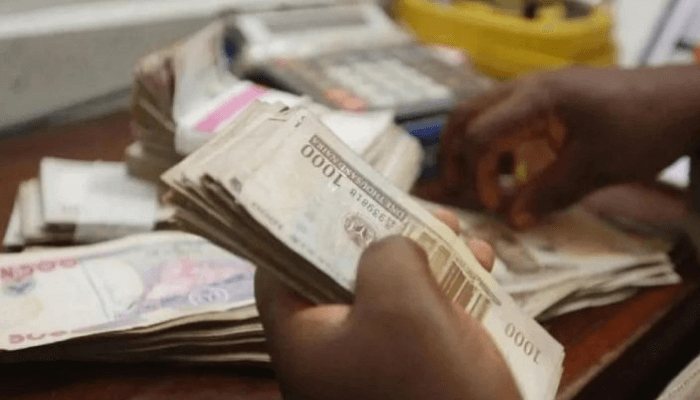
Rates on one-year Nigerian Treasury Bills (T-Bills) hit the highest in three months, touching 3.2 percent on Wednesday as investors patiently await the Central Bank of Nigeria’s Special Bills.
Confusion around pricing of the special bills saw investors stay on the sidelines during the latest auction for Treasury Bills as they were unsure whether the special bills would be priced higher than Treasury Bills which had only just hit a record low of 0.15 percent before rebounding to 3 percent at the latest auction.
“Largely, this is reflective of many investors staying on the sidelines in anticipation of the CBN special OMO window,” said Ayorinde Akinloye, a research analyst at CSL Stockbrokers Limited.
According to the Lagos-based analyst, the yields on T-bills were driven by the fact that “there were not a lot of bids” from investors.

Compared to the N295.33 billion worth of unsuccessful bids reported in the last auction in November, the Wednesday auction conducted by the CBN on behalf of the Federal Government only recorded N52.03 billion failed transactions.
Investors were willing to subscribe to the N50.1 billion the CBN raised at the Wednesday auction by N102.13 billion, three times less than the N445 billion investors were willing to offer for the N150 billion the apex bank raised at the last auction in November.
“Investors were cautious on the back of the expected CBN special bills, so most bids were aggressive,” Ayodeji Ebo, senior economist/head, research & strategy, Greenwich Merchant Bank, said.
Read also: How CBNs intervention saved power sector from collapse over liquidity crisis, by Experts
While rates on Nigerian government instruments have always been high, the limited attractive instruments and the OMO policy by the Central Bank which prevents domestic investors from participating in the auction have sent yields to their worst record.

But analysts expect the anticipated CBN’s special bills, which are geared towards solving the issue of excess CRR charges on bank deposits to boost lending in an economy that has slipped into its second recession in five years, to offer return than the traditional T-bills.
“The rates on the special bills will most likely be higher than the yields on T-bills,” a Lagos-based market analyst said.
The CBN’s special bills, which come with zero coupons as applicable yield at issuance will be determined by the apex bank, are expected to mop up excess liquidity (idle cash) in the economy. The instrument will be tradable amongst banks, retail and institutional investors, according to the apex bank.
While the CBN claims that the low-interest rate tactics in Nigeria is geared towards channelling funds into the real economy, low yields on the government instrument largely benefit the Federal Government and large corporates who are raising capital at cheaper rates compared to bank loans. Micro and small businesses, which form the bulk of the firms in the country, are left out.
Banks’ depositors, pensioners and investors are also top losers of the low-interest environment as adjusted inflation return has plunged to one of its lowest levels.
Before the Wednesday yield of 3.2 percent on the 364-day bill, stop rates on T-bills plunged to below one and was moving close to negative.
But when adjusted for inflation, the 3.2 percent return would yield -11.03 percent in real term. Nigeria’s inflation rate accelerated to 32-month high of 14.23 percent in October.
A breakdown of the T-bill auction results reveals that stop rates on the 91-day and 182-day and maturities settled at 0.01 percent and 0.60 percent, respectively. While the 182-day bill increased marginally from the previous stop rate of 0.09 percent, the shorter 91-day paper plunged further from its previous stop rate of 0.02 percent.
Further analysis of the Wednesday auction result shows that the 92-day paper was oversubscribed by more than 10 times as N43.72 billion worth of bills bounced back as failed bids. The Central Bank raised N4.41 billion worth of bills but investors were willing to subscribe to the short-term instrument with N48.13 billion.
While investors were willing to subscribe to the 182-day instrument with N12.12 billion, the CBN only allotted N7.82 billion, N4.3 billion unsuccessful transactions.
Surprisingly, the longer 364-day paper which in the past attracted more bids from investors only recorded N4.01 billion unsuccessful bids as investors were chasing the N38.7 the CBN raised with N42.71 billion.