Religious organisations, especially churches in Nigeria, have been urged to prioritise members’ talent development by amplifying capacity building among their followers.
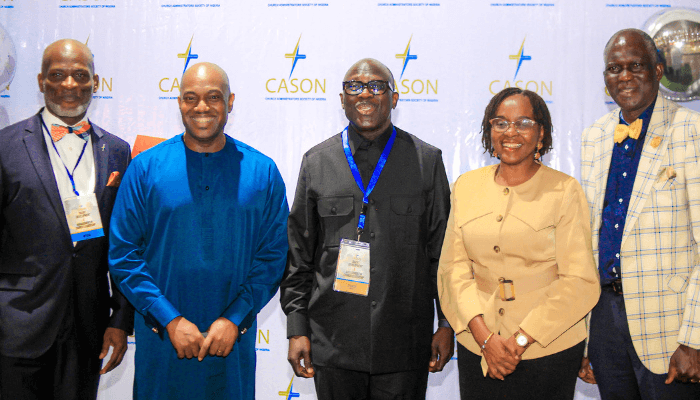
This call was made during the 12th annual conference of the Church Administrators Society of Nigeria (CASON) held in Lagos, with the theme, ‘Talent Development and Management in Church Leadership.’
“At CASON, our annual conferences have been a strong prophetic voice for the body of Christ. Our vision is to professionalise church administration and have every church administrator become a certified and registered member of CASON. We train leaders how to run their church well, and not run it down,” Seyi Oladimeji, CASON President, said.
Read also: Church-state collaboration needed to promote physical, spiritual well-being

According to him, CASON currently runs an executive diploma programme in Church Administration in conjunction with Babcock University, and will commence MBA in Church Administration by January 2026.
Fela Durotoye, founder/CEO, Gemstone Group, said church administrators must be equipped to manage worshippers’ aspirations as well as the leader’s targets and expectations.
Describing the role of church administrators with the allegory of a club sandwich, Durotoye said,
“They are like the ham, cheese, chicken or avocado positioned between the bottom slice of bread, which is the congregation, and the top slice, which is the head pastor.”
Odunayo Oke, Lagos State Baptist Conference, advised that as much as possible, every gifted and highly talented person should do the best they can to make their church leaders comfortable with the innovations and rapid changes they may be inspired to bring to the church. “Otherwise, you would be shooting yourself in the foot and your ideas may never be implemented.”

Read also: What should be paramount to church leaders is bringing the world to Christ – Olayemi
On the question of whether or not musicians in a church should be paid, both Durotoye and Bukola Smith, managing director, FSDH Merchant Bank, agreed that the church must invest significantly in music ministers as its human capital.
While Smith emphasised that the matter of remuneration is discretionary, Durotoye urged that what works best is for churches to train and invest resources in such talents till they become their best and are then able to live off their skills in the larger society. “That way, they would be willing to serve the lord in the church for next to nothing,” Durotoye said.