|
Getting your Trinity Audio player ready...
|
Faced with rising competition and a plethora of environmental and social challenges, Nigerian and global brewers are adopting technologies to reduce their energy consumption and emissions in order to grow bottom-line and regain customers’ trust.
At the Africa Brewing Conference held in Douala Cameroon, from June 12-15, half a day’s programme was devoted to discussing how automated brewing systems are providing brewers with exciting opportunities to increase production levels while significantly reducing the use of resources and costs.
“These systems allow brands to monitor temperatures, pressures, and other variables during production stages in a precise manner, resulting in higher quality products and increased end-user satisfaction,” said Kentish Mbrew, managing director of Steiner Hops Ltd, the UK subsidiary of Hopsteiner Group, which supplies brewers worldwide.
He added, “Additionally, data collected through sensor-connected equipment can optimise processes, create predictive analytics models to anticipate future needs, and better plan inventory stock levels”.

Alexander John, sales manager, Africa, for Ziemann Holvrieka, said the global beer industry is embracing new technologies in order to increase output, reduce waste, and implement more sustainable practices.
“In this era of super-sustainability, businesses have no time to waste, and burying your head in the sand is not an option,” John said.
He added, “Heightened public expectation and the formalisation of new environmental, social and governance (ESG) requirements from investors mean beer brands must step up to the sustainability challenge like never before.”
“However, it is critical to look beyond and decarbonise the entire value chain through collaborative efforts,” John said during his presentation.
Jan Biering, head of research for German-based Beer and Beverage Production, said brewers are increasingly adopting technologies to reduce their energy consumption and emissions.

“One key area of focus is energy-efficient brewing equipment. Modern brewing equipment is designed to be more energy-efficient, using heat exchangers, insulated mash tuns and kettles, and energy-efficient pumps and motors,” Biering said.
“This means brewers can use less energy to heat water, resulting in significant energy savings,” he added.
BusinessDay’s findings showed Heineken, one of the world’s largest beer brands, has taken steps to reduce its environmental footprint across the value chain.
The company has set a goal to become carbon neutral by 2040 and has implemented a variety of sustainable technologies, including renewable energy sources, energy-efficient lighting, and water conservation technologies.
Since 2018, it has established more than 130 renewable energy projects, including solar-powered breweries. In Spain, for example, the firm has signed a deal with Iberdrola, a Spanish electric company to power all of its operations and offices using solar power and it will replace its gas boilers with biomass ones.
Heineken said it has developed two cutting-edge technologies to enhance the cooling of its products.
During a product exhibition in Douala, findings showed Heineken’s “Chill it” cools its products in just 30 seconds while another technology, an IoT (Internet of Things) solution for retail, enables Heineken to monitor the effectiveness of their fridges at points of sale.
“These technologies provide customers with perfectly chilled beverages while ensuring optimal performance of their refrigeration systems at all times,” Heineken’s sales team told BusinessDay at its exhibition stand.
Another big player, Anheuser-Busch InBev, said it has implemented energy-efficient technologies, including biomass boilers, wastewater treatment plants that generate biogas, and carbon capture and utilisation technologies.
The company said it is investing in emerging technology and innovation, like remote sensing and data analytics, to support its initiatives.
Further findings showed several beer brands have implemented energy-saving and water-conservation technologies in their breweries.
For instance, Heineken said it has built a new water reclamation plant in South Africa, reducing its reliance on freshwater and reclaiming wastewater thanks to its water recycling technology.
“The journey of beer does not end until it is enjoyed by beer lovers worldwide, which is why reducing waste throughout the entire beer value chain is crucial,” Biering said.
In Nigeria, Anthony Osunde, head of sales, Krones West Africa, said the company has developed a “skip and run” technology that benefits its customers in terms of cost savings and energy efficiency in their PET bottle production units.
“Our low-temperature equitherm technology for breweries will cut down energy costs for new breweries and can be retrofitted for existing breweries,” Osunde said at the event.
He added, “Our continuous investments not only in beverage and recycling technology but also in our local infrastructure like our local consumables manufacturing plant and our solar energy project, enables us to approach the future with confidence.”
Apart from Krones, BusinessDay’s findings showed two renewable energy (solar and battery storage hybrid) projects announced for Ibadan and Ama breweries in Oyo and Enugu states, last November, valued at $10 million, are among the largest renewable energy projects for a business in Nigeria.
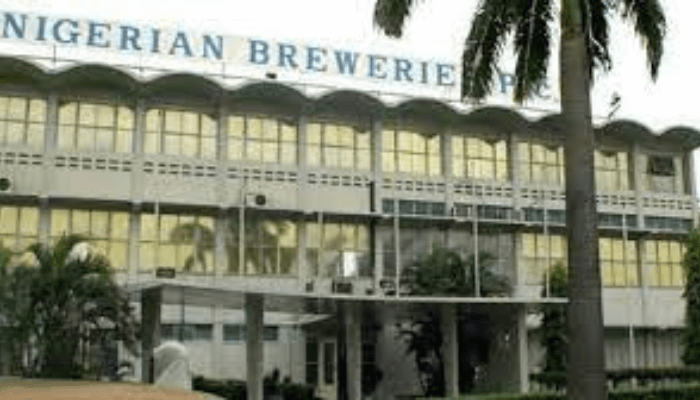
“The solar plants combined which are under collaboration between Nigerian Breweries and CrossBoundary Energy, will supply approximately 10GWh annually to the Ibadan and Ama breweries at a significant discount to their current cost of power,” a statement from Nigerian Breweries said.