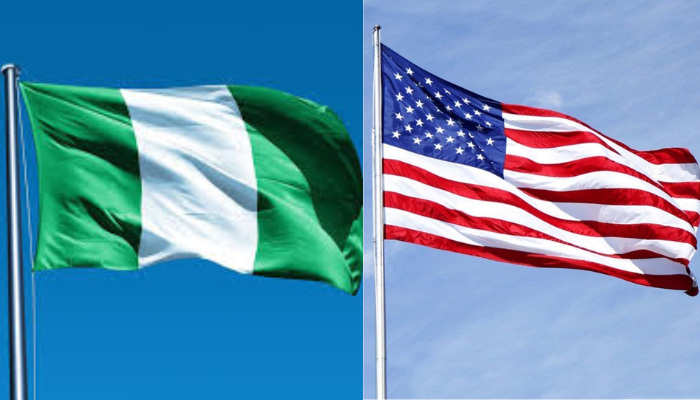
Despite a fresh 15 percent tariff imposed on Nigerian exports to the United States, both countries have reaffirmed their commitment to strengthening bilateral trade and investment relations.
The renewed commitment followed a strategic meeting in Abuja between Jumoke Oduwole, Nigeria’s Minister of Industry, Trade and Investment, and U.S. diplomats, outgoing Deputy, Richard M. Mills Jr. and incoming U.S. Consul General to Nigeria, Rick Swart.
At the centre of discussions was the evolving trade landscape triggered by a July 31 executive order signed by U.S. President Donald Trump, which officially placed Nigeria among a list of approximately 40 countries subject to elevated tariffs under a revised reciprocal trade policy.
The new rate, up from 14 percent in April to 15 percent takes effect on August 7.

Oduwole acknowledged that Nigeria’s tariff on trade with the United States has moved from 14% to 15%, clarifying that despite this adjustment, Nigeria remains a favorable environment for U.S. investors. She emphasized the scale of duty-free machinery, equipment, and services entering Nigeria from the U.S., underlining the mutually beneficial nature of this commercial exchange.
She highlighted the ongoing business-to-business engagements stemming from the commercial investment partnership launched on June 24th, “which continue with momentum and are set to culminate in a ministerial meeting on November 20th. This underscores the enduring relationship between both nations and their shared commitment to economic collaboration,”
Oduwole reiterated Nigeria’s dedication to advancing food sovereignty, digital trade, and competitiveness under President Bola Ahmed Tinubu’s “Nigeria First Policy and Intervention” initiative. She noted that recent monetary, fiscal, and trade reforms have yielded measurable results in stabilizing the economy and setting it on a growth trajectory.
The Outgoing Deputy Ambassador reaffirmed Washington’s interest in maintaining strong trade links with Nigeria, Africa’s largest economy and a key commercial partner. He noted that the incoming Consul General, Rick Swart, will play a crucial role in advancing U.S. trade and investment priorities in the region.
Swart, in his first formal remarks since assuming office, pledged to champion fair and balanced trade between both nations. He underscored the U.S. government’s commitment to fostering economic opportunities that benefit both American and Nigerian businesses.

The both parties resolved to navigate the new tariff regime through continued dialogue and strategic engagement, reinforcing the long-standing economic partnership between Nigeria and the United States.