|
Getting your Trinity Audio player ready...
|
The Federal Government says it expects as much as $4 billion in loan facilities for development of oil industry infrastructures as a 40-man Chinese investment delegation arrives the country later in October.
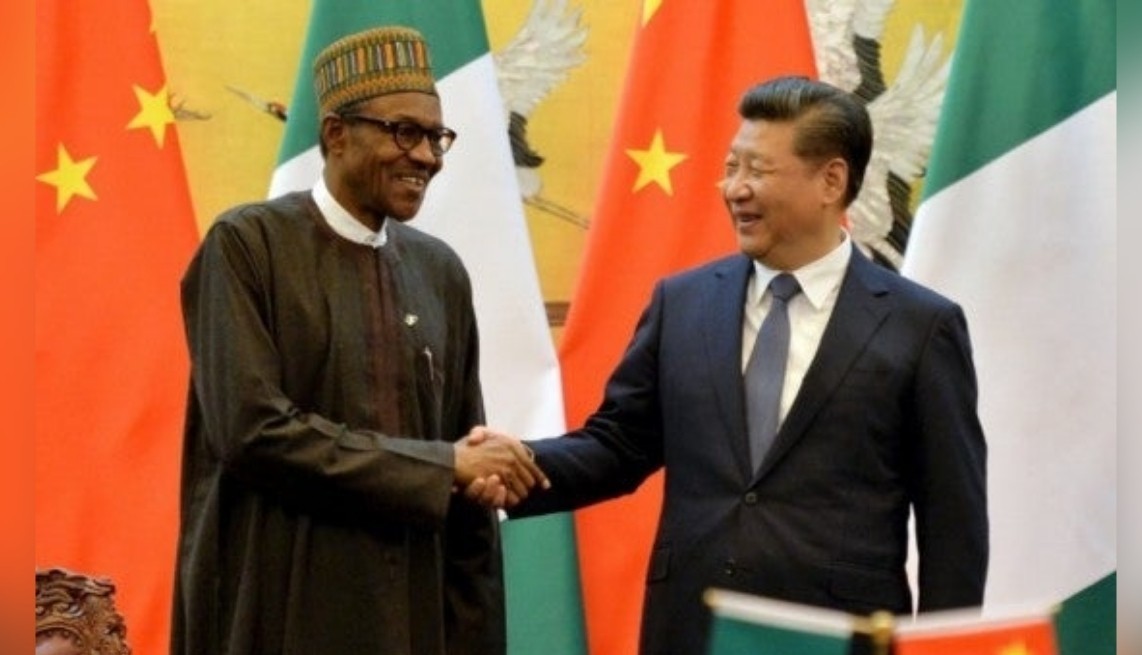
This is a fallout from the July road show in China where Nigeria signed a $75.6billion Memorandum of Understanding for investment in the oil sector, Minister of State for Petroleum Resources, Emmanuel Ibe Kachikwu said after the Federal Executive Council (FEC) meeting on Wednesday.
Briefing journalists alongside the ministers of Information and Culture, Lai Mohammed, Interior Abdurahman Danbazzau and Power Works and Housing Babatunde Fashola, after FEC meeting Kachikwu explained that the MoUs signed during the road show has a gestation period of about one year as both countries set up their
teams on bilateral lines to look at specific areas of investment interests.
“That is still work in progress, we are having a team of over 40 Chinese, members of some of those bodies about visiting Nigeria by the end of this month. We are also setting up a full inter-ministerial panel that will be deliberating with them for each of those sectoral investments.

“I will say that the target we had while going to China was to raise $40 billion which is the total cost of our infrastructural gap for the oil industry we raised about $75.6 billion, $69 billion of which were NNPC and government related potential investments and loans and the rest directly to the private sector, if we get even 20% of that, that will
be a major achievement for us.
“I will say we have one year period to work on this, we expect that some will come earlier, there are some facility lines that are almost readily available close to about $3 or $4billion but the investment packages will take us time. Realise that this is different from the pledges that were made when the President visited China which was an
all African type front basis, this is completely separate” the minister said.
The Nigerian National Petroleum Corporation (NNPC) had in July this year embarked on a road show to China seeking investments to bridge the infrastructure funding gaps in the Nigerian oil and gas sector. The management of the country’s state oil company had subsequently announced the signing of MOUs with some Chinese companies worth over $50 billion for infrastructure development.
The corporation had in its statement said listed companies involves in the deal to include China North Industries Corporation (NORINCO Group), China Cinda Asset Management Company Limited (CINDA), China National Offshore Oil Corporation (CNOOC), China Petroleum & Chemical Corporation/Addax petroleum SINOPEC/ADDAX), International Chamber of Commerce/ China’s National Development and Reform Commission
(ICC-NDRC), among others.

Council also approved the resuscitation of the National Council on the Hydrocarbon, an ombudsman council that meets once a year to just review policies in the oil and gas sector.
The minister explained that the council is a gathering of people from the business, oil sector, oil communities and ministries that are directly or indirectly affected by the policies rolled out by the petroleum ministry.
“…we continue the dialogue we have been having with militants, creating such a fora enables anybody who has an interest in the area, to converge and develop the thinking process that will guide policies in this sector,” he said.
He said the Council also approved the hosting of an international flare reduction convergence meeting in Nigeria billed to hold on November 30th and December 1st. “We will use that as a chance to roll out efforts by the ministry to addressing the flare. You are aware Nigeria is next to Russia in terms of the highest flaring nation. Even though we have progressed positively to reduce 70 per cent of the flare, but the 30 percent we still flare, is about 10 percent of the world’s flare so is a huge amount of gas” he added.
Kachikwu said he also briefed council on the outcome of the OPEC meetings and efforts to modulate prices as well as the meetings held in Algeria when “we decided to put some ceilings cap to the barrels of oil that we allow to produce over this short period of time with the specific exemptions of Nigeria from those.”