The federal government has reaffirmed its commitment to achieving food sovereignty through improved seed systems, innovation, and international collaboration — as part of efforts to strengthen Nigeria’s agricultural competitiveness and reduce dependence on food imports.
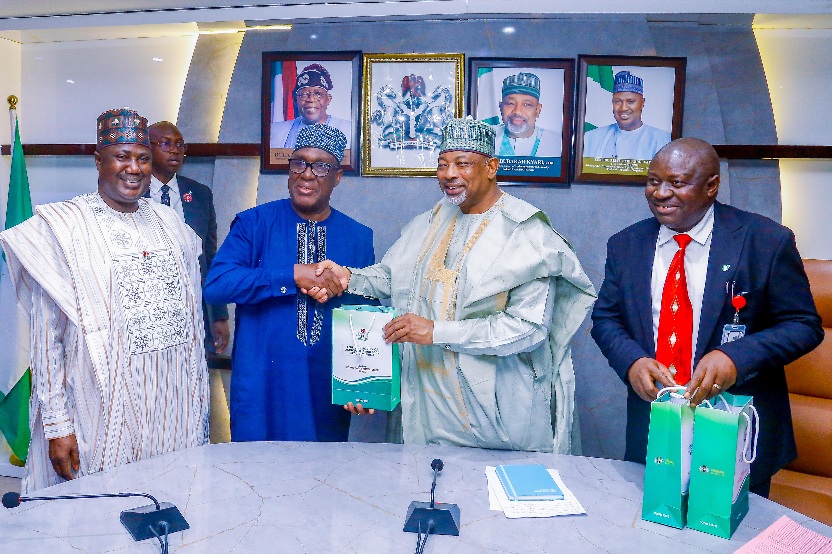
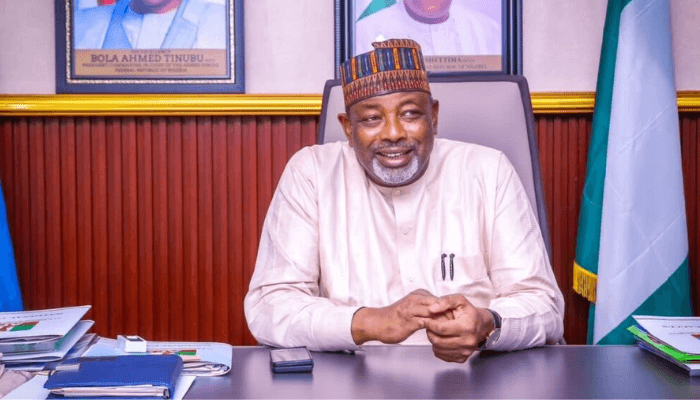
In a statement from the ministry, Abubakar Kyari, minister of Agriculture and Food Security, while speaking at the 2025 World Food Forum “Seeds to Foods” Exhibition organized by the Food and Agriculture Organization (FAO) in Rome, Italy, announced that the FAO–Türkiye–Nigeria South–South Cooperation Programme had successfully piloted a multi-million-naira initiative to boost dryland farming, enhance seed quality, and empower farmers in Borno State.
According to the Minister, the partnership has already yielded measurable results. “Under the programme, 10 Turkish crop varieties and five Nigerian local varieties were introduced to enhance crop diversity and climate resilience.
The initiative also conducted 219 field demonstrations and 14 seed multiplication plots, while identifying October 15 as the optimal sowing date for higher yields.

The project generated 7.5 tonnes of quality seed, including 684 kilograms from newly introduced legumes such as chickpeas and lentils. A total of 186 participants — 55 of them women — benefited from hands-on training and exchange visits to Türkiye focused on seed processing, value addition, and post-harvest handling.
The capacity-building effort was backed by an investment of USD 200,000 (approximately ₦310 million) in training, demonstrations, and institutional development.
Infrastructure support included the installation of boreholes and provision of field equipment to promote irrigation and dry-season farming — critical for improving productivity in the drought-prone areas of northeast Nigeria.
“This partnership stands as proof of vision in action — transforming ideas into impact and policy into progress,” Kyari said. “When we strengthen our seeds, we strengthen our farmers. When we secure our seeds, we secure our nation’s future.”
The Minister emphasised that the federal government’s agricultural transformation strategy would continue to revolve around a resilient and competitive seed system, calling for sustained investment in research and development, seed certification, and private sector participation.

“To sustain this progress, we must foster innovation, transparency, and private-sector-led growth,” he noted. “Institutions like the National Agricultural Seeds Council (NASC) must be empowered to serve both domestic and regional markets with certified, high-quality seeds.”
Kyari praised the leadership of governor Babagana Umara Zulum of Borno State, whose agricultural revival efforts have restored livelihoods and enabled the return of displaced persons to their farms. He also commended the Mohammed Lawan College of Agriculture, Maiduguri, for benefiting from technical assistance in crop monitoring and extension services.
The FAO–Türkiye–Nigeria initiative, according to Kyari, has introduced seven high-value crops — lentils, fenugreek, coriander, chickpea, black cumin, buckwheat, and dry beans — to Nigeria’s drylands, offering new opportunities for nutrition improvement, income diversification, and climate resilience.
Read also: FG lauds stockbrokers $1trn advocacy as 48 members bag fellowship
Marking FAO’s 80th anniversary, the Minister lauded the organization for its “leadership, dedication, and lasting contribution to global food security,” while reaffirming Nigeria’s readiness to deepen cooperation with international partners to achieve sustainable food systems.
With over 70% of Nigeria’s population engaged in smallholder farming and facing mounting climate challenges, analysts say such seed improvement initiatives could significantly narrow the national food deficit, enhance export potential, and accelerate the government’s target of achieving food sovereignty by 2030.