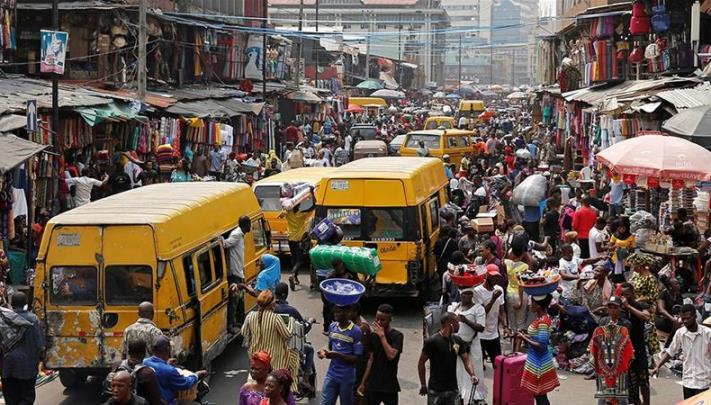
The year 1960 was unprecedented in the history of Africa, and the world at large. It was the year that witnessed the independence of 17 African countries (the highest in a single year) from their European colonial masters.
From Cameroon on January 1, Senegal on April 4, Somalia on July 1, Cote d’Ivoire on August 7, Nigeria on October 1, and to other freed countries, 1960 was truly the freedom year for Africa.
As well, the world was caught up with the excitement of Africa in 1960. As a feature in Toronto’s Star Weekly, a Canadian newspaper, rightly put it then, “Africa, long known as the Dark Continent, is now bright with the glow of smoldering unrest and the flame of open revolt.”
Another American weekly also noted in 1960 that, “Africa, vast, rich and for centuries a slumbering giant, is bursting its chains.”

Sadly, 60 years down the line, all of the 17 African countries that gained independence, especially Nigeria, have nothing to show for their hard-earned freedom. Despite the freedom, Africa’s poverty gap is getting wider every year, while her folks in Asia are fast closing theirs.
The case of Nigeria is pathetic, considering the trillions of dollars earned from the exploitation of the vast natural resources across her landscape, particularly crude oil, which do not reflect in the country’s current state of development.
Martins Okopi, a public affairs analyst, observed that in the past 60 years, Nigeria has been growing without prosperity.
“Despite Nigeria’s improving record of growth, there has been limited evidence of poverty reduction or improved equity in the country’s highly skewed economy”, Okopi said.
For him, Nigeria cannot even affirm her claim as the giant of Africa among other countries that gained independence in 1960 because they are entangled with similar challenges and underdevelopment.

“We are deceived by the claim of Nigeria being the largest economy in Africa, but infrastructural development, standard of living and life expectancy are better in some of the African countries that share Independence Day with Nigeria. So, what kind of giant is Nigeria at 60”, Okopi said.
For Maxwell Onochie, a Lagos-based forensic lawyer, politicians would always point to feats they have achieved, but when they are put together for the 60 years the country has ruled itself, the feats would attract little commendation as the masses are yet to feel the impact of self-governance.
“There may be some positive things that have happened in Nigeria since independence, but there are many gaps, especially poverty. There should be a change and closing of the gap between Nigeria, a supposedly African giant, and the West. Real change will be when we can see genuine economic and social development for ordinary Nigerians,” Onochie said.
However, looking at the performance of some countries that had independence 1960 or relatively closer to that year, they seem to be far ahead of Nigeria in all developmental indices.
Botswana, which gained independence from Britain in September 1966, seems to be doing better than her peers in Africa. Despite the country’s history that has not been without turmoil, the southern African country has emerged as a model African state today.
Formerly one of the world’s poorest countries, with a GDP per capita of about US$70 per year in the late 1960s, Botswana has since transformed itself into an upper middle income country, with one of the world’s fastest-growing economies.
Going by its GDP (purchasing power parity) per capita of about $18,825 per year as of 2015, one of the highest in Africa, its high gross national income (by some estimates the fourth-largest in Africa), the country has a relatively high standard of living and the highest Human Development Index of continental Sub-Saharan Africa.
Moreover, from Cyprus, which gained independence from the United Kingdom in August 1960; Kuwait, from the United Kingdom in February, 1961; Singapore in August 1965, and Malaysia, earlier in August 1957, these countries, which are relatively peers of Nigeria, are doing far better than the African giant today.
Of course, Singapore stands out with its highly developed market economy and world class infrastructural development. It is one of the four Asian Tigers, but has surpassed its peers in terms of GDP per capita in recent times.
Again, for several years, Singapore has been one of the few countries with an AAA credit rating from the big three credit rating agencies in the world, a laudable feat that has wooed global investors and multinationals to the country.
On the other hand, Malaysia’s persistent drive to develop and upgrade its infrastructure has resulted in one of the most well-developed infrastructure among the newly industrializing countries of Asia. In 2014, Malaysia ranked 8th in Asia and 25th in the world in term of overall infrastructure development.
There are currently 1,833 kilometres (1,139 mi) of railways in Malaysia, of which 767 km (477 mi) are double tracked and electrified.
Due to sustained investments in infrastructure, Cyprus, an island country in Europe, has become a major tourist destination in the Mediterranean. Also, with an advanced high-income economy and a very high Human Development Index, Cyprus has something to show for her 60 years of independence.
So also is Kuwait. The oil-rich Arab country is the seventh richest country in the world per capita and the second richest Gulf Corporation Council (GCC) country per capita (after Qatar). A visit to the alluring Kuwait City, the capital, reveals the proper use of the country’s oil wealth.
The reasons for Nigeria’s lag among peers are obvious. First, lack of visionary leadership has retarded the country’s growth since independence.
Of course, corruption, nepotism, political instability, and lack of strong institutions have played their evil parts too.
Taking a look at Nigeria, some development experts argue that the country is the easiest in the world to manage and lead, but that it lacks good leadership to harmonize government and private sector efforts to achieve the desired development.
According to Andrew S. Nevin, partner and chief economist, PricewaterhouseCoopers (PwC) Nigeria, the country is a self-organising nation.
“When you look around things that have happened successfully in the country, groups of people are not told by anyone what to do but they get together and accomplish things and many of the organised private sector actors that are doing very well organise their own power, infrastructure and training”, Nevin said.
Considering the extraordinary abilities of some self-regulating organisations such as Institute of Chartered Accountants of Nigeria (ICAN), Nigerian Bar Association (NBA), Chartered Institute of Bankers of Nigeria (CIBN), among others, most Nigerians believe that the private sector is offering better leadership than government.
“If our governments over the year have adopted leadership principles of some successful companies in the country in running the affairs of the nation, Nigeria would have been the true giant of Africa in infrastructural development, broad economy, politics among others”, Okopi said.
But Onochie insisted that Nigeria has been overtaken by her peers in all indices, especially development because the country allowed corruption to thrive.
“If we had dealt with corrupt leaders in the past, they would have served as example to others and nobody would loot funds meant for development again. We can start now to safeguard the next 60 years”, Onochie said.
A look at some countries that are advanced in development also reveals zero tolerance to corruption and insistence on accountability at the formative stage of their nationhood.
The likes of Cyprus, Singapore, Kuwait, Malaysia and even Botswana, all have strong institutions that checkmate corruption, hold leaders accountable, monitor budgets and projects, formulate policies with human face among other measures that have seen them on steady rise since heir independence.
Nigeria can still learn, make her citizenry happy for once and avert the exodus to advance countries where things are orderly, public infrastructure is at its best and life expectancy is high.