A new bilateral economic and cross border co-operation agreement has been sealed between Nigeria, and Niger Republic geared at creating a new trade corridor along the Kano-Jigawa-Daura-Zinder geo-economic sphere of the two countries.
The new bilateral frame work of cross-border co-operation between the two neighboring would be leveraging on the successes recorded under the on-going Kano-Katsina-Maradi (K2M) corridor between the two countries.
The agreement was signed weekend in Dutse, capital of Jigawa state during a bi-national workshop organized by the Secretariat of the Nigeria-Niger Joint Commission in collaboration with the Governments of Jigawa, Kano, and Katsina state, as well as the Zinder Region of Niger Republic with Technical and Financial support of IFAD-Niger Programme through the Family Farming Programme (ProDAF).
Communiqué of the workshop obtained by BusinessDay shows that the corridor driven development approach was conceived to create conducive environment that will boost the two countries’ economies.

The move is primarily aimed at ameliorating cross-border flows of agro-pastoral products, establishment of policy dialogue and economic integration, as well as facilitates linkages of development poles and transportation systems, by improving knowledge of economic operators on volume of trade as well as removing all hindrances affecting cross-border business transactions.
For a successful take-off of the corridor, the four Governors of Jigawa, Kano, Katsina, and Zinder have unanimously pledged to financially and logistically support the take-off and implementation of the activities of the corridor
They have also promised to provide infrastructural development support through their State Government and by advocating to their respective countries for the following roads to connect Zinder – Magaria – Tinkim – Dungas – Maigatari.
Other roads to be constructed would link Zinder – Magaria – Tinkim – Babura. Zinder Matameye – Kongolom – Daura – Kano, and Zinder – Gidimuni – Washa – Dungas – Maigatari.
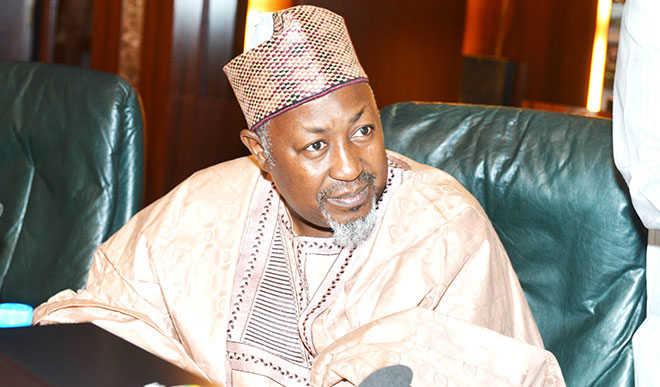
During a Technical Session of the workshop, presided over by Governor Muhammadu Badaru Abubakar, and other participating states, as well as experts from the Joint Commission, ProDAF and CILSS presented papers on the modalities for the management of corridors, the Maigatari Free Trade Zone, Cross-border Flow Monitoring Mechanisms and Institutional Arrangement towards the effective implementation of the Cross-border Co-operation Initiative.

Finally, the following resolutions were made and accepted by the Governors and all stakeholders: that the Local Technical Units regularly monitor the quality of agricultural products just like what obtains in other countries.
It was also agreed upon that the stakeholders at grass root level be sensitized to take ownership of this initiative and ensure that resources are well managed, and that the decisions taken at this workshop be widely disseminated so as to reach all stakeholders;
The Nigeria-Niger Joint Commission for Cooperation was mandated to implements ECOWAS regulatory texts on immigration between the two countries; and the two parties set up corresponding control posts to reduce incidence of harassments, a step that will enhance trade between the two countries, among others
Earlier, Ambassador Abubakar Abdul-Jalil, secretary-general of the Nigeria-Niger Joint Commission in his remarks expressed his gratitude to the Executive Governor of Jigawa, Kano, Katsina states and Zinder region, counterparts that in spite of their tight schedules, partook in the launching workshop.
He particularly showered his appreciations to the Host-Governor for the warmest African hospitality accorded all the delegations and for the excellent arrangements made for hosting this important event.
He equally recognized the National Boundary Commissions of Nigeria and Niger as dependable stakeholders and supporters, calling to mind the development of corridors in West Africa in general and between the two countries in particular. He recalled the potentials the Kano-Jigawa-Daura-Zinder corridor is endowed with and urged the relevant authorities to ensure effective and efficient utilization of the opportunities for the good of the rural peoples of both countries