WALE HAASTRUP
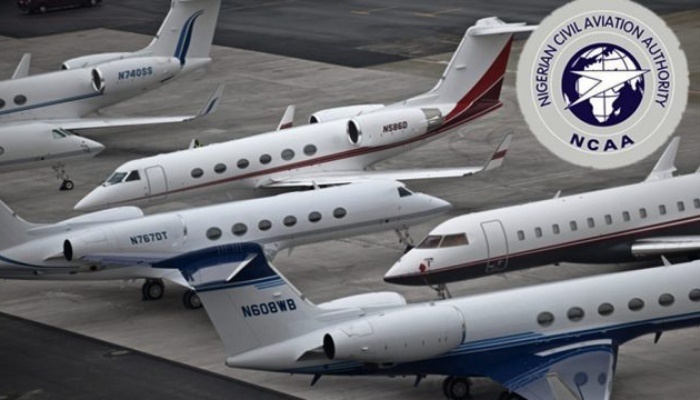
Nigerian aviation stakeholders have repeatedly challenged government to find a solution to the problem leading to a lot of capital flight as airlines have had to ferry their aircraft out and pay in dollars to those that have maintenance facilities All together, Nigeria can boast of having about 70 aircraft owned by airlines in the country, servicing domestic, regional and international route.
Unfortunately, a country like Nigeria with its pedigree as Giant of Africa does not have an aircraft maintenance repair and overhaul (MRO) facility!
Airlines have also used the excuse of maintaining their aircraft outside Nigeria not to pay federal agencies what they are expected to remit after collecting same from passengers.
The need to have such a facility in a nation like Nigeria where old generation aircraft are still flying was emphasised at a recent conference on airline maintenance, repair and overhaul at Addis Ababa , Ethiopia .
Experts from different parts of the world laid emphasis on having a good MRO to cater for the need of the airlines as that is one sure way of achieving safety.
In a paper presented, Sayed Anwar of Egypt Air, Maintenance and Engineering said, in 2008 to 2018 commercial aircraft generated MRO demand worth from 43, 8 to 67,2 billion United States Dollars.
Read Also: Nigeria government assures support for aviation investors

Nigerian aviation stakeholders have repeatedly challenged government to find a solution to the problem leading to a lot of capital flight as airlines have had to ferry their aircraft out and pay in dollars to those that have maintenance facilities.
The federal government on its part had held that it was no longer interested in managing any business but that conducive environment would be given to any interested in establishing a maintenance hangar.
At a time, Afrijet Airline, which was then being managed by the current Director General of the Nigerian Civil Aviation Authority (NCAA), began construction of a maintenance hangar.
Mid-way to finishing, the project seems to have been stuck as nothing is going on, though aviation watchers hinted that the no-nonsense NCAA boss stopped the construction.
His argument according to Business Day source was that some of the materials to be used for the construction were sub-standard.
There had been several other applications by airlines to build maintenance hangar, but government had been slow in giving approval as some of the request were said to be frivolous.
However, recently, a month after he was appointed minister of aviation, Babatunde Omotoba told Business Day that a maintenance facility would be sited in Abuja .
The minister who said the project which is to be handled by a private firm already has the approval of the federal government, just as he disclosed that the firm would be working with Lufthansa Technik of Germany .
As it is known, there is currently no aircraft maintenance facility that can carry out C and D-checks on aircraft in West Africa .
Nigerian airlines currently carry out major checks and maintenance of their aircraft in Europe, America and Ethiopia Airlines hangar in Addis-Ababa , Ethiopia , depending on the degree of maintenance required.
When completed, aside serving Nigerian airlines, the maintenance hangar is expected to serve the whole of West Africa and o airlines from other countries that would not want to go far for MRO.
According to Omotoba, the new state-of-the-art facility to be co-owned by Nigerian firms and Lufthansa Technik would save the nation foreign exchange and provide jobs for Nigerian aeronautical and aircraft maintenance engineers.
The firm, according to the minister, would collaborate with the Nigerian College of Aviation Technology (NCAT), Zaria to train and thereafter employ Nigerian young aircraft engineers.
He also said former engineers of the liquidated Nigeria Airways would be invited to be part of the project as they will be able ready for the task ahead, pending when new engineers are trained.
To African airlines, the minister said, Let us capitalize on the service recovery culture of our continent and encourage MRO in Africa.
According to him, aviation continues to play vital roles in the development of a nation’s economy, Africa presents a large untapped opportunities, Nigeria is no exception, so we must work together to see that Africa aviation grows.
Speaking in the same vein, Harold Demuren, the director general of the NCAA said, We have seen the advantages of new airlines, new aircraft and we even have one new terminal. It all looks very good for Nigeria but we have a fundamental problem. Almost, no training or maintenance support for our airlines locally.
He reiterated the fact that almost all maintenance of aircraft are done outside of Nigeria , just as training of pilots and engineers are done outside the country. There is virtually no heavy maintenance carried out in Nigeria . The same can be said for most West African countries. C’ and D Checks are outsourced, Engine overhaul “outsourced Avionics repair “outsourced Major repair “outsourced.
Demuren called for the encouragement of young people to pursue aviation careers as well as attract skilled tradesmen that the MRO business needs.
Our African airline industries can support in-house maintenance if we invest wisely in: Aircraft Maintenance Hangars, Training of Aircraft Maintenance Engineers and Technicians. In doing so, we can retain the profits of our African airlines in Africa and gain an even more efficient and profitable industry. We can create even more jobs for Africans. Above all, we promote safety, he said.
As much as it is the dream of stakeholders to have the maintenance hangar, Nick Fadugba, the convener of the MRO conference said: in my library gathering dust is a study of probably over ten years of maintenance facility for Nigeria national hanger, complex or facility they called it. This is over ten years ago. What has happened, nothing? And yet we have many airlines. Our fleet is growing.
He held that Nigeria needs a maintenance facility urgently, as there is no serious aviation nation in the world without a MRO facility.
According to him, until Nigeria is able to tap into this, the nation cannot be taken as being serious in aviation.
Now I commend the aviation minister for making plans to implement it. However, I must stress, it must be commercially driven and not government run. Because we have seen in the past that government run doesn’t work in Nigeria . It must have government support and push but it must be commercially driven to make it viable. And whether you put it in Abuja or Lagos it is debatable. In Lagos you have the business. But in Abuja you have the land, the wide space to make it. So it is debatable. So I think an economic analysis should be done to get the perfect location.

Mesfin Tasew, Vice President, Maintenance and Engineering, Ethiopian Airlines agreed that the demand for MRO service in Africa will continue to grow.
According to him, the challenges for MRO providers are numerous, which include: retention of skilled technicians, the need to support both old and new generation fleet and meeting return condition of leased aircraft.
Tasew said the size of aircraft fleet is increasing, more aged fleet, requiring more maintenance as most African airlines are too small to develop internal MRO capabilities.